Mayor presents 2026 budget emphasizing core services and a possible local sales-tax option
Loading...
Summary
Mayor presented Green Bays recommended 2026 budget focusing on core services, data-driven service improvements and staffing needs; he flagged a possible half-cent local sales-tax referendum as a long-term revenue option and noted a roughly $2.3 million increase in debt service.
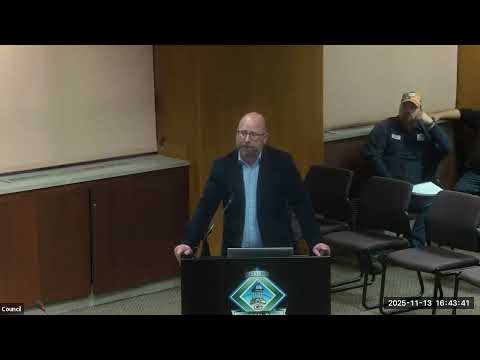
Mayor presented the recommended 2026 budget to the Green Bay Finance Committee, emphasizing steady support for core services and targeted investments in staff and data to improve service delivery. "Nothing flashy here," the mayor said, framing the proposal as focused on public safety, public works and parks while continuing to seek additional support from the state.
The budget message previewed several specific proposals: a data-focused initiative led by fellow Ishu Gupta, creation of a financial/data analyst for the fire department, and three full-time community service officer positions to insource City Hall security and create a pipeline to police work. The mayor told the committee the cost picture includes a proposed 3.4% levy increase (about a 3% mill-rate increase) and roughly a $2.3 million jump in debt-service payments driven by planned infrastructure borrowing. "Were focusing on infrastructure investments," he said, and noted that borrowing and interest rates have increased costs.
The mayor raised a longer-term revenue concept: the option of a local sales tax subject to voter approval. He pointed to the countys experience and estimated the countys sales tax collections at about $40 million; using the citys approximate population share (about 40%), he suggested a Green Bay share could be on the order of $16 million—money that could be used instead of some borrowing. He advised that the Department of Revenue (DOR) could be asked for more precise local yield estimates.
Committee members asked technical and policy questions. The mayor confirmed a planned 2.5% cost-of-living adjustment ("the COLA is 2 and a half") and discussed the interplay between assessed and equalized property values; he reiterated that rising property values can depress the tax rate on an equalized basis even while individual assessed bills change. On revenues, he described increases in state-shared revenue, municipal service payments, and transportation aid, and noted the overall budget baseline at about $143 million.
The mayor concluded by inviting follow-up questions and promised further detail on the data initiative in December. The committee moved on to line-item review of departmental budgets following the presentation.