Get Full Government Meeting Transcripts, Videos, & Alerts Forever!
Get email alerts on the Budget Rubric topic
No spam. Unsubscribe anytime.
Jackson City committee advances scoring rubric to prioritize budget requests
Summary
A Jackson City budget committee previewed a scoring rubric to rank capital and operating requests by legal mandate, public safety, fiscal impact and community demand; members used examples (Sportsplex turf, Civic Center risers, a grant-writer position) and set a timeline for final edits, training and later adoption.
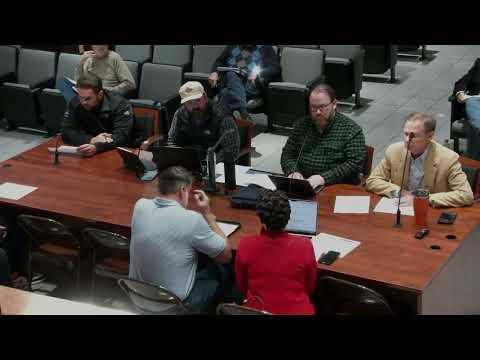
Paul, who led the meeting, presented a proposed scoring rubric the Jackson City budget committee would use to rank departmental budget requests by priority and shared a dry-run of how the tool would work.
"Tier A are must fund services," Paul said while explaining the system that assigns base-tier points for services the city is legally required to provide. He told the committee the rubric pairs that base tier with numeric scores across other criteria — legal mandate, public-safety risk, infrastructure preservation, community demand, economic/fiscal impact, leverage/match, timing and asset life — so decisions are grounded in a consistent framework.
Why it matters: Committee members said the rubric is intended to bring transparency and consistency to a constrained budget process by identifying items the city must fund versus discretionary enhancements. Paul and colleagues used real examples to show how the rubric can change priorities when costs, safety concerns or available leverage shift.
Examples discussed: For a proposed turf replacement at the Sportsplex, Paul walked through the scoring: no legal mandate, modest safety benefit, infrastructure and community-demand points, but a lower fiscal-impact score because recent cost increases reduced net economic return. The exercise produced an 11-out-of-24 result in the presenter’s example, placing the project in a medium-priority bucket.
On Civic Center risers, committee members debated whether the work is primarily a safety item or a discretionary quality-of-life upgrade. "There's a lot of nuance to this," Paul said, and the committee agreed safety scoring can raise a lower-tiered project's priority when it prevents injury or major liability.
Staffing and program examples: The Innovation Department's proposed grant-writer was discussed as a discretionary, innovation-oriented role that nevertheless scored well in several categories (risk reduction, infrastructure leverage, and economic impact) in the committee's walk-through; Paul said that example totaled a 17 when not-applicable fields were excluded. Committee members then tested an additional accountant position and noted staffing decisions produce mid-range scores that require further discussion about marginal impact.
Process and safeguards: The committee endorsed a two-pass approach: department heads would score their own programs first (blind, if desired), Nathan's office would normalize and track adjustments, and the mayor's office and council would review aggregated scores and rationales. Several members emphasized the rubric should not be an automatic "filter" that cuts off funding for anything below a numeric threshold, but rather a tool to focus council deliberations.
Schedule and next steps: Paul said he hopes to finalize the rubric "in our meeting later this month" and to use January for department-head training so scored requests are ready for the February budgeting window. Committee members referenced December informational and work sessions; one said, "It'll be on December 1," and the group agreed to circulate a revised draft for wordsmithing before the next meeting.
What remains unresolved: The committee asked staff to clarify how indirect economic benefits (hotel and restaurant tax tied to tournaments) will be quantified for fiscal scoring and to define precisely how plan alignment (master plan or MPO priorities) will add weight in the rubric. Members also requested clear documentation of any adjustments Nathan's office makes when normalizing departmental scores.
The committee did not take a formal vote to adopt the rubric at the session; Paul said the intention is to return with a revised draft for committee approval and for training materials prior to the next budget cycle.