
Department updates RAC rules to comply with SB 314; providers ask for clearer, consolidated procedures
Get AI-powered insights, summaries, and transcripts
Subscribe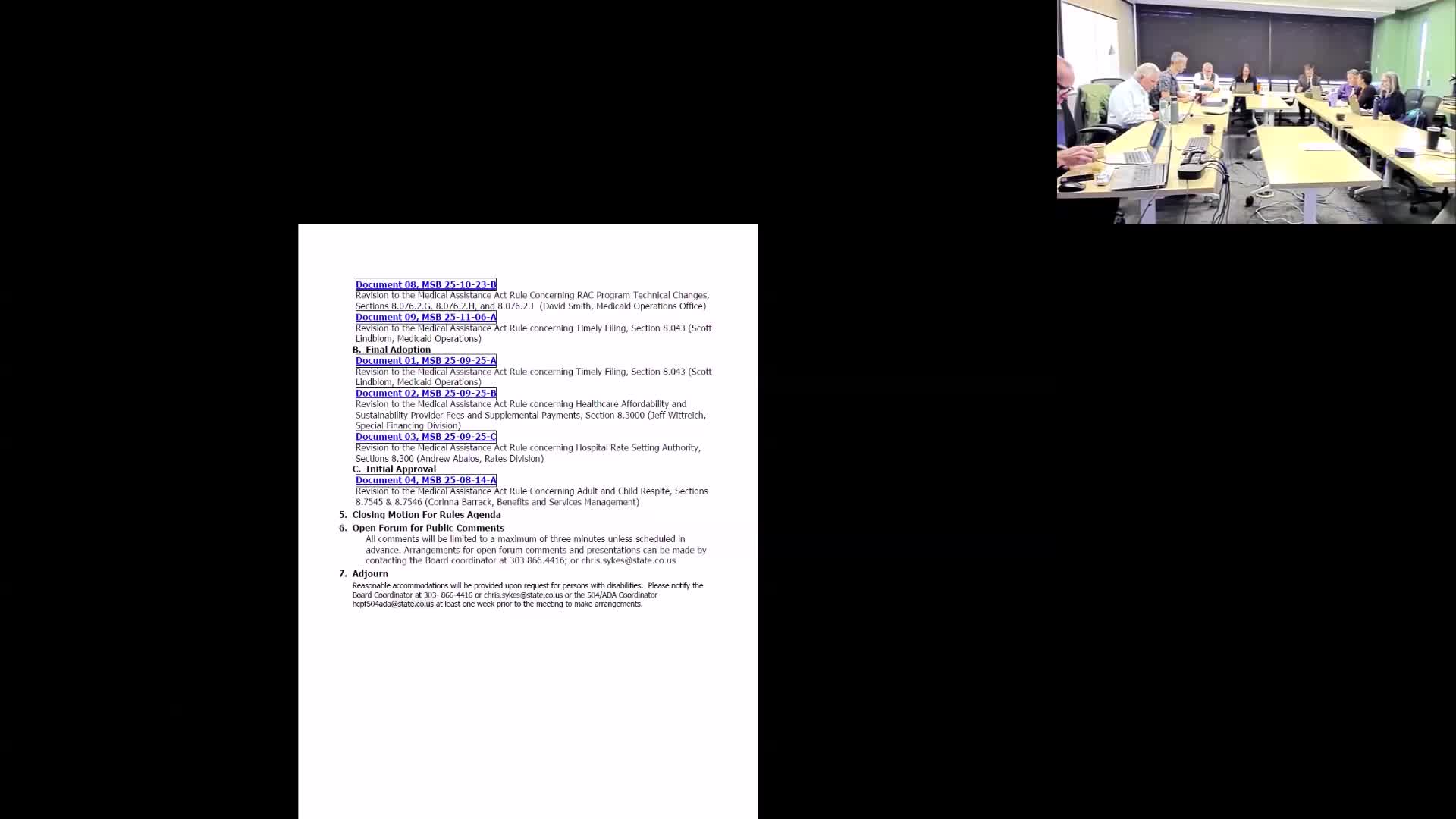
Summary
The board adopted emergency rule changes to the Recovery Audit Contractor (RAC) program to align with Senate Bill 314 and federal requirements; providers urged the department to consolidate RAC procedures in rule and improve provider-facing clarity and education.
The Medical Services Board approved emergency edits to program-integrity rules that govern the Recovery Audit Contractor (RAC) program, changes the department said are required by Senate Bill 314.
David Smith, a department official with program-integrity responsibilities, told the board these amendments align rules with SB 314’s more prescriptive due-process provisions for audits — including notice requirements, document production timelines and levels of review — and are necessary to restart and implement audits consistent with statute. "Immediate adoption of these changes to the existing rule is necessary to comply with Senate Bill 314 as well as federal law," Smith said.
Provider representatives, including Bryce Rafferty of the Colorado Cross-Disability Coalition and the Colorado Coalition of provider groups, supported the statute’s increased due process but asked that the department place the operational timelines and notices in rule language that providers can easily find. Rafferty also warned that emergency rulemaking and rapid changes to decision-support tools had eroded trust among some providers and families.
Prisma Perez described operational scope: RAC audits are post-payment reviews that analyze claims for technical and complex clinical issues; the program currently focuses heavily on hospitals but applies to all providers. The department estimated prior recoveries on the order of tens of millions per year and said the bill creates additional fairness mechanisms for providers.
The board adopted the rule on an emergency basis and will carry out implementation work and additional rulemaking as prescribed by statute.
Ending: Document 8 was adopted; the department committed to provider outreach, education and further rulemaking where the statute leaves operational details to agencies.