
District leaders urge killing or amending draft bill to give charter schools first right on sold school property
Get AI-powered insights, summaries, and transcripts
Subscribe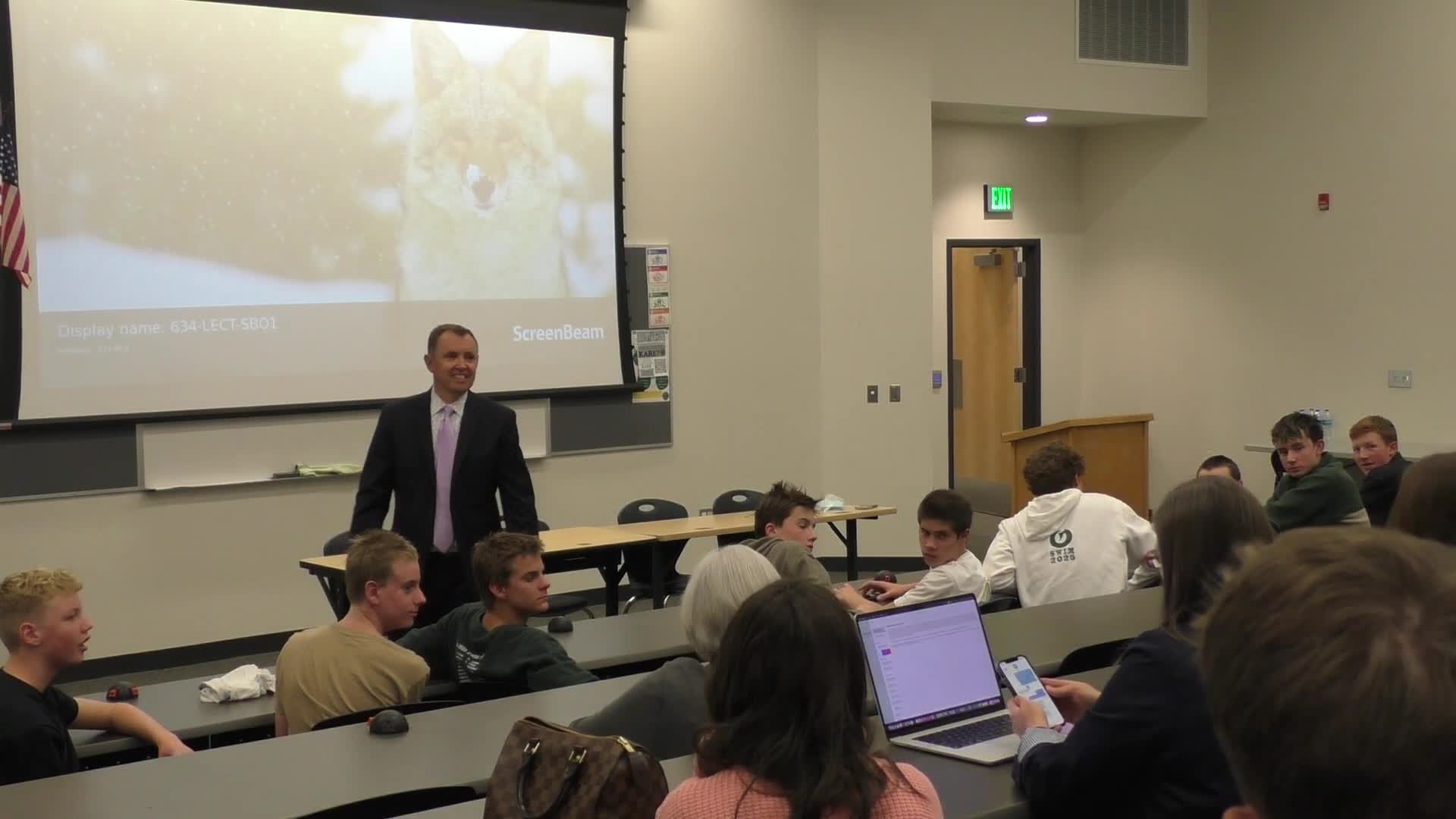
Summary
Superintendent Ben Orsley told a public town hall that a draft state bill would require districts to offer closed school property to charter schools; he said the district is pushing to kill the bill or add a reversionary clause so the local education agency would regain first refusal if a charter later sold the property.
At a Granite School District town hall, Superintendent Ben Orsley described a draft state bill reported to be sponsored by Rep. Cam Sparucci that would change who gets first right of refusal when district property is sold. Under current practice, Orsley said, municipalities (or county governments) are offered the district’s surplus properties first; the draft bill would shift that first option to charter schools statewide if the district were to sell a property.
"The bill changes the reversionary or the first right of refusal to charter schools," he said, adding the provision would mean offering closed properties to every charter school in the state. Orsley said the district has not sold many properties in the past decade and that the bill would only take effect upon a sale.
Orsley described conversations with legislators and lobbyists to influence the bill: he said Rep. Neil Waters plans to propose an amendment that would insert a reversionary clause returning sale proceeds or first refusal to the local education agency if a charter later closes or sells the property. "If we can't kill the bill, then you try to amend it to death," Orsley said, adding he and local municipal groups are coordinating opposition.
Orsley also warned of secondary risks, saying some charter development companies are owned by former legislators or lobbyists and that unrestricted transfers could undercut neighborhood public schools; that assertion was presented as Orsley’s view and not independently verified in the meeting. He said there could be a committee vote in mid‑November and urged attendees to contact legislators.
Next steps: the district said it will continue lobbying to kill the bill or secure amendments that preserve a reversionary right for the local education agency; no formal board action was recorded at the town hall.