
Risk management says insurance changes saved the district money and reduced claims
Get AI-powered insights, summaries, and transcripts
Sign Up Free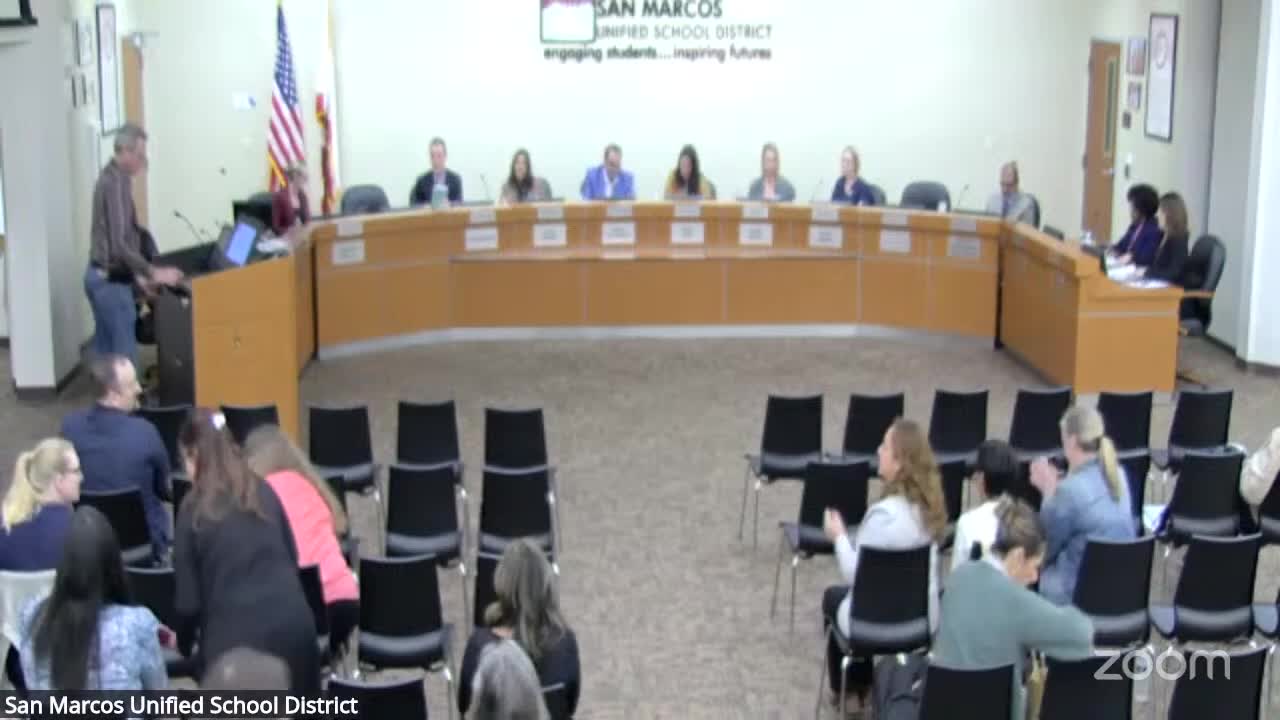
Summary
The district risk management director told the board the district moved to a different JPA on 07/01/2022, transferring $2.1 million in risk and reporting $353,000 and $107,000 in identified savings and a 26.62% drop in workers’ compensation claims as of June 30, 2025.
SAN MARCOS, Calif. — Marissa Evans, San Marcos Unified School District’s director of risk management, told the board Nov. 13 that several insurance and program changes have reduced the district’s financial exposure and claims.
Evans said the district moved to a new joint powers authority (JPA) on July 1, 2022, transferring approximately $2,100,000 in risk to the JPA and eliminating a prior structure that left the district responsible for the first $100,000 of each claim. She said workers’ compensation claims were down 26.62% as of June 30, 2025, compared with the prior program structure.
“From 07/01/2022 moving forward, we’ve reduced workers’ compensation claims by 26.62%,” Evans said. She added that the district has realized $353,000 in savings related to an effective return-to-work program and $107,000 from moving interactive process meetings in-house.
Evans also described liability and property coverage improvements under Southern California Risk (SCR) — noting the district’s increase in insured limits (up to $75 million per claim for liability coverage) and smaller premium increases (about 6% for the district versus 18–20% regionwide among SCR members) as evidence of improved program performance.
Evans reviewed program responsibilities (drone program, ADA service-animal protocol, chemical hygiene, emergency preparedness), asset management and periodic third-party assessments to ensure accurate replacement values. She said risk management also supports site safety assessments, parking-lot and traffic reviews, emergency reunification, and prevention-oriented equipment purchases.
Board members asked operational questions about OSHA training, CTE credentialing and the goal of issuing OSHA cards through CTE; Evans said it’s not yet in place but is a goal.
What’s next: Risk management will continue district-wide safety assessments, asset mapping and compliance support for new state legislation; the board received the presentation as information.