Superintendent: Bellevue’s year‑end finances better than feared; district highlights language, dyslexia and ASL programs
Summary
Superintendent Kelly Aramaki told the Bellevue School Board that 2024–25 closed with a roughly $700,000 deficit — far smaller than an earlier $6 million projection — highlighted program innovations that helped enrollment, and warned structural funding pressures could return deficits by 2028–29 without state action.
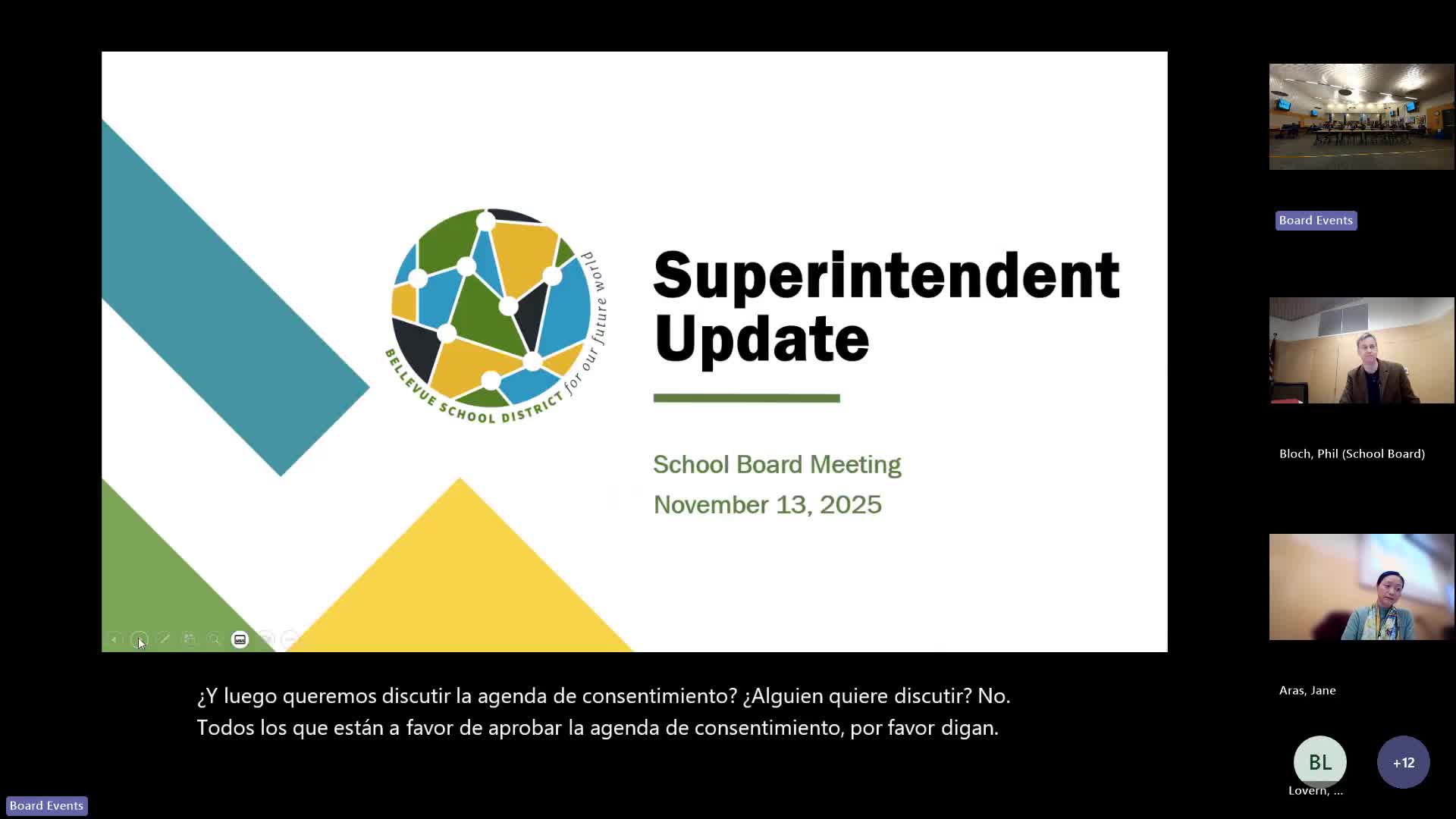
Superintendent Kelly Aramaki told the Bellevue School Board on Nov. 13 that the district closed its books for the 2024–25 school year in a stronger position than expected, highlighted expansion of language and support programs, and urged continued advocacy for changes to the state funding model.
"Our ending fund balance or reserves is coming out to about negative $700,000," Aramaki said, noting that the district had previously projected a roughly $6,000,000 shortfall. She credited careful budget work and higher‑than‑expected special education reimbursements — "our special education team brought in 2 and a half million dollars more than we thought they were going to" — for narrowing the gap.
Aramaki said those improvements shift the near‑term forecast: the district now projects it may end the coming year "about $1,300,000 in the black" but cautioned that if staffing levels and the current funding model hold, costs could again outpace revenues by the 2028–29 school year. "When you hear us talk about all of our advocacy," she said, the district and its partners are pressing the legislature to alter school funding.
Aramaki also highlighted programmatic steps the district says have helped enrollment and engagement: new language programs (Japanese, Korean, Arabic), a parent‑partnership model to support homeschooling families with access to music, PE and digital courses, and work on dyslexia supports and expanded services for students who are deaf or hard of hearing. She said the district is exploring a free public Montessori program starting in preschool and invited families to help design initiatives.
The superintendent closed by previewing the board’s upcoming budget parameter development on Jan. 22 and the legislative session’s March 12 deadline for state action that could affect district funding.
The board acknowledged the work and asked for more detail on how larger class sizes and staffing constraints are affecting implementation of school plans. Aramaki and staff said schools are adapting practices and that more work on staffing and state support will be necessary.