Appeals Court Hears Sibling Dispute Over Ambiguous Will Language and No‑Contest Clause
Loading...
Summary
In Derek Walton v. David Walton, the Massachusetts Appeals Court heard competing arguments about whether Article 3 of a will created a life‑use right or a tenancy in common and whether Derek’s equity claims and promissory‑estoppel allegations triggered a broad no‑contest clause. The matter was submitted for decision.
The Massachusetts Appeals Court heard oral arguments in Derek Walton v. David Walton (docket 25P0380) on whether Article 3 of the testatrix’s will conveyed an ownership interest or merely a right to use and occupy the family home, and whether later equity claims and a promissory‑estoppel theory trigger a no‑contest clause.
Attorney Lois Farmer, arguing for Derek, told the panel the will is ambiguous and that equitable principles bar automatic enforcement of the no‑contest clause. "In Article 3, it says, 'I grant my sons the right to use and occupy the property,'" Farmer said, and argued that Derek’s continued residence, payments toward expenses and other conduct constituted partial performance that supports a promissory‑estoppel remedy.
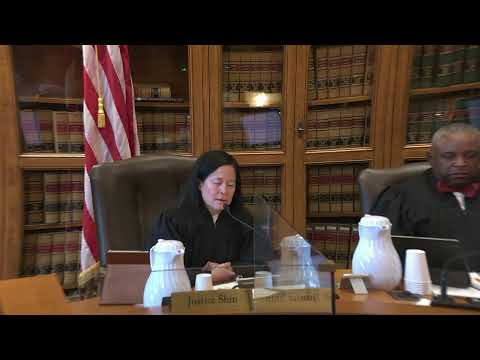
Justice Desmond questioned whether the language was truly ambiguous and whether remanding for an evidentiary hearing was required. Farmer said ambiguity arises from the will's inconsistent wording across articles and cited Wittes and other probate authority to show that courts sometimes need a trial record to determine intent.
Kathleen Horn MacLean, representing David, urged the court to read the will as conveying an ownership interest such that title vested at probate and David lawfully pursued a partition to realize his interest. She argued Derek’s lawsuit — and the equity claims attached to it — presented an indirect challenge to the will that the contested no‑contest clause was designed to forbid.
Douglas E. Sylvia, also representing David on the opposing view, focused on whether petitioning for partition or seeking a declaratory judgment constitutes a "challenge" for no‑contest purposes and whether equity claims based on alleged promises fall into recognized exceptions. He told the court that some promissory‑estoppel claims can be resolved on summary judgment only when narrow exceptions apply.
The three‑judge panel asked detailed questions about Article 3’s text, Article 8’s interim clause, and the practical effects of finding either a life‑use interest or a tenancy in common. After argument the matter was submitted for decision.
The case turns on statutory and common‑law rules about will construction, the scope of no‑contest clauses, and when equitable doctrines such as promissory estoppel and partial performance can alter distribution that otherwise follows probate.