Interim superintendent: Bridgeport ‘balanced’ a $67 million deficit but district is 'running on fumes'
Loading...
Summary
Interim Superintendent Dr. Royce Avery credited staff and community partnerships for progress — including four schools removed from the state turnaround list — but warned that, despite closing a $67,000,000 deficit, the district has cut deeply and needs more funding to avoid further losses.
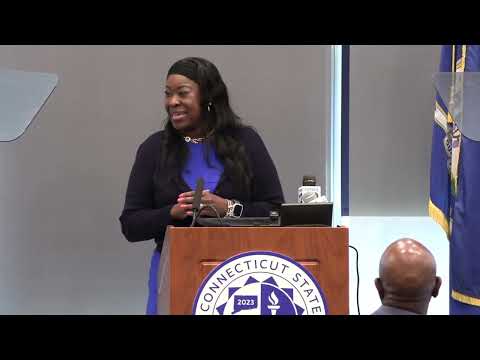
Interim Superintendent Dr. Royce Avery told a standing-room audience that the district has made measurable progress over the past year but remains financially fragile.
"We closed the $67,000,000 deficit," Avery said, adding a cautionary note: "We're running on fumes." He described lost positions — including library support specialists and kindergarten paraprofessionals — and said the district cannot make further cuts without harming students.
Avery credited a year of listening and relationship-building for part of the turnaround. He highlighted that four schools have come off the Connecticut State Department of Education's turnaround list, calling the change "validation" of hours of work by staff and families.
District leaders sketched the scale of need behind the progress. Chief of Operations George Garcia said a facilities condition assessment identified about $700,000,000 in capital needs and outlined recent capital projects, including a $74,000,000 special education center and an $80,000,000 Winthrop project. Garcia also said teacher vacancies have fallen from roughly 150 to about 40 and that the district has only two open special education positions.
Carly Roca Reyes, the district's director of school counseling and partnerships, framed student needs: 31% of students receive language support and 20% receive specialized instruction, which she said means more than half of the student body requires high-level support.
Avery urged community members and legislators to press for fair funding in the upcoming budget cycle, saying the district had balanced the books "while keeping our focus on classrooms and students" but needs sustained investment to restore services and staffing.
The superintendent also pointed to recent accountability steps, including a forensic audit and a decade-long facilities master plan, as tools to justify future investments. He closed by renewing a call for collaboration among the board, city, state delegation and community to keep the momentum going.
Next steps: district leaders said they will push for funding and enrollment strategies during the next budget cycle and asked community partners to support advocacy efforts.