Get Full Government Meeting Transcripts, Videos, & Alerts Forever!
Get email alerts on the Ada Compliance topic
No spam. Unsubscribe anytime.
Madison County board hosts ADA walkthrough at annex; liaison recommends countywide self-evaluation and phased fixes
Summary
Madison County invited Molly Wepker of the Great Plains ADA Center to inspect the annex building. Her on-site review found missing braille/auditory elevator features, no compliant accessible stall in the women's restroom and recommended an ADA self-evaluation, a transition plan and low-cost immediate fixes such as signage and parking remarking.
Madison County board members on Tuesday hosted an on-site ADA compliance walkthrough of the county annex, where a state-designated liaison recommended a formal ADA self-evaluation and a phased transition plan to address accessibility gaps.
Molly Wepker, the Iowa liaison for the Great Plains ADA Center, told the board she would prepare an assessment after reviewing the annex. "My first recommendation is to do an ADA self evaluation," Wepker said, adding that the evaluation will help the county identify readily achievable fixes and long-term projects.
Wepker’s quick inspection flagged several deficiencies. She said the elevator lacks braille and auditory floor signals and that some buttons are above the 48-inch reach range recommended for people who use wheelchairs. In the women's restroom she found no accessible stall meeting the 60-inch width requirement and noted the location of fixtures and protruding objects could impede required clear floor space.
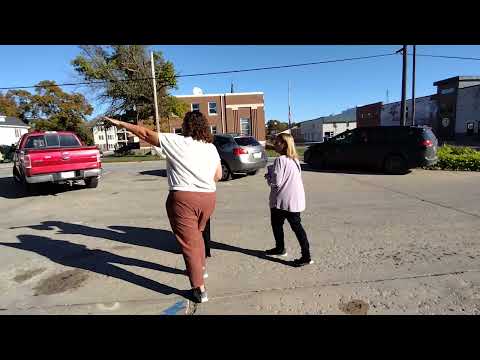
"You need to have accessible stalls, but then you also have to have an access aisle," Wepker said while reviewing exterior parking and the building’s accessible route. She recommended remarking parking stalls, adding signage to direct visitors to the accessible entrance and providing an accessible counter or table inside where people can fill out forms — all items she described as low-cost, "readily achievable" fixes.
Wepker told the board the annex may qualify for ‘‘safe harbor’’ status if the elevator and other key features predate the 1990 ADA, which could affect the timing or scope of required upgrades. She cautioned, however, that any major renovation would likely trigger current-code requirements and broaden what must be made accessible.
Board members asked Wepker about options such as converting restrooms to single-user/unisex stalls to simplify compliance; she said that approach is commonly used but advised checking local plumbing codes before removing fixtures.
Wepker also recommended the county designate a point person for ADA matters and publish that contact on the county website so members of the public can submit complaints or requests. She offered to deliver a written, informal report and to refer the county to state code contacts for plumbing and construction questions.
The board agreed to pursue a formal ADA self-evaluation and to include the assessment in a broader transition plan that would prioritize low-cost fixes first and schedule larger projects over time. Wepker said the ADA does not set fixed deadlines for full compliance but looks for a documented, good-faith effort.
Next steps recorded in the meeting included scheduling a fuller ADA assessment, documenting a transition plan, and having staff coordinate follow-up with Wepker so she can deliver her written assessment to the board.