Get Full Government Meeting Transcripts, Videos, & Alerts Forever!
Get email alerts on the Roads Infrastructure topic
No spam. Unsubscribe anytime.
Madison County roads update: Pitzer Bridge progress, $4M Cummings resurfacing nearly complete and new fuel system planned
Summary
Secondary Roads director Mike Hackett told supervisors that Pitzer Bridge foundations and beams are in place, the $4,000,000 Cummings Road resurfacing project is about 90% complete, and a new two-tank fuel system is coming online to better manage an estimated 300,000 gallons of diesel per year.
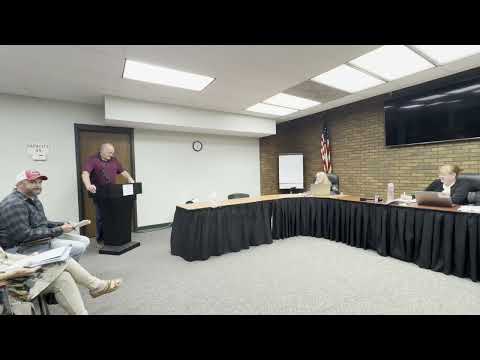
Mike Hackett, Madison County’s secretary of roads, gave the board a detailed update on ongoing infrastructure and maintenance projects, noting progress on a small bridge/culvert replacement, a nearly finished resurfacing contract, and upgrades to county fuel storage and handling.
Hackett said foundations and piles for Pitzer Bridge are complete and that beams and decking are set, moving the project into deck work and finishing operations. On Cummings Road, he described base patching and resurfacing work for the second half of the corridor and told supervisors the $4,000,000 contract is roughly 90% complete with final items (guardrail, shoulder work, entrance builds and striping) remaining.
He also reviewed a planned replacement of the county fuel system, describing a two-tank solution intended to let staff blend and store diesel mixes for cold-weather operations. "The equipment's expensive. We go through about 300,000 gallons of diesel fuel a year," Hackett said, explaining that the change will reduce operational costs and wear on injectors by allowing appropriate blends for seasonal conditions.
Hackett summarized the county’s rock-road program—about 750 miles divided into nine zones with an annual material budget around $1,900,000—and explained ongoing road-shaping work on Hundred and 105th just east of Earlham, including use of recycled aggregates and multi-layer surfacing (larger base aggregate choked with smaller capping material).
Supervisors asked technical questions about deck thickness, staging for paving and the handling of old timber planks from bridges; Hackett described stockpiling and selective reuse when feasible. Several resolutions related to construction and temporary road closures (secondary-roads Resolutions A, C and E) were presented and approved in a consent grouping.
The board thanked Hackett for the briefing and noted follow-up items on staffing for the secondary roads crew and forthcoming detailed presentations on the fuel system renovation.
The presentation and resolutions are part of the board’s routine review and approval of capital and maintenance projects that affect county infrastructure and budgets.