Get Full Government Meeting Transcripts, Videos, & Alerts Forever!
Get email alerts on the Civic Governance topic
No spam. Unsubscribe anytime.
Sedona council interviews four applicants; housing, budget and home-rule tradeoffs dominate
Summary
Councilors spent the bulk of the interview session questioning four applicants about workforce housing, municipal budgeting, conflict-of-interest practices and home rule versus permanent base adjustment, citing the need for an appointee who can quickly engage on budget and land-use matters.
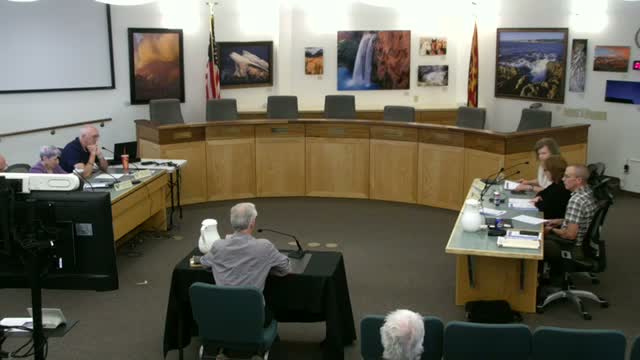
The Sedona City Council spent an extended interview session with four applicants for a vacant council seat — Alan Alffett, Charlotte Hosseini, a candidate identified as Sean, and Ernest (Ernie) Stroud — focusing their questions on workforce housing, the municipal budget process, conflicts of interest, and the ballot-level choice between home rule and a permanent base adjustment.
Alan Alffett framed housing as a national problem that is intensified locally by limited land and high demand. "In Sedona, it's exacerbated by the fact that we have limited land resources... In order to build more affordable housing, the city will have to subsidize it," Alffett said, listing land banks, community-owned housing and greater use of ADUs as potential tools and noting the practical role low-income housing tax credits (LIHTC) play as gap financing.
Charlotte Hosseini, who chairs Sedona's Planning & Zoning commission, described a background of citizen budget work groups and P&Z service and explained she would not run in 2026 if appointed. On the city’s long-running choice about fiscal rules, she said she leans toward home rule for flexibility: "Home rule is probably still a better answer for you," she told councilors while weighing home rule against a permanent base adjustment.
Other applicants raised similar themes. Sean, a long-time local business owner, emphasized balancing tourism-driven revenue with livability and said he would seek to expand community participation in major decisions. Ernie Stroud, a former councilor, stressed improving public communications and relying on the community plan as the council's guiding document.
Across interviews, councilors pressed candidates on how they would prepare to decide on topics they know little about; candidates consistently described using staff briefings, external experts, packet materials and citizen work groups to inform votes. On conflicts of interest, candidates generally said they would consult legal counsel and ask colleagues to recuse themselves when appropriate rather than unilaterally enforcing recusal.
Councilors told applicants they valued demonstrated local involvement, subject-matter familiarity and the ability to "hit the ground running" — qualifications the council later used in private deliberations to select an appointee. The interviews closed with a scheduled 5:00 p.m. session for deliberation and an expressed intent to make a same-day appointment so the council would have full membership for upcoming budget hearings and planning items.
The interviews underscored three recurring policy pressures for the city: workforce housing shortages and funding constraints, decisions about whether to preserve local fiscal flexibility via home rule or adjust statutory spending bases, and the near-term demands of the annual municipal budget cycle.
Next procedural steps identified during the meeting: private council deliberation on candidate rankings, public vote on an appointment, immediate swearing-in if the appointee is available and clerk follow-up to post the appointment information.