
Nebraska Sues Colorado Over South Platte Canal; Colorado Denies Obstruction
Get AI-powered insights, summaries, and transcripts
Sign Up Free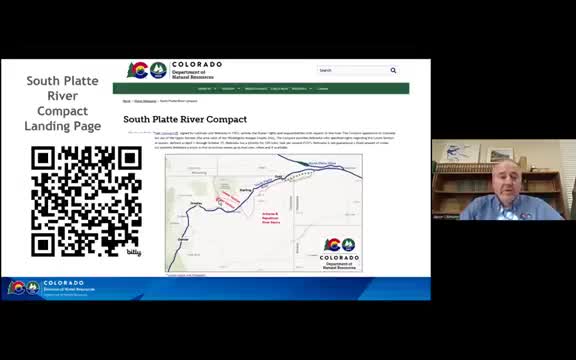
Summary
Nebraska has petitioned the U.S. Supreme Court alleging Colorado obstructed its Perkins County Canal plans and violated the South Platte compact; Colorado's state engineer says the complaint is premature and denies obstruction, with the Court set to consider whether to take the case.
Nebraska has filed a complaint in the U.S. Supreme Court accusing Colorado of obstructing its plans to build the Perkins County Canal and of violating the 1923 South Platte compact, the state engineer told the Colorado State Land Board on Nov. 12. The canal, which Nebraska contends could furnish a winter-season (non-irrigation) right if built, has prompted months of intergovernmental discussion and recent litigation.
Jason Ullman, Colorado's state engineer and director of the Division of Water Resources, summarized the compact and the dispute. He said the compact includes an irrigation-season right and a separate non-irrigation-season component that contemplates Nebraska's Perkins County Canal, and that Nebraska recently renewed interest and dedicated funds toward the canal. Ullman said Nebraska filed a Supreme Court complaint on July 16 alleging Colorado had obstructed canal construction and had violated the compact.
Ullman said Colorado's response—prepared with assistance from the Attorney General's office—denies that the state has obstructed Nebraska. "We haven't denied they could build it," he said, "but they have to build the canal the compact contemplated. They haven't done those things." He said Nebraska's filings do not yet show that the canal, as designed so far, is the canal described in the compact and that Nebraska has not completed permitting or condemnation steps contemplated by the compact. Colorado argues the complaint is therefore unripe.
Ullman also said Nebraska has alleged Colorado has violated the compact since its inception by attempting to use more water than entitled. He described that theory as rooted in a misunderstanding of how the compact creates priorities rather than guaranteed flows. "When you have a water right," Ullman said, "you administer the river and curtail juniors to satisfy seniors. If the river doesn't produce enough, you get what we can provide you." Colorado's brief argues it has historically administered the compact and worked with Nebraska on questions.
The Supreme Court scheduled a conference on whether to accept Nebraska's case for Nov. 14. Ullman said Colorado submitted a response on Oct. 15 and that Nebraska filed an optional short reply; he described the outcome as uncertain and the states as in a waiting period while the Court decides whether to grant review. If the Court accepts the case, the matter would move to a formal adjudicatory stage before the nation's high court.
Next steps: the Court will decide whether to take the case; if it does, the litigation would move into briefing and evidentiary phases. Colorado officials say negotiations and technical design details could influence ripeness and any court outcome.