Get Full Government Meeting Transcripts, Videos, & Alerts Forever!
Get email alerts on the Glenmont Study topic
No spam. Unsubscribe anytime.
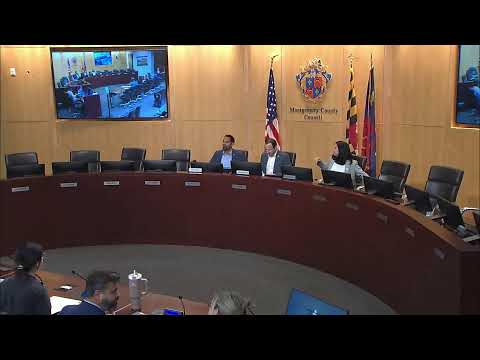
Montgomery County planners present Glenmont Corridors Opportunity Study; council asks for short, costed safety projects list
Summary
Planning staff presented the Glenmont Corridors Opportunity Study to the County Council Planning, Housing, and Parks Committee, highlighting a 15‑minute living analysis, community focus groups, and recommendations to improve walkability, transit access, housing diversity and public space; the committee asked staff for a near‑term, costed 'bang‑for‑buck' list by mid‑December to influence the CIP.
Planning staff presented the Glenmont Corridors Opportunity Study to the Montgomery County Council Planning, Housing, and Parks Committee, outlining findings from a nearly year‑long analysis and community engagement process and recommending corridor‑focused mixed‑use development, improved multimodal access, and the creation of a central civic green. Zubin Adrienne Bala, East County Planning, said the study is intended to be a conversation starter rather than a master plan and drew on demographic, land‑use and transportation data, focus groups, and an informal economy assessment.
"This is a study which is distinct from a plan," Bala said, describing goals to "meaningfully introduce mixed‑use development, promote affordable and diverse housing types, enhance multi‑modal transportation, and create inviting open spaces" that align with county objectives for equitable growth.
Planner Lu Wei Wang described an in‑house 15‑minute living multimodal GIS analysis that evaluated how many essential amenities residents can reach within 15 minutes by walking, biking, or public transit. Wang told the committee that walking‑only access was limited in much of the study area, while biking and transit increased access substantially: "When we expand analysis to include biking and public transit, we observe notable improvements in accessibility," Wang said. In the staff presentation, walking results showed a relatively small share of grid cells with high walking accessibility and a larger share with no access; adding biking and transit raised the share of cells with high accessibility.
The study area, defined to include the Glenmont sector plan, corridors along Georgia Avenue and Randolph Road, and a roughly one‑mile walk shed around the Glenmont Metro Station, has a large Hispanic/Latino population (presented as roughly 51% versus the county's roughly 20%) and a median household income reported in the presentation as about $94,000 (presenters said that figure is roughly 20% lower than the county median reported in the study).
Community outreach included 948 mailed postcards, digital ads, a questionnaire with about 273 responses, and eight focus groups (three adult groups and sessions in two local high schools). Staff reported consistent concerns across ages about station safety, the need for more safe walking and biking routes, limited places for youth hangouts, and maintenance and code enforcement. The focus groups and an informal economy study also found strong support for local small businesses but anxiety among informal vendors about how redevelopment might affect their ability to operate.
Bala and colleagues showed illustrative renderings that imagine a central civic green at the Randolph/Georgia intersection, corridor‑focused development near the Glenmont Metro Station, and activated streetfronts (staff emphasized those images are conceptual and conform broadly to existing zoning guidance). The presentation noted uncertainty about the future BRT alignment (median vs. curb running) and flagged the need to coordinate with MCDOT, SHA and other implementing agencies before design choices are finalized.
District Council Member Natalie Fontaine Gonzalez welcomed the study and emphasized near‑term safety priorities, defending local supermarkets and highlighting community‑led assets such as an urban farm. "Whoever says that has never been to H Mart," Gonzalez said after staff characterization of supermarket quality provoked a defense of local retail options. Gonzalez also recounted prior efforts to seek federal grant funding to make Georgia Avenue safer and said some funding opportunities had lapsed in the past.
Council Vice President Juana and other committee members urged staff to press for immediate safety improvements where feasible—shorter pedestrian crossing intervals, improved crosswalks, protected bike lanes and other Vision Zero measures—even before larger redevelopment occurs. Jessica McVerry, planning supervisor for East County Planning, said staff had not yet resumed detailed conversations with MCDOT about Glenmont since the report's release but noted the study should inform CIP and mandatory referral reviews when those items arise.
The committee asked planning staff to prepare a short, implementable, costed list of recommended capital projects—described by members as a "bang‑for‑buck" list of safety and connectivity investments that could reasonably be funded within low‑to‑mid‑cost ranges—and to submit that package by mid‑December so councilors can consider it ahead of the county executive's capital budget submission. The Committee Chair (name not specified) framed that request as prioritizing near‑term, demonstrable public investments that would increase community buy‑in and make visible improvements sooner than large, multi‑year projects.
Next steps: staff will continue outreach, coordinate with MCDOT and other implementation partners, and return recommendations to the committee in the requested, costed format; no formal votes were taken at the session and the committee adjourned after the presentation.