
UN emergency relief chief urges immediate safe passage and surge of aid after Darfur visit
Get AI-powered insights, summaries, and transcripts
Subscribe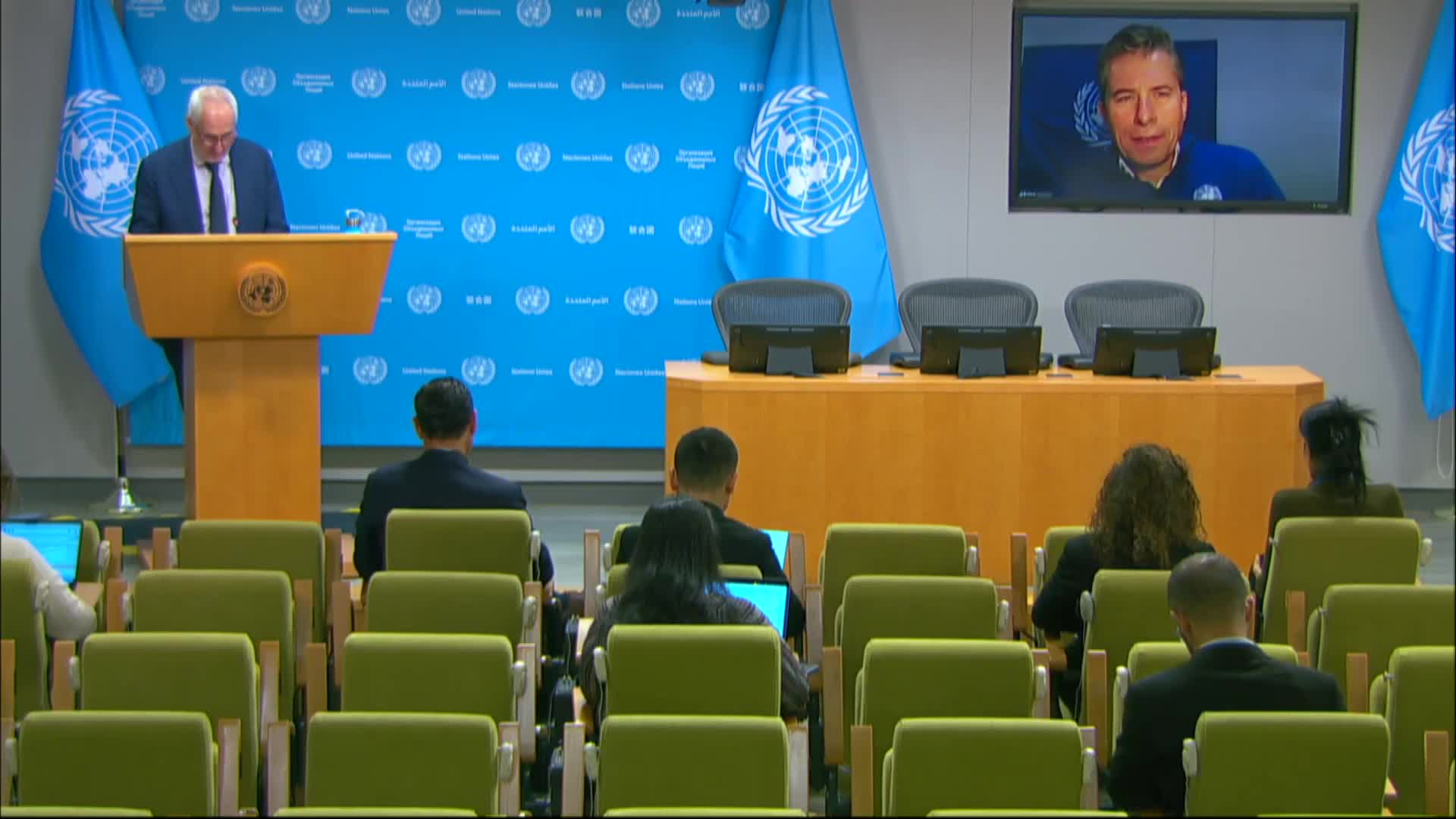
Summary
Tom Fletcher, UN emergency relief coordinator, described El Fasher as "basically a crime scene," urged member states to secure unhindered humanitarian access and called for a surge of UN staff and funding to meet a multi‑billion‑dollar shortfall.
Tom Fletcher, the United Nations emergency relief coordinator and Under‑Secretary‑General for Humanitarian Affairs, urged immediate, unhindered humanitarian access to Darfur and a stronger international political response after a week visiting front‑line towns and border crossings.
Fletcher said he traveled through Port Sudan, the Ajre crossing, Janina, Golo, Tarweela and Tawela and met national authorities and armed actors, including General Burhan and local representatives of the Rapid Support Forces (RSF). "El Fasher, based on the testimonies I heard from many survivors, is basically a crime scene right now," he said, and added that deliberate attacks on civilians "must stop, and we want those who commit these crimes to face justice." He said he had secured what he described as "pretty strong agreement" on access and safe passage but warned: "Let's see if they live up to those commitments they've made to me."
Fletcher stressed three reasons for increasing UN presence inside Darfur: protection (civilians tell the UN they feel safer when humanitarians are visible), negotiating and securing access for convoys and NGO partners, and ensuring delivery quality amid severe funding cuts. "The UN is a ship that was not built to stay in the harbor," he said, and reported a recent surge in UN staff at field locations: "When I left, I had a meeting with 28 UN staff now based, or in Tawela at the moment." He said that surge included both national and international staff.
On funding, Fletcher said the 2025 humanitarian appeal for Sudan is far short of requirements: "11 months into the year, we're at 32% funded of the $4,000,000,000 that we need for 2025." He warned that aid cuts are forcing humanitarians to "hyper prioritize" lifesaving work and to make brutal life‑and‑death decisions. He highlighted acute child vulnerability: roughly one‑third of arrivals in displacement sites are malnourished and, he said, "15 percent of children under the age of 5 are suffering the deadliest form of malnutrition." He attributed the "1 in 5" figure for child deaths to a UNICEF statistic used in his Security Council briefing and said exact casualty counts remain difficult to verify.
Fletcher described the security and operational hazards his teams faced: a UNICEF convoy was caught up in an airstrike on a commercial vehicle, colleagues were injured, vehicles crashed and a forest fire created additional danger. He repeated the UN position that aid must be neutral and impartial and said the organization will publicly "call out those blockages" that prevent assistance from reaching civilians.
During a question‑and‑answer session, Fletcher declined to propose sanctions, saying sanctions and armed embargo decisions lie with member states and the Security Council and are outside his humanitarian remit. He said he favored accountability and pressed states supplying arms to "take a long, long look at themselves in the mirror and start to act responsibly." He also affirmed support for local humanitarian capacity, saying a priority is to channel more pooled funding to national NGOs.
Fletcher said access commitments would be tested operationally and hoped new access could be secured in days or weeks rather than months. He concluded by urging sustained diplomatic pressure from member states and the Security Council to protect civilians, expand humanitarian access and limit flows of arms.
The briefing was conducted from Adre, the crossing between Chad and Sudan; Fletcher said he was continuing to travel in the region.