Get Full Government Meeting Transcripts, Videos, & Alerts Forever!
Get email alerts on the Parks Events topic
No spam. Unsubscribe anytime.
Portland HECD committee delays Payson Park festival contract, seeks more transparency on fees and noise
Summary
Committee members sent a proposed multi-year contract for a Payson Park music festival back to staff for renegotiation, citing concerns about financial transparency, how complimentary tickets are counted, noise enforcement and the ability to transfer contract rights.
Portland’s Housing, Economic and Community Development (HECD) committee on Tuesday postponed action on a proposed three-year contract for a Payson Park music festival and asked staff to negotiate further changes before the full City Council considers the deal.
The committee’s move followed a detailed staff presentation and public comment that highlighted neighborhood concerns about transparency, noise and traffic. "I care that we have a solid, transparent financial agreement," Councilor Kate Sykes said during deliberations.
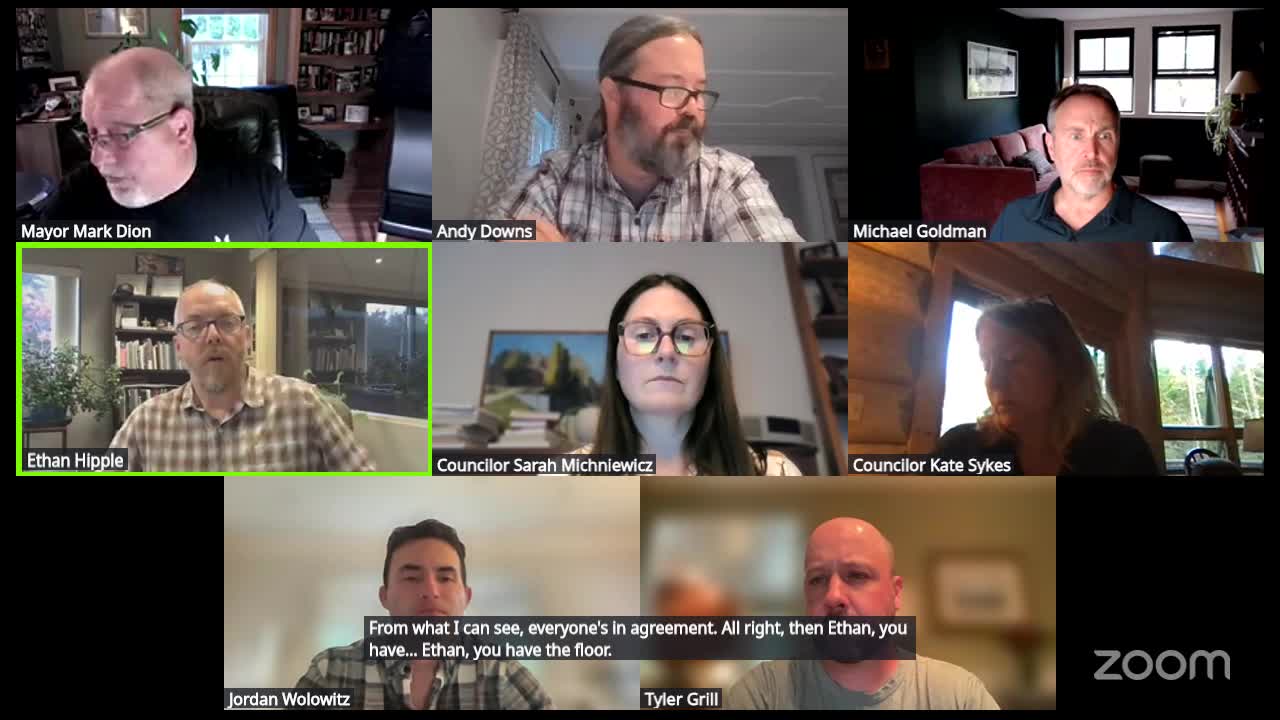
Ethan Hippel, director of Parks, Recreation and Facilities, told the committee the proposed agreement largely mirrors the 2025 festival footprint and schedule but includes a few substantive changes the committee had previously raised. The deal would require promoters to make an annual $100,000 donation to the Portland Parks Conservancy ("up to $600,000" over an initial three-year term if extended), Hippel said. The promoters also agreed to increase a per-ticket city fee from $1 this year to $1.50 next year and $2 in subsequent years after negotiation; staff said promoters would not accept a share of gross revenues but could accept the stepped per-ticket increase.
Several councilors pushed staff to clarify how the ticket fee would be applied. Sykes and others argued the contract should count "all tickets issued for admission" — including complimentary and discounted tickets — rather than only tickets "sold," to ensure the city is compensated for use of the park whether a ticket was paid for or given away. "If it benefits the community and it benefits people in Portland, I think that's fantastic. I just would like to see some transparency about that," Sykes said.
Corporation Counsel Michael Goldman confirmed that Section 35 of the current draft would allow the organizers to sublet or transfer rights with the prior written consent of the city manager, a point Councilor Sarah McNovich flagged as inconsistent with the committee memo stating the organizers "may not assign, pledge or sublet." Goldman said the wording could be changed to require city council approval if that is the committee's recommendation.
Noise enforcement and the size of the noise deposit were another flashpoint. Andy Downs, director of Public Assembly Facilities, said the deposit amount in the draft is drawn from the city's ordinance and that event staff and police non-emergency dispatch were used to route complaints during the festival. Staff took decibel readings during performances and worked in real time with sound engineers to cap levels when spikes occurred, Downs said. McNovich suggested raising the noise deposit as a stronger deterrent, proposing $5,000 instead of the current $1,000.
Neighbors who testified asked for wider disclosure of the festival’s 2025 finances and questioned shuttle routing through residential streets. "I have so many concerns... full transparency is absolutely necessary," said public commenter Devin Green, who said residents had compiled and consolidated neighborhood complaints.
Promoters Jordan Wolowitz and Tyler Gryll told the committee they needed timely clarity to book acts: Wolowitz said a delay past the scheduled council meeting on Oct. 20 risks pushing the project into 2027, and Gryll said the promoters lost money this year and likely will lose money next year without scheduling certainty.
Faced with split views among councillors — some favoring a one-year trial and others arguing a multiyear term provides stability to secure national touring acts and protect small-business contractors — the committee voted to postpone the item to a committee meeting next week so staff can pursue several specific pieces of follow-up and bring a revised packet back for committee consideration prior to the council packet deadline.
What’s next: staff will negotiate with the promoters on the committee’s prioritized items — clearer language on ticket accounting, possible revision of the transfer/assignment clause, community engagement commitments, and noise-deposit levels — and return to the HECD committee for a follow-up vote before the item proceeds to the full City Council.