
Orange County Schools outlines three‑year AI roadmap; board questions safeguards and bias
Get AI-powered insights, summaries, and transcripts
Subscribe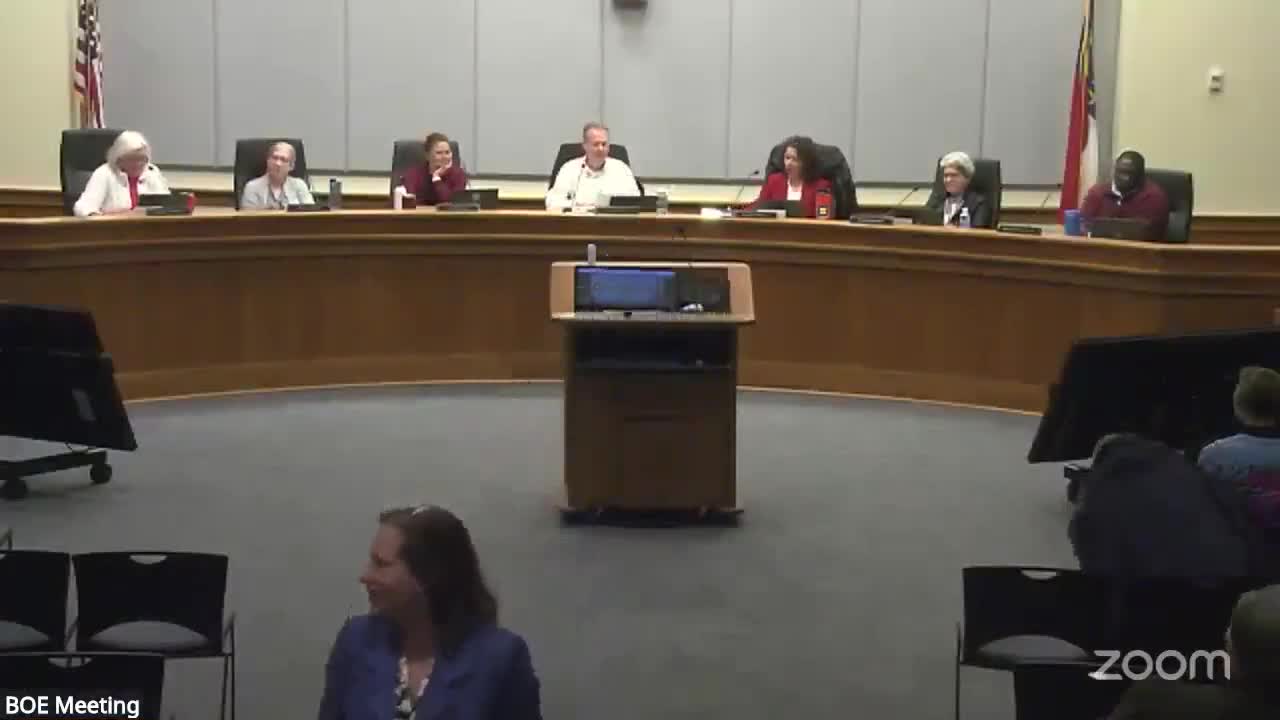
Summary
Digital learning coaches described a three‑year AI integration roadmap focused on training, vetted tools and staged classroom use. The presentation named ChatGPT, Gemini and Canva as examples used during prep and emphasized vetting, grade‑level readiness, and a curated list of approved tools; trustees pressed staff on safeguards, vendor choice and potential bias.
Paige Horton, the district’s digital learning coach, told the Orange County Board of Education the district has developed a three‑year plan to integrate artificial intelligence into classrooms and staff practice while emphasizing caution.
Horton opened with a definition: AI as technology that performs tasks that typically require human‑like reasoning and generative AI as systems that create text, images, code or video. She disclosed that “tools like ChatGPT, Gemini, and Canva were used to support the refinement of language and for the design and development of the visual elements of this presentation,” and said all use followed district AI guidelines and North Carolina Department of Public Instruction recommendations.
Horton summarized research and local indicators: she cited a national figure that “86% of students are already using AI for schoolwork” and a RAND study reporting about 18% of teachers nationwide use AI in instruction; Horton argued these gaps justify structured rollout, teacher training and vetted tools. The district’s roadmap focuses on Year 1 foundation work (training, policies, pilot vetting), Year 2 expansion of effective pilots, and Year 3 broader implementation.
Trustees asked for concrete safeguards and examples. District staff described a layered approach: initial blocking of broad generative AI in 2022 transitioned to selective unblocking for vetted staff tools, vendor vetting rubrics, reliance on state guidance, curated approved‑tool lists (examples named included Amira, Magic School AI, Gemini, and district‑licensed Canva features), and train‑the‑trainer sessions for digital learning coaches.
Board members raised concerns about potential algorithmic bias and impacts on student learning and cognition. Miss Smiley cited research suggesting overreliance on generative tools can weaken deep learning and asked how the district will monitor effects on critical thinking; district staff responded that explicit instruction and cognitive‑theory training for teachers will precede and frame AI use, and that AI is not intended for novice learning.
The board requested follow‑up on parent outreach and explicit examples of safeguards; staff agreed to explore parent training through the family academy and to present more detailed evaluation metrics as pilots proceed. No formal policy changes were adopted at the meeting.