Get Full Government Meeting Transcripts, Videos, & Alerts Forever!
Get email alerts on the Fossil Fuel Free Expansion topic
No spam. Unsubscribe anytime.
Somerville and other cities press Legislature to expand fossil‑fuel‑free building pilot
Summary
Mayors, city councilors and legislators urged the Joint TUE Committee to expand the fossil‑fuel‑free building demonstration from 10 to 20 communities and to approve Somerville’s home‑rule petition enabling local net‑zero standards, arguing local data shows all‑electric new construction can be cost‑competitive and advance equity goals.
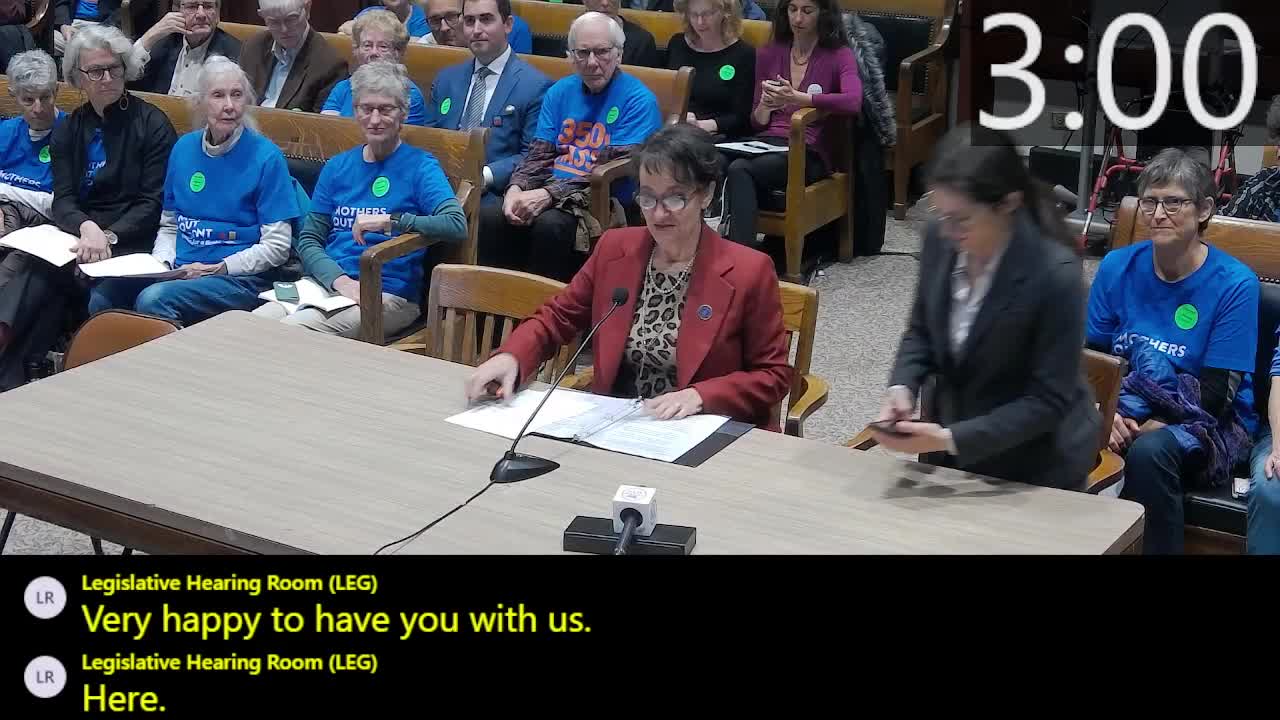
Mayors and municipal leaders from Somerville, Salem, Newton and Worcester told the Joint Committee on Telecommunications, Utilities and Energy on Oct. 31 that the legislature should expand the fossil‑fuel‑free building demonstration program to allow more communities to opt into stricter all‑electric building standards.
"All of Somerville wants the fossil‑fuel‑free program," Mayor Katiana Ballantine told the committee, urging lawmakers to approve House Bill 3449 and Senate Bill 2292 and to accept her city’s home‑rule petition, House Bill 4035, to authorize Somerville to adopt net‑zero emission standards for new construction and major renovations. Ballantine said the Department of Energy Resources recommended continuing the demonstration and that Somerville — which she described as an environmental justice community with 32,000 housing units and about 66% renters — can provide detailed data from its permitting systems.
The petitioners and municipal officials argued that expanding the demonstration would produce a broader set of real‑world data on cost, housing impacts and construction practices. "We would be happy to share the results of four studies," Christine Blaise, Somerville’s director of the mayor’s office of sustainability and environment, said, pointing to state and independent analyses showing electric construction is generally on par with mixed‑fuel construction.
Supporters said the pilot cap left ready communities out of the initial cohort. Representative Mike Connolly, who testified for H3449, described Somerville’s experience seeking inclusion after the original 10 slots were assigned and urged the committee to allow more municipalities to participate so lessons learned are more representative.
Local councilors and city staff cited specific municipal outcomes: Jeff Cohen, Salem Ward 5 councilor, said Salem’s specialized code and related local ordinances have not inhibited housing production and can help deliver both affordable housing and emissions reductions. Mark Sandeen of Lexington highlighted recent affordable housing projects built to passive‑house and all‑electric standards and said developers there report cost parity or savings once teams gain experience.
Advocates and municipal speakers also framed the issue as an equity matter: several witnesses noted that communities with higher climate vulnerability and heavier housing pressures — described repeatedly in testimony as environmental justice communities — have not been proportionally included in the demonstration and should be given an opportunity to participate.
Why it matters: proponents say expanding the demonstration would give the state a larger, more diverse dataset on construction costs, electrification implications for housing supply, and the performance of all‑electric buildings across different municipal contexts. Committee members repeatedly asked for apples‑to‑apples cost comparisons and were offered municipal data and written submissions from Somerville, Cambridge and others.
What’s next: the committee took testimony but recorded no vote. Witnesses pledged to provide additional cost and performance data; supporters asked the committee to report the bills favorably so more communities can join the pilot and pursue local climate and housing goals.