Get Full Government Meeting Transcripts, Videos, & Alerts Forever!
Get email alerts on the Overgrowth And Rodent Ordinances topic
No spam. Unsubscribe anytime.
Medford councilors advance review of overgrowth and rodent-control drafts; keep revisions in committee
Summary
Councilors reviewed a new overgrowth ordinance and updates to the city's rodent-control ordinance, debated solicitor edits and enforcement language, and voted to allow the ordinance sponsor to finalize minor edits with staff and the city solicitor before returning the drafts to committee.
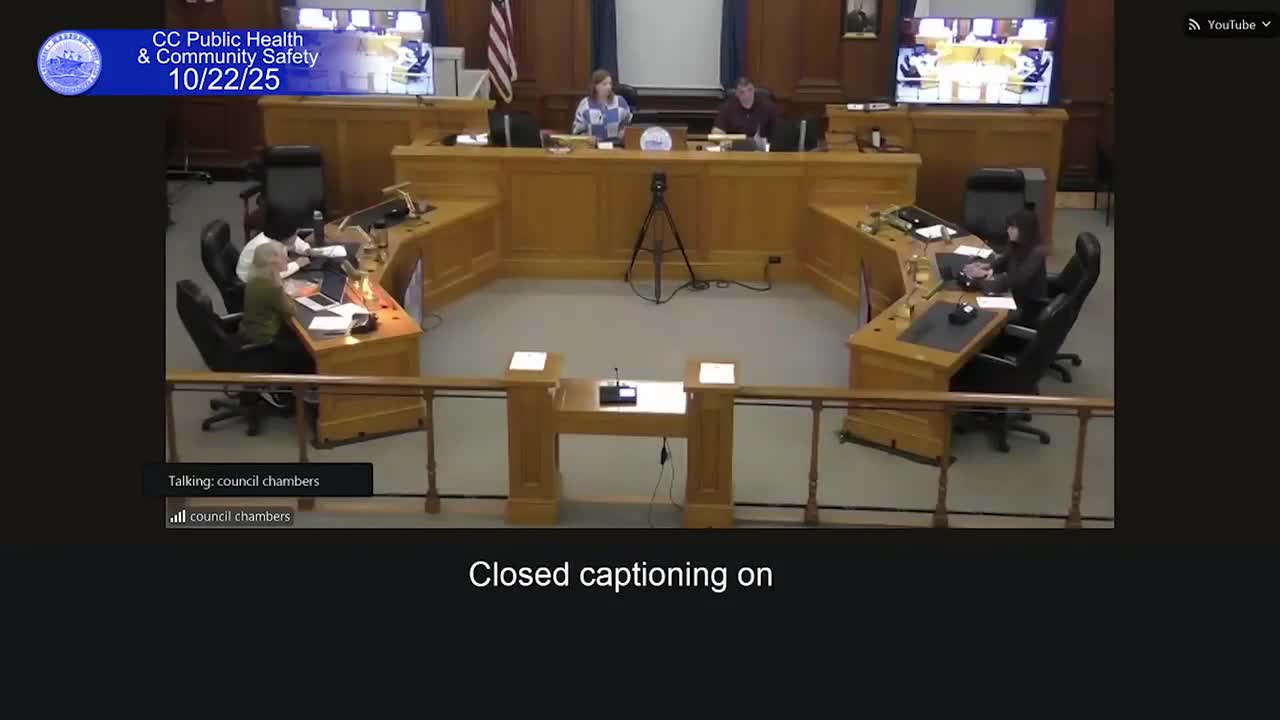
Vice President Councilor Collins led a committee discussion on draft ordinances meant to strengthen Medford City's ability to address private-property overgrowth and rodent infestations and to direct associated fees and fines into a rodent-control revolving fund.
Collins told colleagues the overgrowth ordinance would allow the Board of Health to act when vegetation or conditions on private property create impediments to the public right-of-way or provide harborage for rodents. She said the proposed enforcement ladder begins with a written warning for a first offense, a $50 fine for a second offense and $100 for a third or subsequent offense, and that penalties collected would be deposited into the rodent-control account.
The committee reviewed the city solicitor's redline. Collins summarized solicitor Kevin Foley's main suggestions: renumbering the ordinance, avoiding unnecessary definitions, and shifting detailed operational requirements and some technical prohibitions into Board of Health regulations rather than codifying them directly in municipal code. Foley questioned whether the city could practically or legally enforce prohibitions on specific plant species on private property unless the plant growth created a demonstrable public-health hazard.
Councilors raised concerns about overbroad language and the potential for unfair enforcement. Councilor Syng and Councilor Callaghan urged staff and sanitarians to help craft clearer thresholds and examples so the ordinance targets substantial, sustained public-health hazards rather than short-lived or unavoidable conditions. Sanitarian Raven recommended consulting the state sanitary code (105 CMR 410) and housing code language when defining triggers such as stagnant water or other health hazards.
DPW Commissioner McGiburn requested time to review the draft for potential duplication with existing public-right-of-way enforcement, noting DPW currently enforces sidewalk obstructions and can issue fines. Director O'Connor flagged operational drafting items in the rodent-control redline, including references to transfer stations not applicable to Medford and recommended separating fees for food establishments versus food-processing or storage facilities.
Collins noted the drafts also propose updated fee schedules and discussed a previously considered provision to replace damaged compost bins for seniors; the solicitor's redline removed that provision and Collins said she would follow up to determine whether the item should be retained as regulation or ordinance.
Councilor Collins moved to review solicitor Foley's redline, incorporate minor language tweaks, work with Director O'Connor and Commissioner McGiburn on other edits, resubmit the updated drafts to the solicitor for additional review, and keep the papers in committee for further refinement. Councilor Callaghan seconded the motion; the committee voted in favor and the motion passed (vote tally not recorded in the transcript). The committee subsequently voted to adjourn.
Next steps: Collins and director-level staff will reconcile the solicitor's redline with operational guidance from DPW and the Board of Health, verify the municipal code language that governs whether fines (as well as fees) may be deposited into a revolving account, and return revised drafts to the solicitor and committee for a future meeting.