
Growers and residents push Trinity County to review cultivation tax; board agrees to ad hoc and staff analysis
Get AI-powered insights, summaries, and transcripts
Subscribe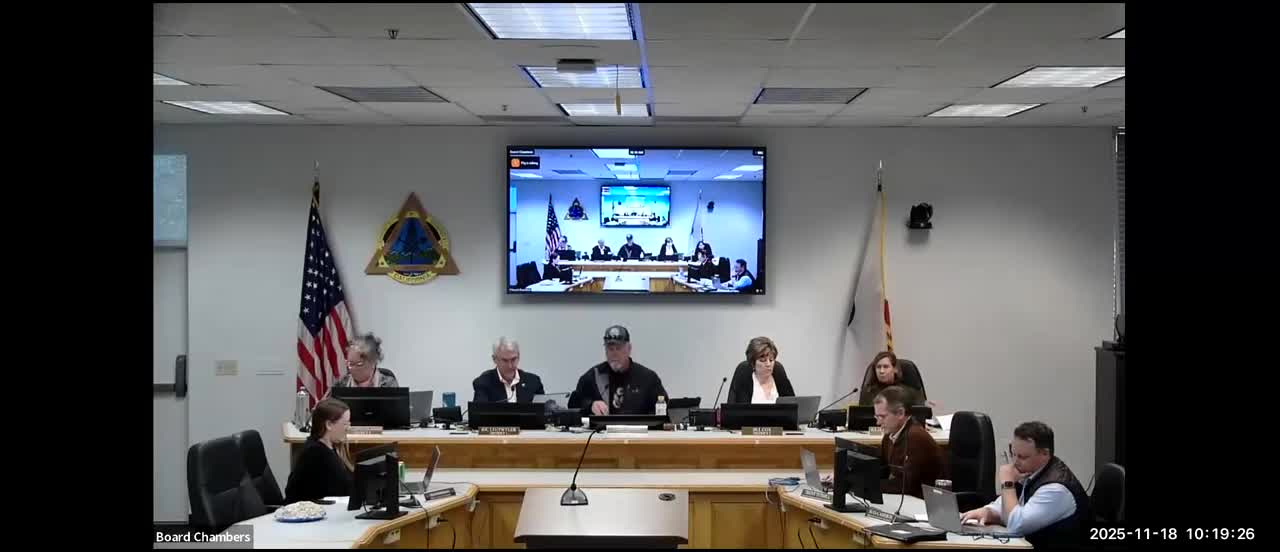
Summary
Multiple public commenters urged the board to repeal or reduce Trinity County—s cannabis cultivation tax. In response, supervisors agreed to pursue staff analytics and form a short ad hoc committee to gather industry input and report back.
During the public-comment period on Nov. 18, a string of growers and residents urged the Trinity County Board of Supervisors to put the county—s cannabis cultivation tax on a near-term agenda for reduction or repeal.
Nicholas Holiday of Burnt Ranch, who identified himself as a long-time grower, called the tax "predatory," saying it exceeded his annual payroll costs and penalized operators trying to move into the legal market. "This tax is detrimental to every one of us small farmers," Holiday said. Several other callers, including Liza Wisniewski (Junction City), Ben Miller and John Brower, described wholesale price collapses, returns of product to growers, and cited recent reductions in neighboring counties such as Humboldt.
Supervisors responded by acknowledging the economic stress described by callers and debating options. Several board members suggested staff perform a focused analysis (including an examination of the tiered trimming rate and renewal fees) and recommended forming a short ad hoc committee to solicit industry input and provide public-facing outreach. The board—s plan is for staff to present analytics at the December meeting or at an early 2026 meeting and for the ad hoc to collect field perspectives so the board will be prepared with options ranging from temporary reductions to targeted relief if warranted.
Outcome: Board directed staff to analyze the cultivation tax and agreed to form a short ad hoc committee to gather input from cannabis operators; timing for formal agenda action was left to staff and the chair.
Next steps: Staff analytics on tax structure, renewal fees and revenue impacts; ad hoc to convene industry representatives and report back to the board prior to any ordinance changes.