Residents warn of unintended consequences in Glynn County zoning rewrite — density, ADUs, lot merges and enforcement
Loading...
Summary
Public commenters at Glynn County’s Nov. 17 meeting raised concerns that draft zoning and subdivision changes could increase density in Farm/Agriculture (FA) districts, weaken conservation protections, force lot mergers when building footprints change, raise costs for compliance (surveys and site plans), and lack clear rules for nuisance livestock and homelessness.
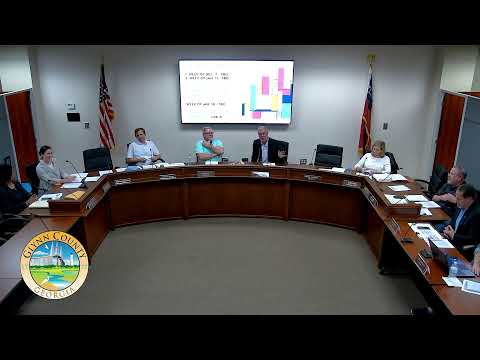
Several Glynn County residents used the Nov. 17 public hearing to warn that aspects of the proposed zoning and subdivision rewrites could produce unintended consequences for property rights, neighborhood character and enforcement.
Beth Benning, a resident and small-business owner, opposed many rezoning proposals in pages 140–151 of the draft, saying some densities appeared comparable to much larger neighboring counties and that projected population growth assumptions did not match what local school officials and others reportedly observe. "When I look at the numbers... I see 6 to 7 houses per acre in some of these zones," she said, and added she was "highly opposed" to the rezoning as presented.
Kat Montgomery, a South Coast advocate with 100 Miles, recommended keeping Forest Agriculture (FA) density low (ideally 1 dwelling per 5 acres, 10 preferred), moving large facilities currently listed as permitted in Conservation Preservation (CP) to special-use review, and reducing CP maximum site coverage from 60% to 5% to better align permitted uses with district intent.
Several residents asked about a draft provision (section 3.10.4) that would merge contiguous parcels under common ownership when a structure’s footprint increases. Commissioners and staff explained the merge is meant to prevent circumvention of regulations by building across adjacent lots; staff noted the rule is triggered by structural additions that enlarge the footprint. Speakers raised mortgage and fairness concerns if owners with mortgages could not re-title lots as readily as cash buyers.
Public commenters and commissioners also flagged practical and cost concerns: whether routine additions (driveways, small sheds or patio pavers) would require new surveys or development plans to show site coverage, the potential expense of accurate plans for building-permit submissions, and enforcement capacity. Staff said accurate site-coverage calculations would be required on plans submitted with building permits but that not all small projects necessarily require a formal plat or survey.
Other community issues raised included a lack of explicit homeless-shelter provisions in the draft zoning code (staff said shelters would continue to be enabled through plan development [PD] approvals where appropriate) and long-standing neighborhood nuisance problems from livestock and roosters, which some residents said current codes do not adequately address.
What happens next: Commissioners and staff encouraged commenters to submit detailed written alternatives (as 100 Miles had done) and attend the upcoming town halls; staff said some sections could have later effective dates to allow compliance time and outreach.