At‑sea whiting processing EFP triggers broad advisory concern over salmon bycatch, enforcement and monitoring
Loading...
Summary
A proposed EFP to allow at‑sea processing of Pacific whiting south of 42°N drew praise from industry for potential efficiency and climate resilience, but advisory bodies — CDFW, GMT, EC, GAP, SAS, STT — flagged risks to ESA‑listed salmon (Klamath Chinook, CCC/SONC coho), enforcement gaps (VMS/processor accounting), observer/genetic sampling needs, and suggested tightened terms (14‑coho cap, May 15 start, haul‑by‑haul reporting).
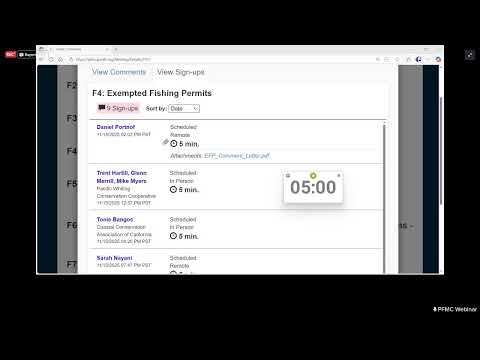
A high‑profile exempted fishing permit application from the Pacific Whiting Conservation Cooperative proposing to allow at‑sea processing of Pacific whiting between 40°10' and 42°N generated extensive advisory review and public comment.
Industry proponents argued the EFP would test whether allowing processing closer to southern aggregations can maintain utilization during southerly distributions, improve quality, and provide fishery‑dependent data to inform management. They proposed precautionary measures including a 500‑Chinook sector cap and a 14‑coho cap in the EFP area, 100% genetic sampling of salmon, a May 15 start date for EFP activities (later than the May 1 season start), and limits on sector processing (no more than 35% of a sector’s annual whiting allocation in the EFP area).
Advisory bodies and state agencies raised technical and conservation concerns: - California Department of Fish and Wildlife (CDFW) said the EFP, as drafted, risks inconsistency with the groundfish biological opinion because the whiting fleet’s distribution has shifted south and could increase interactions with southern ESUs of Chinook and coho; CDFW recommended a hard coho cap consistent with the 2017 biological opinion (14 coho), stronger real‑time stock identification or operational limits, and clarified VMS/processing accounting. (CDFW preferred additional enforceable terms.) - The Enforcement Consultants emphasized that processing vessels, catcher processors and motherships are effectively codependent and urged that processors and motherships be named signatories; they also flagged VMS declaration and state regulation compliance issues and recommended clear, enforceable reporting and operational provisions. - The GMT, GAP and GAAP recommended clearer measurable objectives, EFP‑specific reporting codes in observer and landings databases, strict declarations and delivery rules to ensure EFP catch is attributed correctly, haul‑by‑haul processing safeguards, and a referral of the application to technical committees for additional review. - The Salmon Advisory Subpanel (SAS) and Scientific and Technical Team urged caution, noting Klamath River fall Chinook remain overfished and that salmon populations remain fragile; SAS opposed approving the proposed EFP at this time and suggested reconsideration only after stocks show stronger status and additional analysis.
Industry representatives told the council they will revise their application to incorporate many recommended safeguards during the public‑review process and asked the council to forward the application for public review so that the agency and advisory bodies can work through details, genetic sampling timelines and any needed regulatory consultation.
Next steps: The council has the option to refer the EFP back for further technical review, to recommend modifications before public review, or to forward the application to NOAA for its administrative review (including ESA consultation and observer/monitoring planning). Advisory bodies recommended development of EFP‑specific data codes, observer protocol adjustments, and an in‑season reporting framework to ensure bycatch caps and set‑aside accounting work as intended.