Get Full Government Meeting Transcripts, Videos, & Alerts Forever!
Get email alerts on the Housing Inclusionary Fee topic
No spam. Unsubscribe anytime.
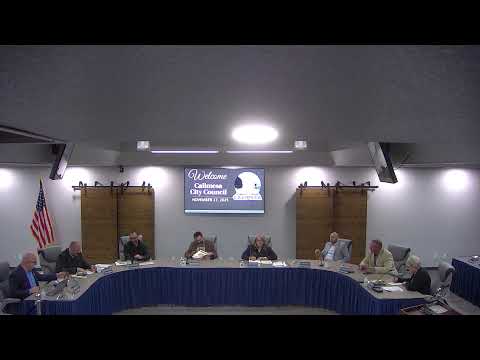
Calimesa council introduces ordinance to add in‑lieu fee for inclusionary housing, sets proposed $3.40/sq ft
Summary
The Calimesa City Council voted to introduce Ordinance 4‑18 to add an in‑lieu fee option to the city's inclusionary‑housing rules and adopted a resolution establishing a proposed fee of $3.40 per finished living square foot; council members said funds would be used only for affordable‑housing planning, site acquisition or construction and would not count toward state construction milestones until units are built.
Calimesa Planning Director Kelly Lucia told the City Council on Monday that Ordinance 4‑18 (ZTA 25‑02) would add an in‑lieu fee as a fourth method to comply with the city's existing inclusionary‑housing requirement, which applies to residential projects of 20 units or more and requires 5% of for‑sale units be reserved at 80% of area median income.
The proposed ordinance would let developers elect to pay a fee at building‑permit issuance instead of building required units on‑site, building off‑site or dedicating land; the fee amount would be set by council resolution. Lucia said a PlaceWorks fee study recommended $3.40 per finished living square foot. Using that figure, she said, a roughly 2,400‑square‑foot home would carry an in‑lieu fee of about $8,100 and a 20‑unit project would generate roughly $165,000 to a dedicated housing fund.
Lucia said the in‑lieu fund would be separate from the general fund and would grow until an affordable‑housing developer proposed a project. ‘‘We would partner with an affordable‑housing developer who could then do a project elsewhere in the city,’’ she said. She and PlaceWorks staff said the money could support planning, design, site acquisition and construction for affordable housing but not public‑safety equipment or unrelated technology.
Councilmembers asked whether the money would count toward the city’s state housing obligations; staff said it would not until actual housing units are constructed and receive the state’s required approvals. Staff pointed to precedent in nearby cities that use similar fees and said the council would consider requests from developers for use of the funds as they arise.
After discussion, a councilmember moved to waive full reading and introduce Ordinance 4‑18 and to adopt City Council Resolution 2025‑55 establishing the in‑lieu fee amount. The motion was seconded and approved by voice vote, recorded as unanimous, 5‑0. Councilmembers noted a second reading and follow‑up materials will be provided before final adoption.
What happens next: the ordinance will return for a second reading and the council will consider any amendments and the final resolution setting the fee schedule. Staff said any use of funds would come back to council for approval unless state law preempts local controls.