Get Full Government Meeting Transcripts, Videos, & Alerts Forever!
Get email alerts on the Water Quality topic
No spam. Unsubscribe anytime.
Elkhart Board of Works fines two permittees after mercury exceedances, offers one‑year review
Summary
The City of Elkhart’s Board of Works found Antwerp Township in violation for exceeding local mercury limits and assessed a $500 penalty with the option to seek reimbursement after one year of compliance; a separate Meinhardt permit exceedance was discussed, offered split‑sampling and investigation, and ultimately tabled for further review.
The City of Elkhart Board of Works on Nov. 4 assessed a $500 penalty against Antwerp Township after staff reported repeated mercury exceedances in Antwerp’s self‑monitoring reports. Board pretreatment staff said Antwerp submitted another sample showing elevated mercury levels; Antwerp representatives said they do not know the source and are continuing investigations and testing.
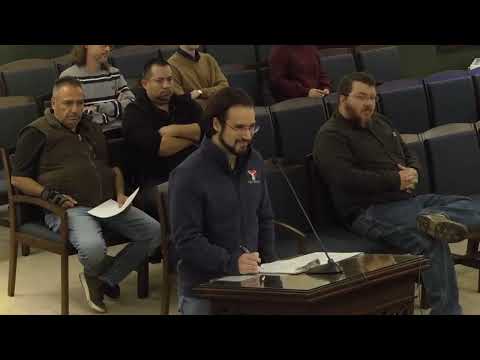
John Bosler, a member of the Antwerp Township wastewater board, told the board: “We’re not we don’t know what it is… we’re gonna meet with Mr. Brown… we have some ideas on where it might be coming from, but we have no solid evidence.” Pretreatment staff said they will meet with Antwerp next week and coordinate additional testing and lab review.
Board members voted to find Antwerp in violation of local mercury limits and to assess a $500 penalty. The board amended the motion to allow Antwerp to request reimbursement of the fine after one year subject to documented compliance. The amended motion passed unanimously.
Separately, the board considered a mercury exceedance attributed to Meinhardt (permit #252025‑03). Dave Pirtle, president and CEO of Meinhardt, said the company is not processing metals, is not conducting soldering, and has no known internal source for mercury. He asked for the ability to inspect the sampling manhole and to perform split sampling with the city. Pretreatment staff confirmed they could conduct split sampling and noted that follow‑up sampling showed Meinhardt back in compliance for mercury.
Pretreatment staff and Meinhardt representatives described possible upstream sources, including groundwater contributions or changes in analytical methods, and limitations on the city’s televising equipment for laterals. Jason Simnick, the city’s project manager, agreed to help prepare a sketch of upstream and downstream connections to clarify what lines tie into the sampled manhole. After extended discussion the board tabled the Meinhardt enforcement action to allow additional investigation and coordinated split sampling.
Board staff emphasized the technical difficulty of addressing mercury in wastewater: the plant can monitor and sample for mercury, but it is effectively removed only by eliminating sources rather than treatment. The board’s actions: Antwerp was found in violation and fined $500 with a one‑year reimbursement review; Meinhardt’s item was discussed, staff agreed to split sampling and further investigation, and the matter was tabled pending additional information.
What’s next: Antwerp will meet with pretreatment staff and may return next year to request the fine be returned if it maintains compliance; the Meinhardt item will return to the board after further sampling and a review of upstream connections.