
Appeals court weighs standing claim over noise, dust and vibration from earth‑removal permit
Get AI-powered insights, summaries, and transcripts
Subscribe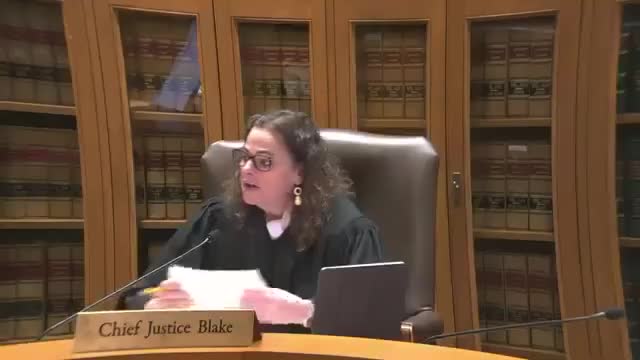
Summary
Appellant argues unrebutted affidavit describing daily dust, vibration and a truck route with "140 trucks a day" created particularized harm that the trial court misread; appellee disputes proximity and factual sufficiency. Panel took matter under advisement.
Boston — The Appeals Court heard argument in a land‑use dispute in which abutters claim earth‑removal operations cause particularized harms that should permit certiorari review of a municipal permit.
Margaret Sheehan, appearing pro bono for appellants Kelsey and Brian Koppenrath, told the court that the trial judge erred in concluding the alleged harms were generalized rather than particularized. Sheehan pointed to the unrebutted affidavit of homeowner Brian Koppenrath describing daily noise and vibration, dust that "occasionally blows onto" his property, and truck traffic the complaint alleges as "140 trucks a day" operating up to 10 hours per day.
Jeffrey Rue, counsel for the permittee Pontiff Cranberries Inc., said maps and the administrative record show the nearest active work was roughly three‑quarters of a mile from the Coppenrath residence, with wooded buffers between the site and the home; he urged the court to respect the high bar for standing in certiorari review and to uphold the trial court’s legal application.
The justices questioned both sides about whether the lower court made legal errors in treating facial motion practice (12(b)(1) and 12(b)(6)) and whether the affidavit and complaint, taken as true at that procedural stage, were nonetheless insufficient to show a particularized injury. Counsel debated published and rule‑23 decisions the parties invoked, and whether the appellate division’s reasoning created an insurmountable barrier to relief for neighbors who experience localized impacts from large‑scale earth‑removal operations.
The panel took the matter under advisement for written disposition.