
Residents and nearby business ask Aurora council to revisit Kwik Trip 'Station 60' car-wash approval
Get AI-powered insights, summaries, and transcripts
Sign Up Free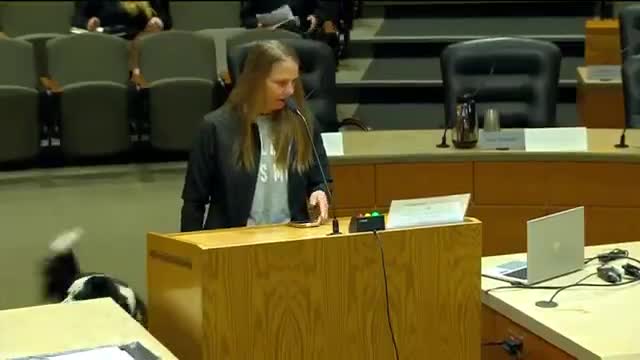
Summary
Neighbors near Airport and Colfax and a competing car-wash owner urged Aurora City Council to call up planning approval for project 1800993 (Station 60), citing lack of neighborhood notice, traffic and noise concerns, alleged design-code violations and questions about water use and appeals process.
Jennifer Strautman, an Aurora resident in Ward 2, asked the council to overturn approval of project no. 1800993, known as Station 60 at Airport Boulevard and Colfax Avenue, saying "proper public notice was not done" and that neighbors were "blindsided" by the application. Strautman told the council the neighborhood already has "several car washes in the immediate area" and that another facility would worsen noise, trash, traffic and safety for Norfolk Glen.
Emily Baratta, founder and owner of Gleam Car Wash in Aurora, told the council she formally requests that the body "call up the conditional use approval granted by the planning commission for the proposed Kwik Trip car wash at Airport and Colfax." Baratta cited city code section 1.146-5.3.1 and said no neighborhood meeting took place; she also argued the site's proximity to parcels owned by Kwik Trip makes appeals by nearby property owners effectively impossible under the staff's interpretation.
Elijah Williams, a self-described car-wash designer and engineer, urged the council to call up the Planning Commission decision and cited what he called multiple design violations, including a car-wash tunnel oriented toward residences and a pay-station placed on the Colfax frontage that he said "is not allowed by Aurora's design standards." Williams said these were noted on earlier submissions and remain unresolved.
A young supporter of Gleam, identifying himself as Aiden, described the company as a local employer for neurodiverse staff: "Gleam Car Wash is a place where people with autism like me get a chance to work," he said, framing part of the owner's appeal in terms of local jobs and inclusion.
The speakers asked the council to remand the matter to planning staff or call up the commission's decision for a full hearing so the public record can include details about anticipated water use, design compliance and access to the appeals process. No formal council action to reopen or remand the specific project is recorded in the public-comment portion of the transcript; council members did vote later to extend the comment period so additional speakers could be heard.
If the council acts to call up the permit, the issues raised by residents and industry witnesses include whether required neighborhood outreach took place, whether design standards were met (pay-station location, tunnel orientation), how water use was calculated and whether the appeals pathway is accessible when multiple adjacent parcels are owned by the applicant.