
Appellate panel hears dispute over collateral estoppel after grand jury presentment in Knox County DUI case
Get AI-powered insights, summaries, and transcripts
Subscribe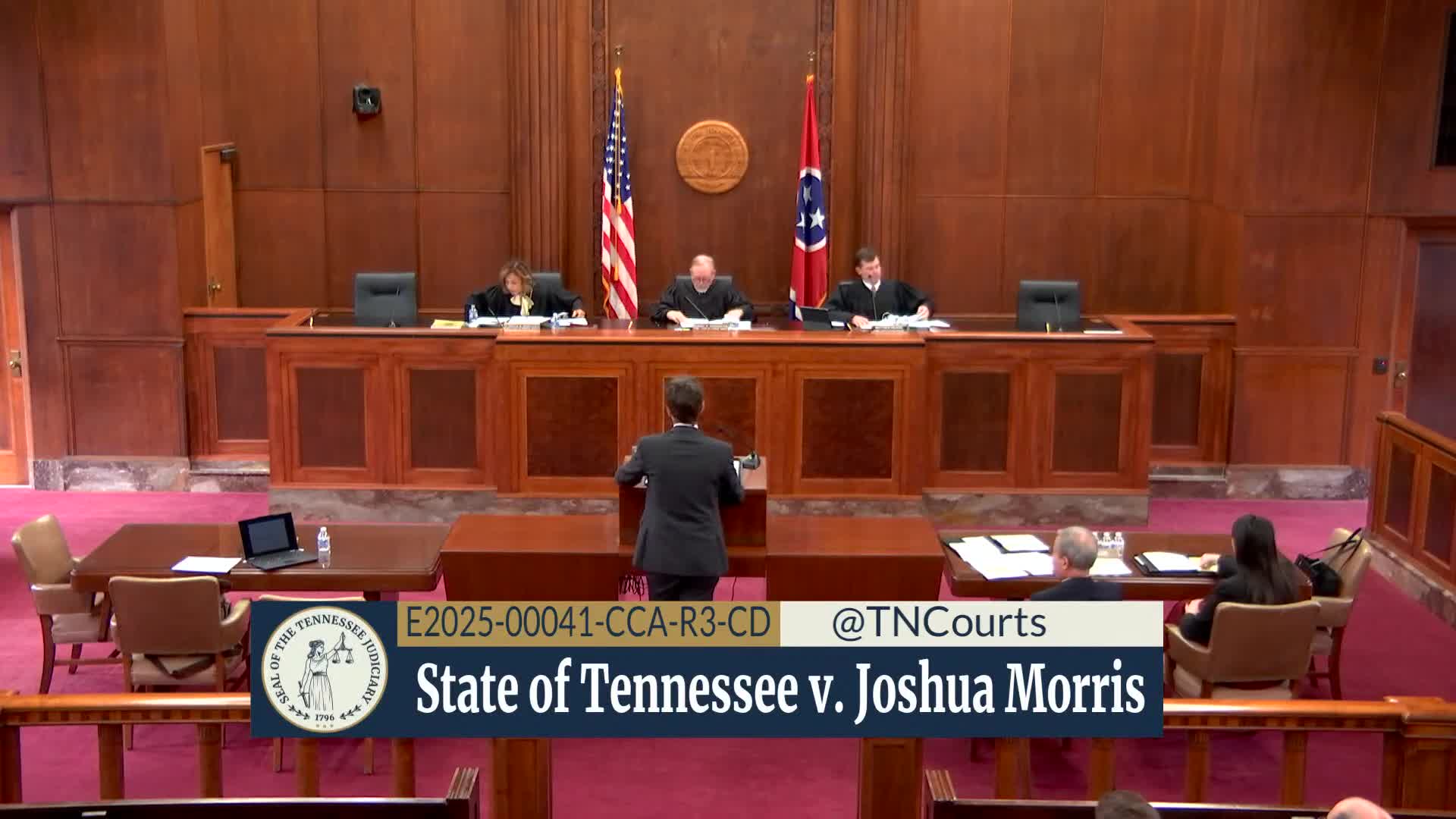
Summary
Attorneys argued whether a Knox County circuit court’s grant of summary judgment on an implied-consent issue can bar later criminal prosecution by collateral estoppel after a grand jury returned a presentment in March 2023. The state urged reversal; defense counsel said the civil judgment is final and preclusive.
An appellate panel heard competing arguments over whether a Knox County criminal prosecution should be blocked by collateral estoppel after a circuit court granted summary judgment in an implied-consent dispute tied to a driving-under-the-influence case.
Garrett Ward, representing the State of Tennessee, told the court the indictment returned by a March 2023 grand jury was a formal finding of probable cause and that the criminal-court dismissal based on collateral estoppel should be reversed. "The grand jury returned a presentment, and that is a formal finding of probable cause," Ward said, arguing that Tennessee law generally does not permit peeling back a grand jury's determination.
Ward outlined the case history: the matter began in Knox County General Sessions Court as a DUI prosecution that included an implied-consent allegation; the defendant appealed the implied-consent finding to circuit court and filed a Rule 56 motion challenging the implied-consent determination. Ward told the panel the grand jury returned a presentment in March 2023 while the implied-consent appeal was pending, and the circuit court granted summary judgment in favor of the defendant roughly 16–18 months after the presentment.
At the heart of the dispute is whether the issue decided in circuit court is identical to the narrow probable-cause inquiry required for implied-consent requests. Ward emphasized a doctrinal distinction: the implied-consent probable-cause inquiry asks what the arresting officer knew "at the exact moment" the request for a test was made, while a grand jury evaluates the totality of evidence the state can present. He urged the court that those are not the same issue for collateral-estoppel purposes.
Defense counsel responded that the circuit court's decision focused on whether the defendant had "physical control" of the vehicle and that the civil ruling was a final judgment that legitimately precludes later criminal proceedings on the same issue. Counsel also stressed procedural choices available to the state, saying the prosecutor "could have filed a motion to stay" or appealed Judge Stevens's decision within the applicable time frame, but did not do so. Defense counsel argued those choices left the civil judgment intact and available for use as a defensive collateral-estoppel bar.
The panel pressed both sides on discrete points of timing and record development: one judge asked how the criminal and civil matters were "separated" and whether the circuit court knew of the grand-jury presentment when it issued its order; another asked whether a grand-jury presentment should be treated as a final judgment for estoppel purposes. Ward conceded the circuit court's order may have been "overly broad," but argued that for collateral-estoppel purposes the criminal court can only be bound by findings necessary to the prior decision, and that a grand-jury presentment weighs heavily against using collateral estoppel to bar prosecution.
Defense counsel acknowledged an affidavit from the arresting officer was excluded from the Rule 56 proceedings for procedural reasons and said the state had remedies (reconsideration or appeal) that it did not pursue; counsel said the defensive use of collateral estoppel followed the conclusion of the circuit-court appeal window.
Both sides framed the dispute around well-established doctrines: the five elements of Tennessee collateral estoppel (which a party invoking estoppel must satisfy), the narrower probable-cause inquiry governing implied-consent refusals, and the relative finality of grand-jury presentments versus civil-court judgments. The panel did not issue a ruling from the bench.
The court heard the parties' arguments and will decide based on the oral argument and the written record. The appeal turns on whether the circuit court’s summary-judgment order and the grand-jury presentment are legally identical and whether the state’s procedural options affected the availability of collateral estoppel in the criminal prosecution.