
Elmhurst residents press council for local limits on ICE activity; council cites legal limits, offers coordination
Get AI-powered insights, summaries, and transcripts
Sign Up Free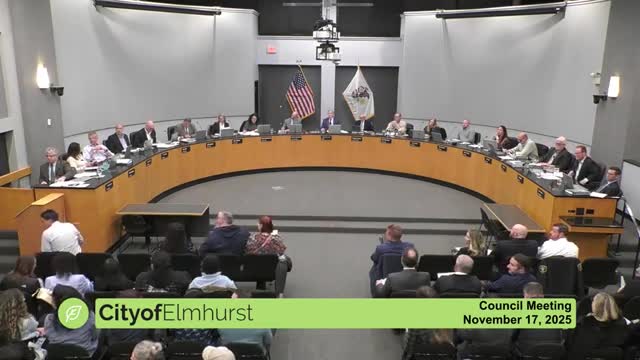
Summary
Dozens of Elmhurst residents urged the City Council Nov. 17 to adopt local protections against federal immigration enforcement after recent detentions; the council acknowledged concerns but said it must comply with state law and the Illinois Trust Act and took no ordinance vote.
Dozens of Elmhurst residents told the City Council on Nov. 17 that recent immigration enforcement activity in the suburbs has left families, students and small businesses fearful and urged the city to adopt local protections.
Brenda Garcia, a fifth-ward resident and small-business advocate, proposed a local "welcoming city" ordinance modeled on measures in Chicago, Evanston and Oak Park that would prohibit municipal employees from inquiring about immigration status, restrict information-sharing with federal agents and require valid judicial warrants before agents access city facilities. "The city of Elmhurst can build upon existing state law by adopting a local welcoming city ordinance and actively educating residents and business owners about their constitutional rights," Garcia said.
Why it matters: multiple speakers described encounters they said were conducted by federal agents — including reports of arrests near worksites and at residences — and asked the council to clarify how local institutions (police, schools, hospitals) should respond. Several speakers urged ordinances to restrict federal agents’ use of city property and to declare schools, hospitals and places of worship as locations where enforcement should not occur without judicial warrants.
Residents framed their appeals as urgent public-safety and community-health concerns. "Our kids are scared. Our businesses are scared," said Jen Kovacs, who described parents and children anxious about encounters near bus stops. Matt Barkas asked the council to adopt a coordinated safety plan with the Elmhurst Police Department and District 205 and to "designat[e] our schools, hospital and places of worship as ICE free zones." Christopher Hannah told the council that recent enforcement he described as "preventative arrest orders" raised constitutional concerns and invoked historical parallels.
Mayor’s reply: the mayor acknowledged the concerns and apologized publicly to a constituent for failing to respond to earlier emails, but cautioned that the city has limited authority over federal enforcement. He emphasized Elmhurst will comply with the Illinois Trust Act — which limits local cooperation with federal immigration enforcement — and said the police will not participate in immigration activities. The mayor said city staff and the police chief are coordinating with District 205 and other local agencies and urged residents to call 911 in emergencies.
What the council did: the City Council listened to the public comments but did not take a vote on an ordinance or resolution related to immigration enforcement at the Nov. 17 meeting. Several residents asked the council to pursue education and reporting mechanisms and to require identification for non-undercover agents operating in the city; those steps were discussed but not formalized.
Claims and legal context: speakers referenced state law limits on agent access to treatment areas and said courts in the Chicago area have required agents who are not undercover to display identification. The council cited the Illinois Trust Act as governing the city’s obligations and said some requests, such as banning federal agents from private property, exceed municipal authority.
Next steps: the mayor said staff will continue to document incidents, coordinate with the police chief and District 205, and monitor the situation. Council members who want ordinances or resolutions would need to bring specific proposals forward for committee debate; no such formal proposal advanced at this meeting.
Ending: residents left the meeting with a clear record of their requests; the council closed public comment and moved on to agenda business without voting on immigration-related ordinances.