Get Full Government Meeting Transcripts, Videos, & Alerts Forever!
Get email alerts on the Budget And Levy topic
No spam. Unsubscribe anytime.
Auburn council adopts mid‑biennial budget amendment and sets 2026 property‑tax levy
Summary
The Auburn City Council approved Ordinance 7,000, a mid‑biennial amendment to the 2025–26 budget, and Ordinance 7,003 to set the 2026 property‑tax levy at $25,843,584. A resident warned of a projected $15 million savings shortfall by 2029 and urged revenue or spending adjustments.
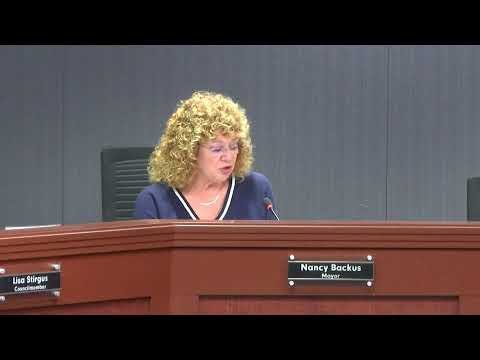
The Auburn City Council unanimously approved a mid‑biennial amendment to the 2025–26 budget and set the city’s 2026 property‑tax levy during its Nov. 17 meeting. Ordinance 7,000, described by Council member Baldwin as the third amendment for the biennium, adjusts capital project budgets, recognizes new grant awards and provides limited new budget authority; Ordinance 7,003 establishes the 2026 levy for general city operations at $25,843,584.
The council moved both measures by voice vote. Council member Baldwin moved to approve Ordinance 7,000 and Council member Traut Manuel seconded; the ordinance passed. Baldwin then moved Ordinance 7,003 and Council member Amer seconded; the levy ordinance passed, the council said, representing about a 1% increase over the 2025 levy.
The items were introduced after a public hearing on the budget amendment. Resident Ronnie Morgan told the council he had reviewed the mid‑biennial budget and raised specific concerns about the condition of the city golf course and its furnace. Morgan said the city’s packet projects a shrinking savings account and told the council, “by the time mayor Backus goes out in 2029, our city will have a $15,000,000 deficit in that account unless we add more money to it.” He urged the council to examine reductions before seeking new revenues.
Director Harris confirmed staff had reviewed the mid‑biennial adjustment at a prior study session, and Baldwin told colleagues the amendment mostly reallocates capital budgets and recognizes grant revenue so new spending is offset by new revenues. The council approved the consent agenda earlier in the meeting and heard the budget ordinance as part of that same legislative block.
The ordinances take effect as adopted; the council did not change the levy amount on the record. The city clerk will publish adopted ordinances and the levy certification will go forward for collection in 2026.