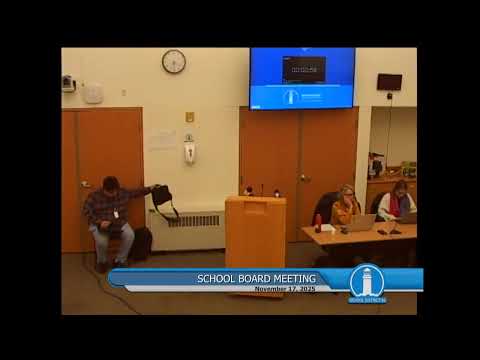
Evanston District 65 board deadlocks on school‑closure hearings after hours of public comment
Loading...
Summary
After more than 70 public commenters and extended presentations on financial models, the District 65 board failed to pass motions to open public hearings on multiple school‑closure scenarios; the board scheduled a special meeting to revisit the remaining option.
The Evanston CCSD 65 Board of Education spent a November meeting debating options to close schools as part of a broader rightsizing plan but failed to muster a majority to begin public hearings on multiple closure scenarios.
Superintendent Doctor Turner and district staff presented updated two‑school scenarios and refined financial models, telling the board that without action the district’s cash reserves and operating projections would deteriorate. “This is the time for vigorous and positive action,” Doctor Turner told the board as she framed closures as one part of a larger capital and sustainability plan.
The board considered three separate motions to authorize the statutorily required public hearings under the Illinois School Code. A motion to open hearings for a two‑school scenario (Kingsley and Willard) failed; an alternative two‑school motion (Kingsley and Lincolnwood) also failed. A third motion to open hearings for a single‑school closure (Kingsley only) ended in a 3–3 tie and did not pass. Following the votes, the meeting record shows that the board will reconvene at a special meeting this week to consider the remaining scenario.
Administration and a consultant from Student Centered Services presented the financial rationale for rightsizing, including projections that next fiscal year could see cash on hand dip toward 70 days if no action is taken and a multiyear need for millions in reductions. Tamara Mitchell, the district’s chief financial officer, outlined baseline assumptions used in the models and described projected transfers and capital needs tied to completion costs of the new Foster School.
The meeting included an extended public‑comment period. More than 70 speakers registered; parents, students, therapists and community groups gave competing testimony. Some speakers urged the board to close two additional schools to realize larger short‑term savings; others — including parents of students in bilingual two‑way immersion (TWI) and families of students with individualized education programs — urged the board to slow down and limit closures to reduce disruption. “These spaces are not extras. They are teaching environments,” said an occupational therapist who described how therapy rooms and sensory spaces are used for legally required services.
Board members repeatedly said the decision is difficult. Several members emphasized the need to balance fiscal responsibility with commitments to equity and special‑education supports, while others said not acting risks deeper financial harm. After the closure motions failed, the board adopted a separate truth‑in‑taxation resolution and approved a consent agenda including personnel items and bills.
Next steps: The board will hold a special meeting to take up the remaining closure option and to determine dates for the public hearings if the board moves forward. No final closure decision was made at the Nov. 17 meeting.