
Lake County hears workshop on community facilities district for Gwinnock/Gwynach mixed‑use project
Get AI-powered insights, summaries, and transcripts
Subscribe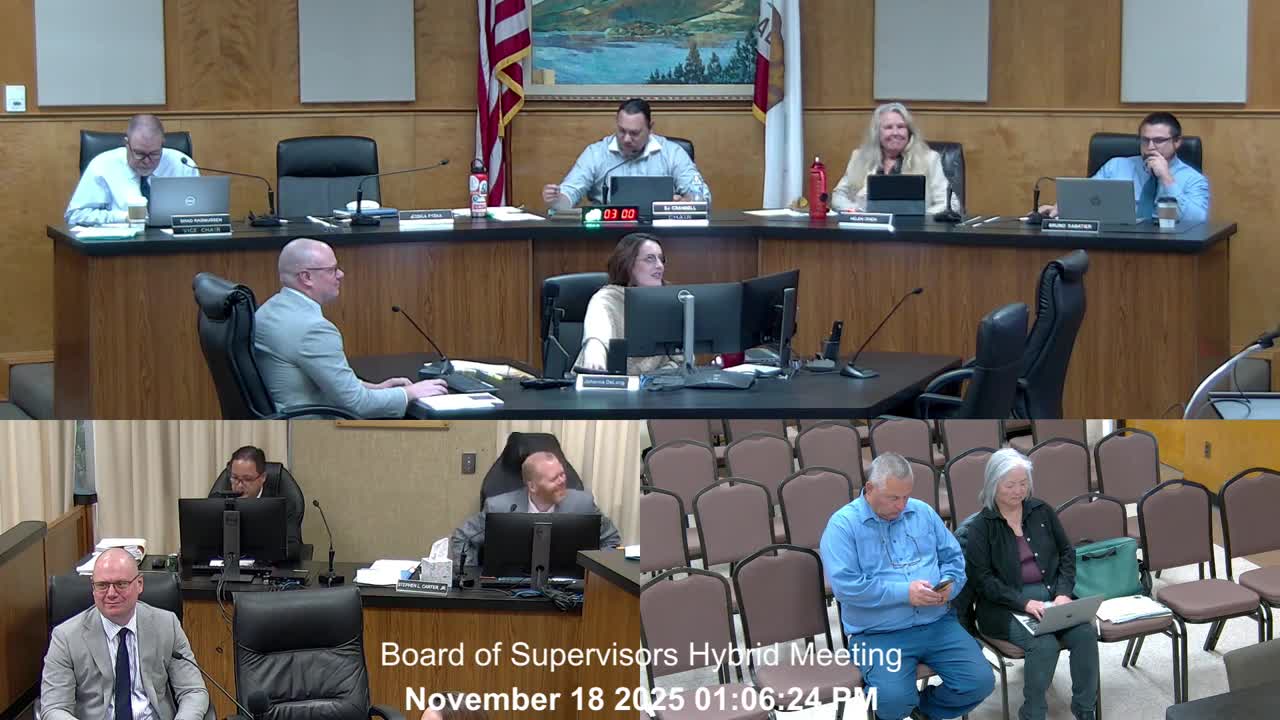
Summary
Developers and CSCDA representatives briefed the Board of Supervisors on using a community facilities district (Mello‑Roos) to finance infrastructure for the Gwinnock/Gwynach Mixed‑Use Project; presenters said CSCDA would be conduit issuer and the district’s bonds would be payable only from special taxes on project property. The board agreed to reconvene Dec. 9 to consider a resolution to authorize CSCDA to form the district.
Developers and municipal finance advisers told the Lake County Board of Supervisors on Nov. 18 they want the board to study and, at a later date, authorize the California Statewide Communities Development Authority to form a community facilities district (CFD) to fund infrastructure for the Gwinnock/Gwynach Mixed‑Use Project.
Deputy County Administrative Officer Ben Rickelman opened the workshop and introduced the developer team and consultants. Consultant Lou Feldman said CFDs — often called Mello‑Roos districts — are a tool to amortize upfront infrastructure costs across future property owners and to finance ongoing maintenance through special taxes. "We're trying to be as transparent as we can," Feldman said, describing the structure as "non‑recourse" to the county.
Bond counsel explained that CFD bonds are payable solely from annual special taxes levied on taxable property inside the district, and that the special tax formula must set a maximum annual levy and be disclosed to future owners. Presenters said the special tax requires a two‑thirds landowner or voter approval depending on who lives in the district. James Hamill of CSCDA described his agency’s role: if authorized, CSCDA would form the district, issue bonds on behalf of the county and handle ongoing administration and collection tasks. "We've never had a default," Hamill said of CSCDA‑issued districts across the state.
Developers and underwriters said bond investors will evaluate value‑to‑lien ratios and absorption risk; Hilltop Securities’ Todd Smith said the marketing approach would likely target institutional buyers for a project with early‑stage development risk. Developer Kevin Case said project work is advancing — permitting, mitigation and subdivision mapping — and the team is targeting an April start of construction.
Interim Public Works Director Lars Ewing and other staff asked presenters to ensure that the project team coordinates with all relevant agencies, including water and wastewater special districts, lighting districts, and the city of Lakeport, and to clarify which public agency would accept improvements after construction and how ongoing maintenance would be funded and administered.
No formal action was taken. Staff recommended, and the board agreed, to reconvene on Dec. 9 to consider a resolution authorizing CSCDA to serve as conduit issuer and begin the formal formation steps.