Get Full Government Meeting Transcripts, Videos, & Alerts Forever!
Get email alerts on the Tax Policy topic
No spam. Unsubscribe anytime.
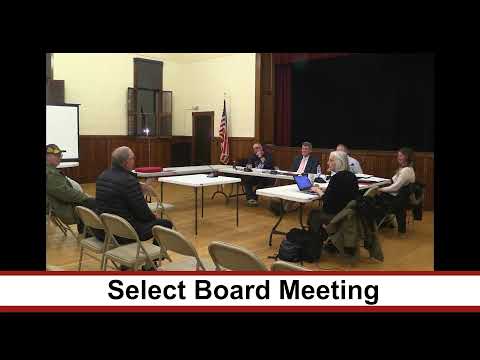
Select Board reviews proposed increases to elderly property-tax exemptions, asks for fiscal impact analysis
Summary
Staff proposed raising Swansea's elderly property-tax exemption amounts and income limits (e.g., 65—674 exemption from $25,000 to $50,000; 80+ from $40,000 to $100,000). Board members supported revisiting the rates but asked staff to model fiscal impacts and to return with consistent, dated budget documents before placing changes on the warrant.
Town staff presented a review of Swansea's elderly exemption schedules (adopted in 2009) and proposed a set of increased exemption amounts and higher qualifying income limits to reflect inflation and rising assessments.
Staff said the current exemptions are $25,000 (age 65—674), $35,000 (75—679) and $40,000 (80+), and recommended raising the amounts to $50,000, $75,000 and $100,000 respectively; staff also proposed increasing the income limits for eligibility (single household from $24,000 to $35,000; married from $32,000 to $60,000). The presentation noted the Consumer Price Index has risen more than 40% since 2009 and that neighboring towns have varied exemption levels.
Board members discussed the distributional effects, potential increases in tax burden for other residents, and the requirement that any change be approved by voters if placed on the warrant. One member emphasized the need for staff to provide an analysis showing the likely number of additional exemptions and the tax-rate impact before the board commits to specific numbers. Several members suggested reviewing exemptions every five years or after major reassessments.
Why it matters: Changes to exemption amounts and eligibility would shift the property-tax burden across the tax base and affect residents on fixed incomes. The board emphasized balancing relief for elderly residents with overall municipal revenue needs.
Next steps: Staff will provide a fiscal-impact estimate that models how proposed exemptions and income limits would change revenue and tax rates and will return to the board with consistent budget documents and a recommended timetable for including any proposal on a warrant.