Get Full Government Meeting Transcripts, Videos, & Alerts Forever!
Get email alerts on the Procurement topic
No spam. Unsubscribe anytime.
City procurement director outlines contract routing, bid thresholds and timing
Summary
Johnny Crawford, Montgomery's procurement director, walked the council through the contract routing process, emphasizing departmental requirements, a mandatory contract routing sheet, and Alabama bid‑law thresholds such as $30,000 for competitive bids and guidance for recurring services.
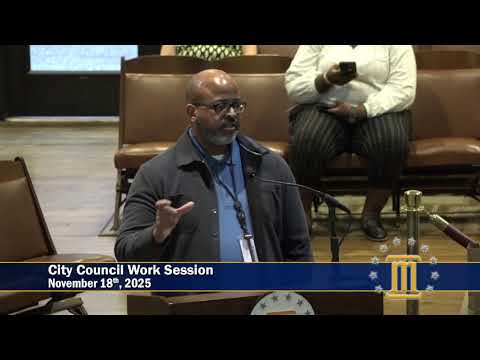
Johnny Crawford, procurement director for the city of Montgomery, told the work session the procurement process begins at the department level with requirement development and a statement of work, then proceeds to public posting (RFP/IFB), bid evaluation, award and a mandatory contract routing sheet before legal and mayoral signature.
Crawford underscored Alabama bid law thresholds: "$30,000 is the bid law amount," he said. Crawford explained that purchases above $30,000 generally require competitive bidding and that recurring services that total more than $30,000 in a year should be placed on contract. For very small, district‑level projects, council members were told that single‑quote purchases should generally be under $10,000 to avoid bid complications and that documentation should be submitted through Munis for invoicing.
On timing, Crawford said the solicitations typically remain posted 30 days to allow bidders to respond and that total time from requirements development to award can range from weeks to months depending on complexity. He also described an instance where a sanitation solicitation closed with a single bid and required reworking of the statement of work before resoliciting.
Crawford emphasized that each contract passes through multiple reviews — procurement, accounting, CFO (for fund availability), city attorney (for legal sufficiency) and finally the mayor — and that these steps collectively add oversight but also processing time.