Get Full Government Meeting Transcripts, Videos, & Alerts Forever!
Get email alerts on the Infant Mortality topic
No spam. Unsubscribe anytime.
Committee approves $500,000 agreement to fund First Year Cleveland infant-mortality work
Summary
The Finance Committee approved an emergency ordinance authorizing up to $500,000 over two years for First Year Cleveland to continue programming aimed at reducing infant mortality; presenters outlined neighborhood outreach, mini-grants and a new resource app.
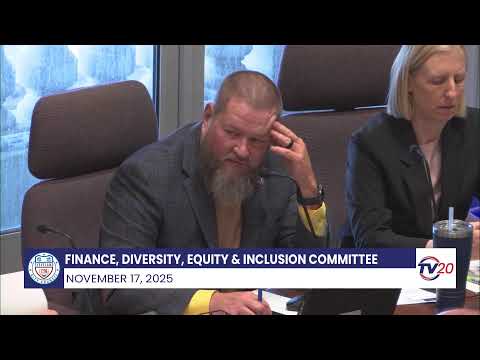
The Finance, Diversity & Inclusion Committee on Nov. 17 approved an emergency ordinance authorizing the director of public health to enter into an agreement with Case Western Reserve University to fund First Year Cleveland for professional services to continue its infant-mortality programming. The ordinance authorizes up to $500,000 over two years and was presented as a general-fund allocation.
Angela Newman White, executive director of First Year Cleveland, described the program’s mission and activities. “The organization's primary...purpose is to do policy advocacy and fundraising,” White said, and noted that First Year Cleveland functions as “a connector, protector, and activator” for community-based providers. Between 2022 and 2024, she said, the organization invested more than $7,000,000 in local organizations serving pregnant and parenting women and has distributed over 40 mini-grants of up to $5,000 to local providers.
The city’s Director of Public Health provided preliminary 2024 data and pushed the urgency of the agreement. He reported: “The overall infant mortality rate is 13.6, the African American infant mortality rate is 19.7, the Hispanic/Latino rate is 9.1 and the white infant mortality rate is 5.8” (rates as presented by the director). He said the Healthy People 2030 goal is 5 per 1,000 live births and that Cleveland remains above that benchmark. The director also reported roughly 3,800 births in the city in 2024 and over 12,000 births in the county.
Council members asked how the program reaches families in neighborhoods rather than relying only on centralized sites. White said First Year Cleveland has developed a network of community-based and faith-based organizations, hosts regular community partner gatherings (about 80 people on average, 110 registered for an upcoming event), and launched a web/app resource called First Year Connects that allows providers and families to identify services by location. She said First Year Cleveland also provides direct funding, technical assistance (including Medicaid-billing optimization) and capacity building.
After questions about funding sources and neighborhood outreach, the committee approved the ordinance. The chair asked First Year Cleveland staff to provide printed or electronic materials for a council newsletter and sign the ordinance paperwork.
The committee did not record a roll-call vote tally in the transcript; the chair announced that the ordinance had been approved and asked presenters to sign on.