
Wilsonville council weighs park maintenance utility fee as budget pressures mount
Get AI-powered insights, summaries, and transcripts
Subscribe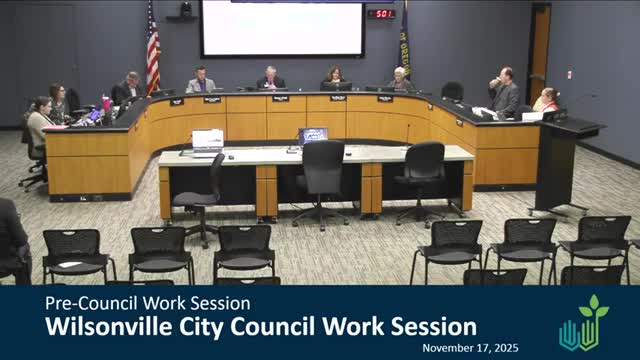
Summary
Councilors heard a consultant model for a potential parks maintenance utility fee that would generate $776,000–$2.8 million depending on scope, producing a single-family monthly charge ranging roughly $6.37–$22.87; staff were directed to refine nonresidential assumptions and community outreach before any decision.
The Wilsonville City Council on Nov. 17 reviewed a proposal to create a dedicated parks maintenance utility fee aimed at stabilizing funding for park operations and capital needs as the city adds acreage.
Parks and Recreation Director Chris Ammerman introduced the proposal and framed it against a general fund that supports parks alongside public safety and other services. Finance Director Keith Catco told council the general fund began FY2026 with an audited balance of about $18,600,000 (as of 06/30/2025) and projects roughly $29,000,000 in revenue for the current fiscal year, with property tax comprising about $13,000,000 of that total.
Consultant Zach Hazel of FCS Group described the fee methodology used in other Oregon cities: a revenue requirement divided by a measured customer base expressed as “residential equivalents” (REs). Hazel presented three example revenue targets — $776,000, $1.8 million and $2.8 million — and showed the per-RE monthly rate would range from $2.35 to $8.44. Applied to single-family homes, the scenarios produced monthly fees of approximately $6.37 at the low end and $22.87 at the high end. Hazel also said the analysis uses an employee-to-resident equivalency of 0.05 for nonresidential uses.
Councilors focused on who should bear the cost and when the city should act. Council President Berry and others said the fee is intended to preserve current levels of service as new parkland is added; Councilor Cunningham warned the timing may be poor after recent large sewer and stormwater increases and suggested referring a final proposal to voters. Cunningham said, "This is a hard sell right now" given recent utility-rate increases.
Several councilors pressed staff to capture a larger nonresidential share and questioned how a fee assessed via utility billing would reach out-of-town workers who use Wilsonville parks. City Attorney staff cautioned that some user-fee approaches can affect recreational-immunity protections and will require legal review.
Staff summarized the direction from council: refine customer and employee data that determine the RE denominator; examine the 0.05 nonresidential assumption and provide a range of options for that component; model fee scenarios between the lower and middle examples rather than adopting the highest scenario; and plan community outreach to test public appetite, including the possibility of a ballot referral. No formal fee was adopted at the meeting.
The council requested further analysis on administration, enforcement costs and options to capture more of the nonresident contribution to park use. Staff said they will return with updated modeling and outreach proposals for council consideration.