
CVTA finance committee weighs using interest income for a contingency fund to cover project overruns
Get AI-powered insights, summaries, and transcripts
Subscribe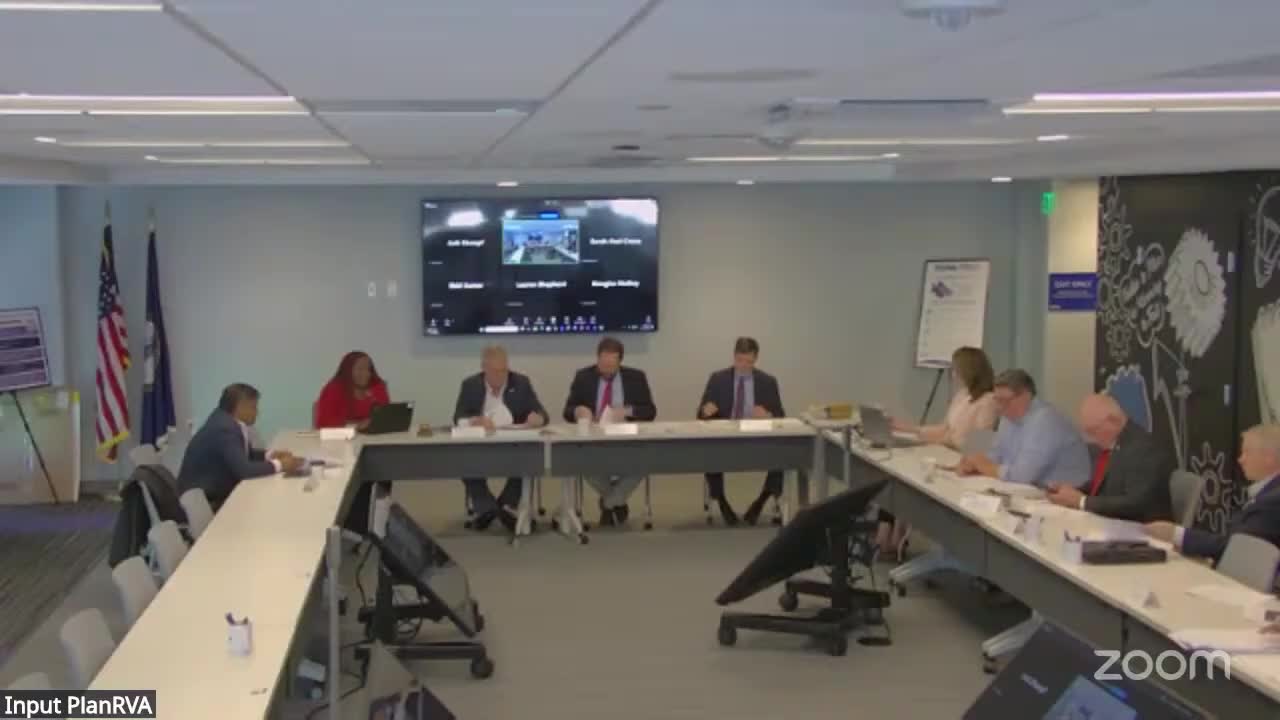
Summary
At a Nov. 12 finance committee meeting, staff presented five options for using CVTA interest income; committee members largely favored creating a contingency line to cover cost escalations while staff recommended folding interest into the regional fund to help round‑4 projects. TAC and finance will study formulas and report back in December.
At its Nov. 12 finance committee meeting, the Central Virginia Transportation Authority reviewed five staff options for applying interest income earned on regional funds and debated whether to target those earnings to immediate project funding or to a contingency reserve for cost escalations.
Staff present(ed) a memo outlining five choices: keep status quo; fold available interest into the 35% regional fund for biannual project rounds; invest in longer-term instruments such as CDs; distribute interest directly to projects via a new selection process; or create a contingency line to support existing regional commitments. Staff said option 2 (allocating interest to the regional fund) was the short-term recommendation because it would help fund round‑4 projects currently under evaluation, while option 5 (a contingency line) was described by several members as a longer-term fix to prevent otherwise‑funded projects from stalling when costs escalate.
Mister Parsons, presenting the memo, said the authority currently shows roughly $13,100,000 in available interest income (figure provided in the packet) and reviewed prior commitments from interest earnings, including $5,500,000 previously allocated, $1,500,000 set aside for Fall Line Trail wayfinding, and a $4,000,000 commitment used in June to cover a shortfall for Design Build 2 so that procurement could proceed without rebidding. "We started working with TAC to identify potential uses in terms of project needs," Parsons said, describing the sequence that led to prior allocations.
Several committee members argued for option 5, saying that a contingency account would allow the authority to address unforeseen escalation and keep projects moving. One member cited the June action to fill a shortfall for a design‑build contract as precedent for using interest income to avoid project delays. "We will continue to see large balances strictly because of how long it takes for projects to come out of the ground," a committee member said, urging a mechanism to avoid stalling projects already approved.
Staff said they could develop formulas and multi‑year scenarios to operationalize a contingency approach and recommended further work with TAC and fiscal partners (Chesterfield County and PFM) to model returns and timing. Next procedural steps: TAC will continue discussions; staff will report back to TAC Dec. 8 on eligibility and scoring (for the off‑cycle Diamond District request) and to finance Dec. 10; the full authority could take final action at its Jan. 23 meeting.
The committee did not vote on an option; members asked staff for more analysis on how to apply interest income over the authority’s 6–7 year programming horizon and for a scenario that reconciles the working capital reserve (currently shown as $18,000,000) with available earnings.
The finance committee is scheduled to meet again Dec. 10; TAC is expected to meet before that and bring refined recommendations.