
Lenox trustees hear pleas to delay Felton Elementary closure as legal counsel says no recusal required
Get AI-powered insights, summaries, and transcripts
Subscribe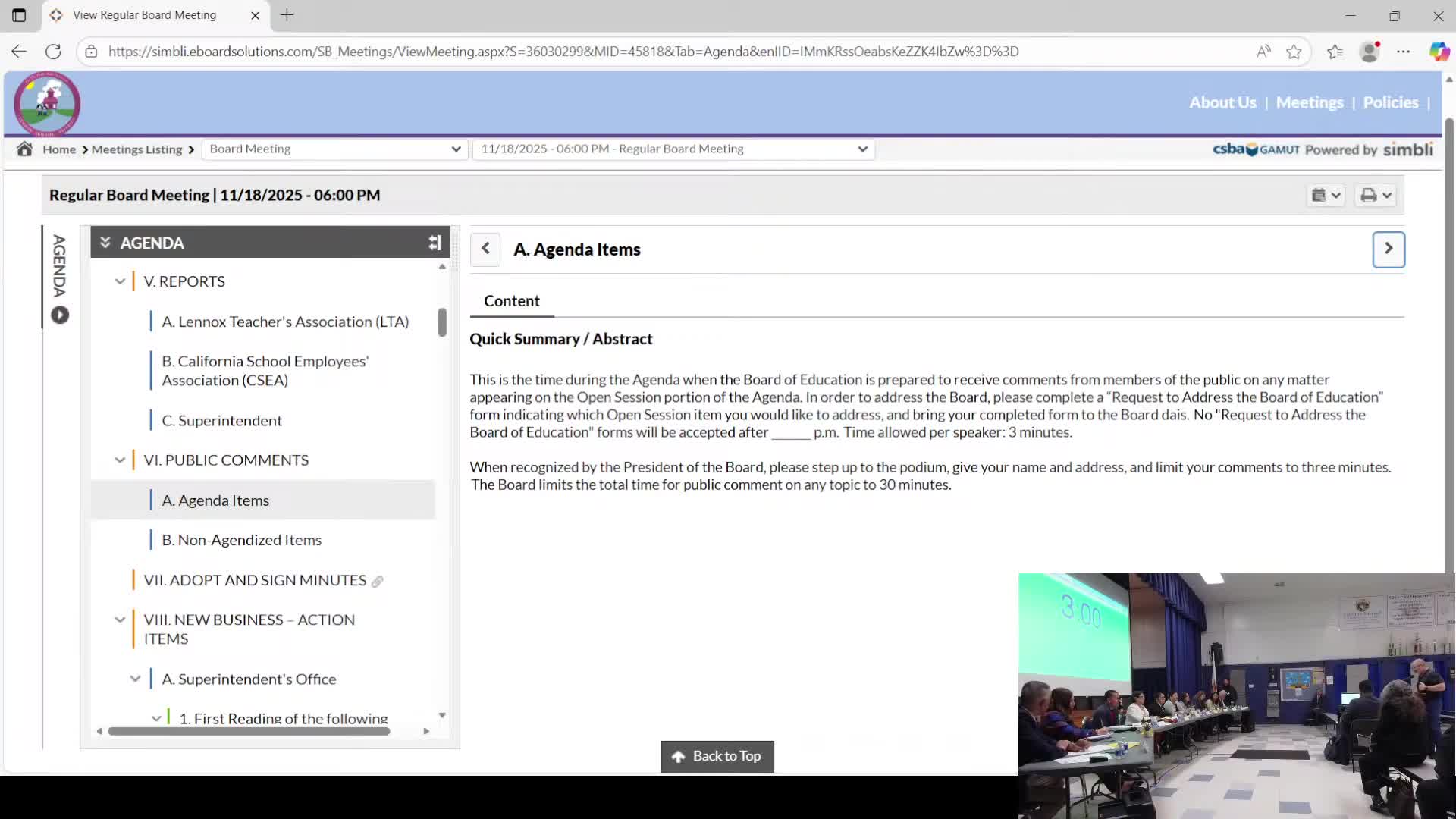
Summary
Public commenters urged the Lenox Board of Trustees to delay a proposed Felton Elementary closure, citing student-centered transition needs and special-education concerns; district legal counsel advised a trustee that state conflict-of-interest rules do not require recusal because the recommendation does not include selling the property.
At a Lenox Board of Trustees meeting, dozens of community members urged the board to delay its proposed closure of Felton Elementary, arguing the timeline is rushed and would harm students, families and specialized programs.
Legal counsel reviewed the Political Reform Act and advised trustees that, based on the current recommendation to close and repurpose Felton as a community center rather than sell the site, a board member’s private property holdings in Lenox would not create a material financial conflict requiring recusal. Trustee Vargas said he had consulted counsel and intends to participate in the December 16 discussion and vote.
Speakers during the public-comment period described concrete concerns. David Marcellini, speaking on behalf of Hannah Fierro Marcelini, said the process felt predetermined and urged the board to listen to alternatives and explore more student-centered options. Anna Vero Marceleti, who served on the superintendent’s advisory committee, cited AB 1912’s student-centered standard for consolidation and said committee minutes show members felt the decision was predetermined. A special-day-class teacher asked the board to delay the closure for one year so staff could develop cohort-based transition plans, conduct visiting days and prepare receiving campuses for students with complex needs.
Other families described economic and scheduling hardship if students are moved, including later start times that reduce household income and the burden of uncertain transportation and program continuity. Commenters also asked for more detailed fiscal information: they said Felton’s reported net negative revenue was presented without a line-item breakdown of maintenance and repair costs, and they questioned what concrete savings the district expects from an immediate closure.
Board members and staff responded with procedural clarifications. Legal counsel stressed that an “appearance” of conflict under public comment does not, by itself, meet the legal threshold for disqualification under state law if there is no distinguishable material effect on a board member’s property. Superintendent staff reiterated that the consolidation recommendation is on the December agenda and that the district had provided a study session on consolidation with demographic and special-education analyses.
The board did not make a final closure decision during the meeting; the transcript records the advisory, the public comments and the legal opinion but does not record a final vote on Felton during this session.