Get Full Government Meeting Transcripts, Videos, & Alerts Forever!
Get email alerts on the Land Bank topic
No spam. Unsubscribe anytime.
Council committee advances land-bank ordinance after MACOG outlines $20 million regional housing plan
Summary
The council’s land use committee voted to forward ordinance 87-25 enabling a regional land bank after a Michiana Area Council of Governments presentation on a $20 million Lilly Endowment implementation grant to fund a land bank and a revolving attainable housing fund to address vacant properties and build affordable units across three counties.
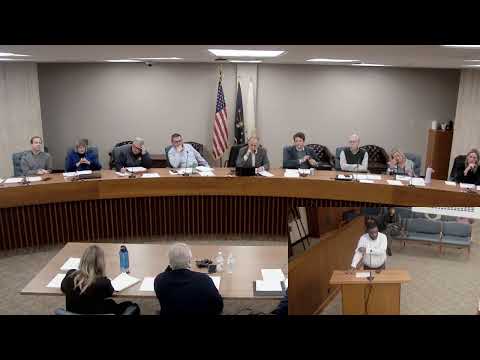
The St. Joseph County Council’s land use committee voted to send ordinance 87-25 favorably to the full council after a presentation from the Michiana Area Council of Governments (MACOG) on a regional housing initiative funded by a $20 million Lilly Endowment implementation grant.
James Turnbull, MACOG executive director, described two linked programs: a regional land bank to shorten the time it takes to move vacant or abandoned properties back into productive ownership, and the Regional Attainable Housing Investment Fund (RAHEAF), a revolving loan and grant program intended to support nonprofit developers. "The land bank would look to improve vacant and abandoned properties, and hopefully get at least 325 of those across the next five years back into positive reuse," he said. The RAHEAF is projected to help create 500 to 600 new attainable housing units over five years.
Turnbull outlined how the $20 million award would be deployed: roughly $3 million into an endowment to support administration, $2.5 million for direct grants to nonprofit developers, and the remainder as revolving capital to fuel below-market loan products managed by a certified CDFI. He said Intend Indiana, a community development financial institution, would administer lending products; MACOG would staff the land bank through a 501(c)(3) with a 7–9 member board to provide public oversight. "We approached the Lilly Endowment for a regional implementation grant…we were successful as a region in receiving a full award of $20,000,000," Turnbull said.
Council members asked technical questions about tax-sale mechanics, title clearing, geographic coverage and protections for property owners. Turnbull said the land bank would still respect property-owner rights and would use a public website, developer agreements, and performance timelines to ensure responsible redevelopment. On tax relief, he said the ordinance could allow the county to authorize a 25–50% property tax abatement for up to five years for buyers of land-bank properties, but that the final choice would rest with the council.
Supporters said the program would streamline a process that can be unpredictable and costly for municipalities and private developers; presenters pointed to examples of existing land banks and similar programs in Indiana and Ohio. Opponents voiced questions about scope and potential municipal impacts; no final vote on the interlocal resolution establishing the land bank was taken tonight. Ordinance 87-25 moves to the full council with a favorable recommendation. The full council is expected to consider the related resolution and interlocal agreement in a future meeting.