
Farmington board wrestles with state safety funds tied to waiver of legal privilege
Get AI-powered insights, summaries, and transcripts
Subscribe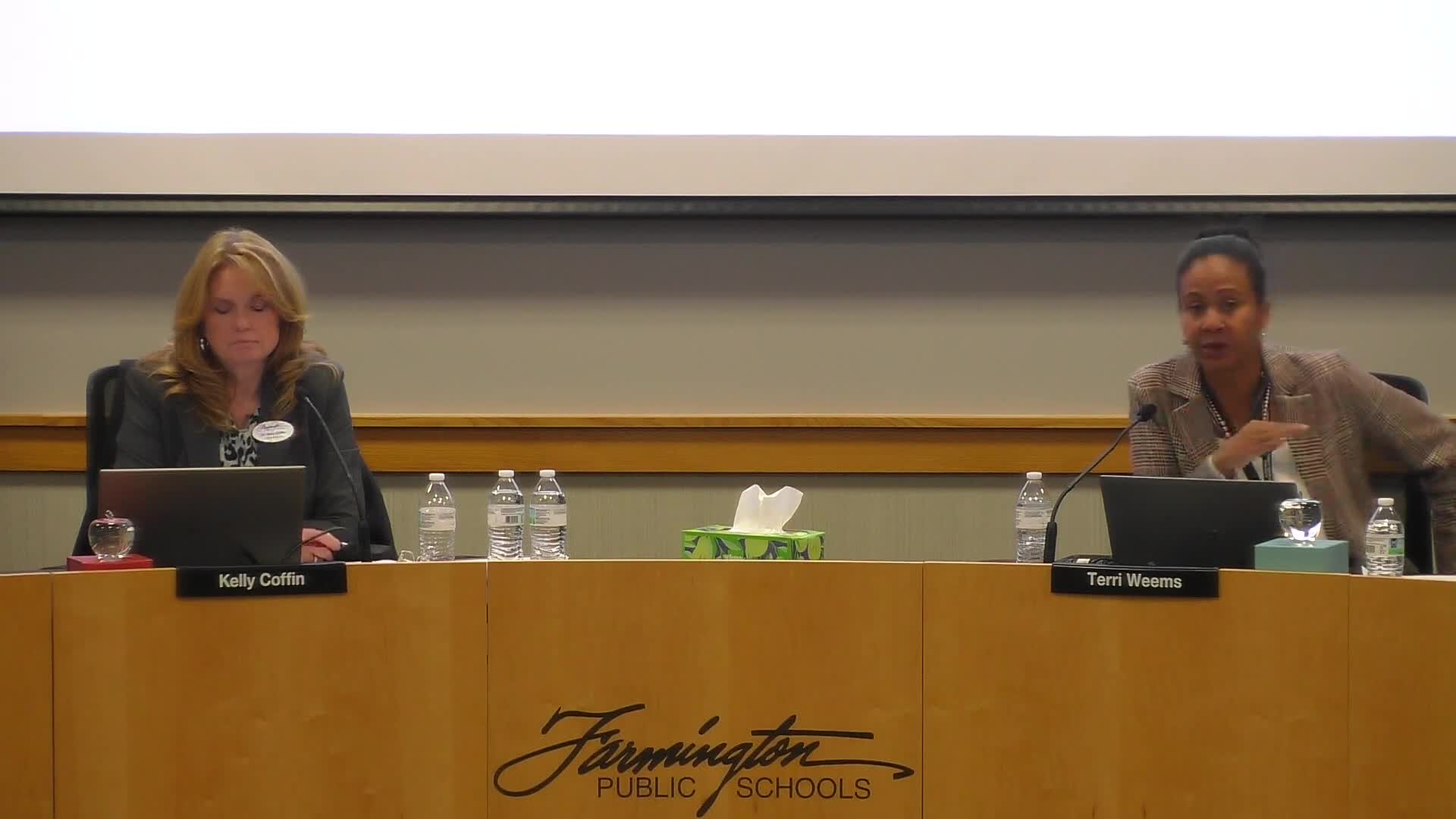
Summary
Board members debated whether to accept state '31aa' safety and mental‑health funds (about $1M/year; $2M over two years) that would require the district to allow outside investigations and waive attorney–client privilege for certain "mass events." Trustees voiced concern about privacy, legal ambiguity and potential downstream costs; a formal decision was deferred to the next meeting.
The Farmington Public Schools Board of Education spent more than an hour on Nov. 18 weighing whether to accept state safety and mental‑health funding that, according to presenters, would be conditioned on the district waiving certain attorney–client privileges in the event of a defined "mass event." Board members and legal counsel described the proposal—referred to in the meeting as "31aa"—as both a potential source of roughly $1 million per year for the district and a source of legal and privacy risk.
President Terry Weems said the board received briefings from the Michigan Association of School Boards and the district's attorneys and that the legislation raises difficult questions. "It doesn't feel right to me to have to sign a piece of paper to say I'm giving up my rights," Weems said during discussion about potential consequences of a waiver.
Superintendent Dr. Coffin told the board the funds currently support safety staff and social‑emotional supports across schools; absent that money, the district would need to reallocate general‑fund dollars or reduce services. Board members cited the size of the program discussed in the meeting—described as about $1 million per year and about $2 million over two years—as the primary fiscal reason to consider the funding despite the legal concerns.
Trustees raised specific legal and practical questions: how broadly "mass event" would be interpreted; whether the waiver would be time‑limited or apply in perpetuity; whether accepting funds would require staff to hire private counsel to preserve their own privileges; and whether student or personnel information could become more exposed in subsequent investigations. Trustee Walker summarized the choice bluntly: "This is a phenomenally excellent lose‑lose situation," noting the risk to staff and students and the political pressure districts face.
Legal counsel in the meeting recommended that if the board chose to accept funds, it adopt a district resolution that narrowly defines the scope—specifying what counts as a mass event and setting temporal limits—to reduce legal ambiguity.
Several trustees said they opposed the broader principle of tying funding to a waiver of privilege; others said they were torn between principled opposition and the practical need to maintain current safety and mental‑health staffing. Doctor Blau said the board could pursue a middle path: press the courts and the legislature while adopting clarifying language if it accepted money. Several trustees agreed to coordinate outreach to state legislators and the Michigan Association of School Boards, and the board left the issue unresolved pending possible court actions and a likely decision at the next meeting.
Next steps: trustees and staff said they will draft (and share) a proposed resolution to define terms if they decide to accept the funding, continue to gather legal analysis, and contact legislators and county partners. The board indicated it expects to revisit the question at its next scheduled meeting.