Get Full Government Meeting Transcripts, Videos, & Alerts Forever!
California agencies outline survivor assistance, confidentiality and eligibility at statewide Victim Resource Panel
Summary
State officials from the California Victim Compensation Board, Safe at Home, the Department of Justice and the Department of Social Services described available services, eligibility rules and outreach steps for domestic-violence survivors, and answered questions about federal funding disruptions and practical barriers such as mail forwarding and enrollment.
A statewide webinar hosted by the California Victim Compensation Board on Oct. 28 brought together state agencies to walk survivors and advocates through compensation eligibility, the address-confidentiality Safe at Home program and other resources — and to answer operational questions about enrolling, language access and how a federal shutdown might affect benefits.
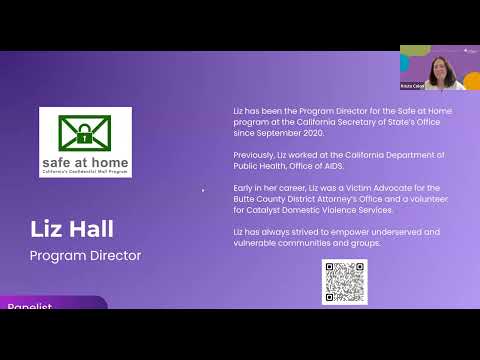
The panel was led by Linda Cueto, executive officer of the California Victim Compensation Board (CalVCB), and moderated by Christa Colon, executive director of the California Partnership to End Domestic Violence. Panelists included Liz Hall, program director for the Safe at Home address-confidentiality program; Victoria Ramirez, victim services manager at the California Department of Justice; and representatives from the Department of Social Services (CDSS).
Why it matters: survivors navigating safety planning, criminal justice proceedings or relocation often rely on a mix of state programs. The webinar sought to clarify what help is available, who may qualify and how to access services without creating additional risk for survivors.
CalVCB: benefits and eligibility Linda Cueto described CalVCB’s role and recent program activity. CalVCB celebrated its 60th anniversary and has assisted roughly 1.7 million victims historically, dispersing approximately $2.7 billion in compensation. In the most recent fiscal year CalVCB received about 7,000 domestic-violence applications and paid roughly $7.2 million to domestic-violence victims.
Cueto said victims generally have seven years from…
Already have an account? Log in
Subscribe to keep reading
Unlock the rest of this article — and every article on Citizen Portal.
- Unlimited articles
- AI-powered breakdowns of topics, speakers, decisions, and budgets
- Instant alerts when your location has a new meeting
- Follow topics and more locations
- 1,000 AI Insights / month, plus AI Chat