
Historic Zoning Commission adopts rules-of-order changes including chair vote and public comment period
Get AI-powered insights, summaries, and transcripts
Subscribe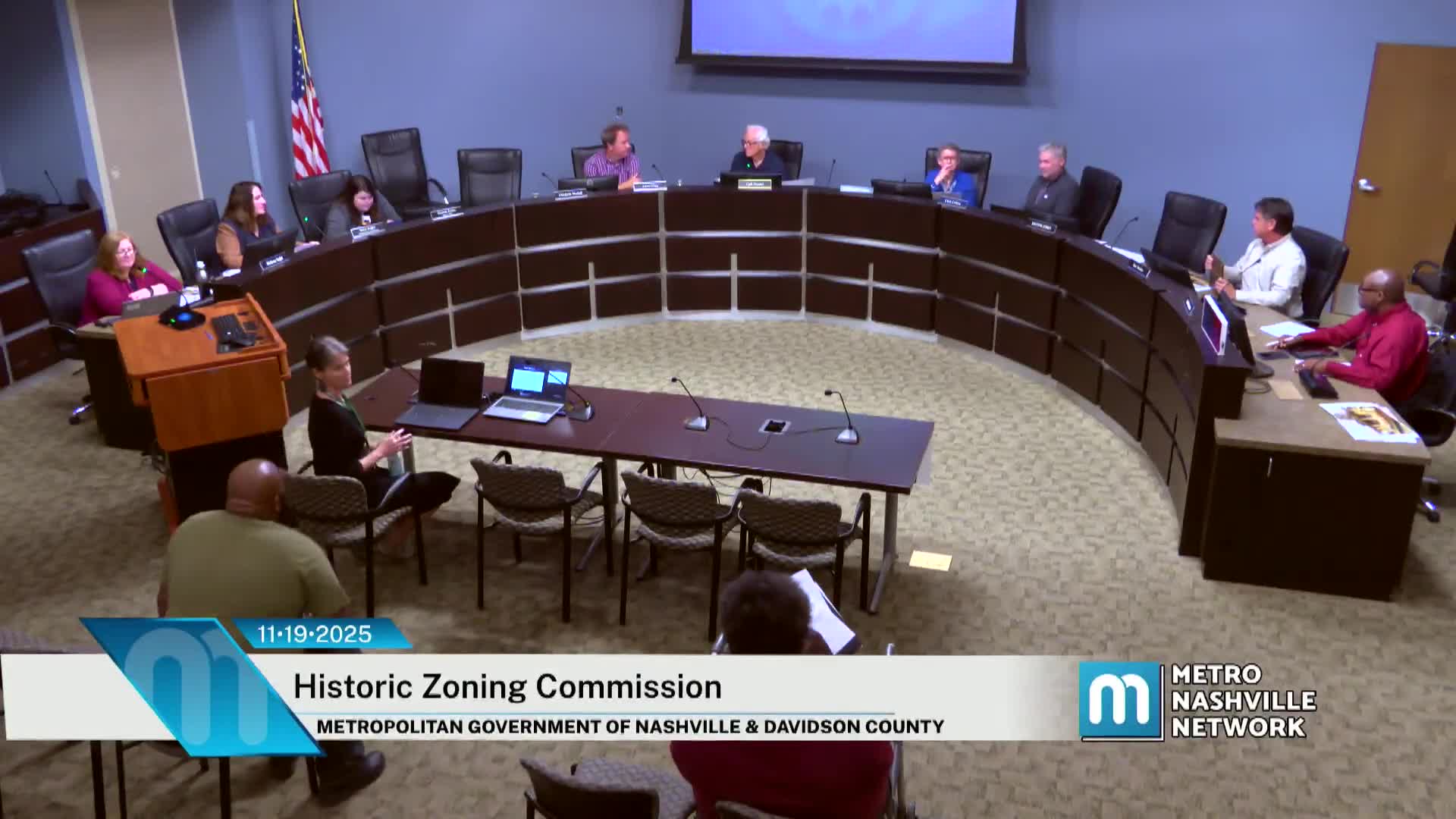
Summary
The commission updated its rules of order to allow the chair to deliberate and vote, formalize conflict-of-interest disclosure language, add a public comment period (20 minutes total, two minutes per speaker), and include certain telecommunication facilities as administratively approvable.
The Historic Zoning Commission voted to revise its rules of order to reflect departmental changes and to formalize several procedural items.
Legal counsel presented changes that include housekeeping updates (department names and addresses), an explicit allowance for the chair to deliberate and vote, clarified conflict-of-interest language allowing members to disclose perceived conflicts and state whether they can participate, and removal of an older 24-hour meeting-cancellation deadline. The draft also adds telecommunication facilities to the list of administratively approvable permits in limited circumstances where Metro has little regulatory authority.
Staff (Hannah) described a proposed new public comment period drafted to satisfy recent state law changes: 20 minutes total with a two-minute limit per speaker, or another configuration such as a cap on the number of speakers. Commissioners discussed script language and practical implementation; several commissioners said they were comfortable approving the draft today with staff finalizing language and a script for public guidance. Commissioner Mosley moved to approve the changes; Commissioner Cashion seconded and the motion carried.
The revised rules will take effect immediately and staff will prepare a short script and public-facing language to explain the new public comment segment at future meetings.