
Fresno County supervisors advance revised kratom ordinance after hours of testimony
Get AI-powered insights, summaries, and transcripts
Sign Up Free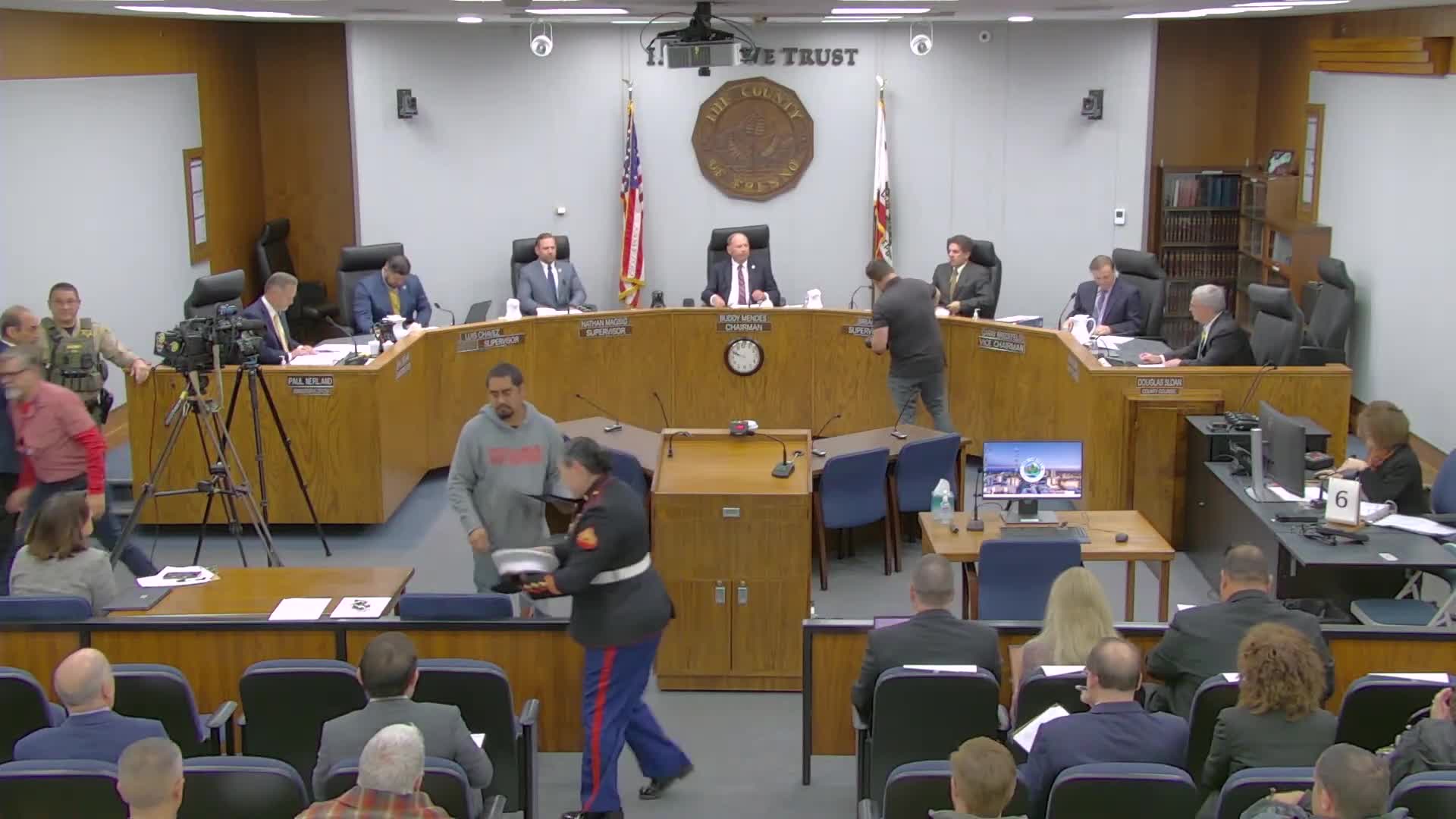
Summary
After a multi‑hour hearing with expert testimony and public comment, the Fresno County Board of Supervisors approved a motion to revise a proposed ordinance restricting retail kratom sales in unincorporated areas, exempting natural leaf for adults 21+ while banning concentrated 7‑hydroxy products above 2% and setting a second hearing for Dec. 9, 2025.
The Fresno County Board of Supervisors on Nov. 18 held a lengthy first hearing on a proposed ordinance to regulate retail sales of kratom in unincorporated parts of the county, directing staff to rewrite the measure to exempt natural leaf kratom for adults while targeting concentrated, synthesized compounds that public health experts say are most dangerous.
Supervisor Luis Magsig introduced the item as an effort to keep potent kratom products out of the hands of young people and to respond to public health concerns. Dr. (Voora/Vohr), a county medical toxicologist, told the board kratom products range widely in composition and pharmacology, that some purified alkaloids (notably 7‑hydroxymitragynine, or 7‑OH) have opioid‑like potency, and that reported local overdoses and deaths have been linked to concentrated products nationally. "It's unregulated, unpredictable, and underappreciated as a true cause of harm," the doctor said during the hearing.
Public commenters were sharply divided. Several people described personal benefits from natural leaf kratom and urged regulation rather than prohibition. Other speakers, including family members of people who died, and law‑enforcement representatives urged the board to act against concentrated synthetic 7‑OH products sold in capsules, gummies and drinks.
County public health staff told supervisors that enforcement is challenging because distinguishing natural leaf from concentrated or altered products requires specialized laboratory testing. Joe Prado, interim director of Fresno County Department of Public Health, said the department would prioritize inspections near schools and work with code enforcement and public health inspectors rather than rely on criminal prosecutions.
After discussion about feasibility and scope, Supervisor Magsig moved to modify the ordinance to allow natural leaf kratom sales only to people 21 and older and require behind‑the‑counter sales and ID checks; to ban products with 7‑OH concentration levels above a 2% threshold; and to bring the ordinance back for a second hearing on Dec. 9, 2025. The board approved the motion by voice vote.
The board’s direction preserves possession of kratom for individuals while aiming to curb retail availability of concentrated products that public health officials and law enforcement tied to recent adverse events. County counsel and staff were directed to draft a revised ordinance and prepare fair summaries for publication under the government code. The item will return for a formal second hearing and potential adoption.
The county’s approach mirrors other local jurisdictions that have differentiated between natural leaf products and concentrated synthetics. The board and staff acknowledged the risk that bad actors could mislabel products, and members asked staff to monitor developments at the federal and state level — including pending state legislation referenced during the hearing — when drafting enforcement provisions.
The hearing drew substantial public turnout and testimony from medical toxicologists, law‑enforcement advocates and consumer groups. The board did not adopt a final ordinance on Nov. 18; it approved the revised policy direction and scheduled the required second hearing.