
Corona Council Advances Mobile‑Home Rent Stabilization Ordinance in First Reading After Hours of Testimony
Get AI-powered insights, summaries, and transcripts
Sign Up Free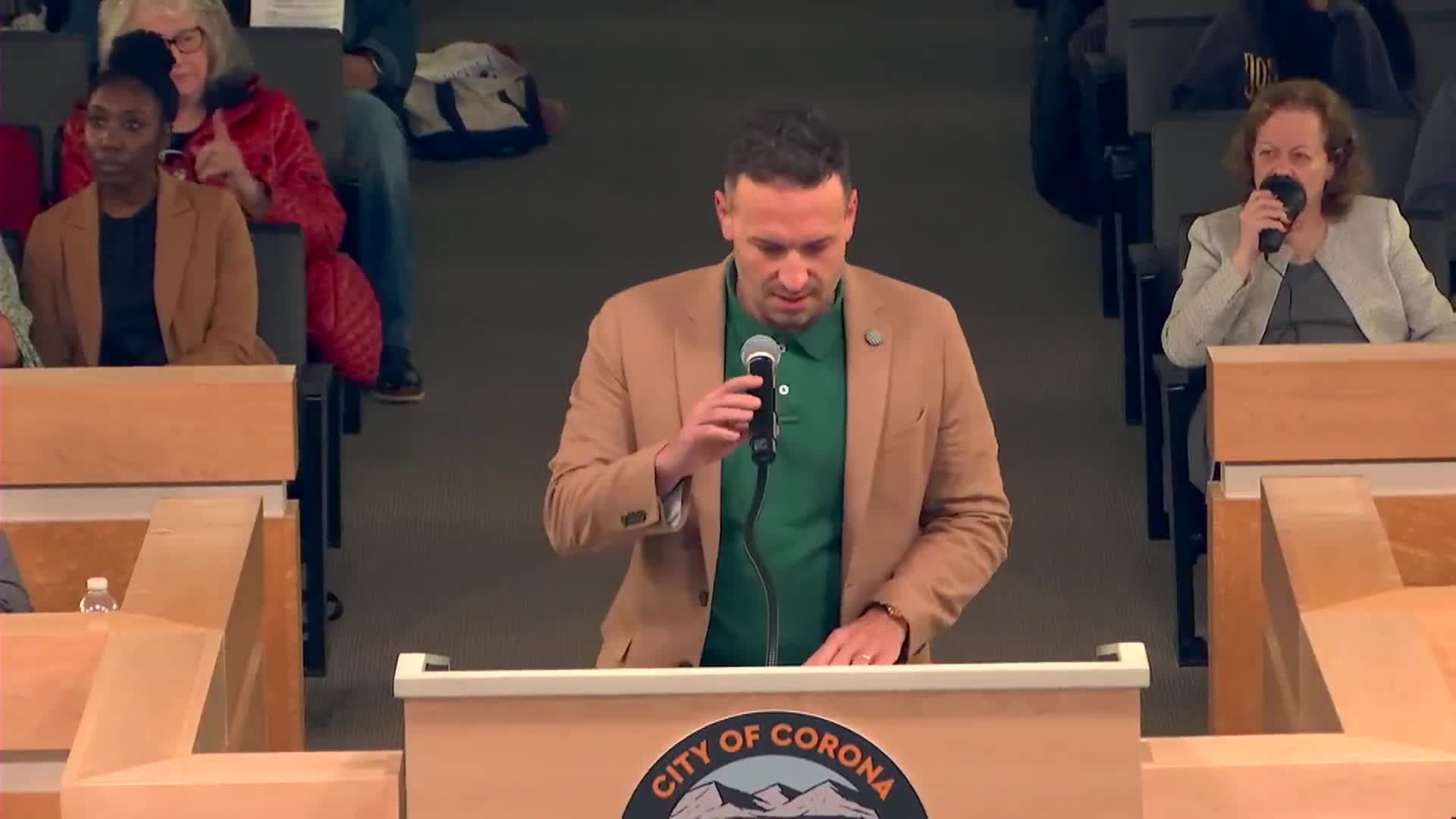
Summary
After hours of testimony from both park owners and long-term residents, the council introduced Ordinance No. 3422 (mobile‑home park rent stabilization) by title only and waived full reading; the first reading passed 4–0–1.
The Corona City Council introduced by title Ordinance No. 3422, a rent‑stabilization measure for mobile‑home parks, after an extended public hearing that drew dozens of homeowners, park residents and owner‑representatives.
Benjamin Kelly, representing the Manufactured Housing Educational Trust, told the council that blanket rent control would impose large costs on mobile‑home parks and said the ordinance’s findings overstated mobile homes as a pool of subsidized low‑income housing. "Mobile home parks make up only 2.2% of the housing stock in the city," he said in opposition, arguing a need‑based approach would be more appropriate.
Residents and tenant‑advocacy representatives urged stronger, city‑specific protections. Steve Husner and other mobile homeowners asked the council to keep a 3% annual cap on space‑rent increases and to limit increases at the time of home sale, arguing that steep lot‑rent spikes destroy resale value and risk displacement. Inland Counties Legal Services’ Veronica Garcia (on Zoom) urged clarity in notices and recommended relocation assistance amounts that reflect real moving costs.
City staff described implementation logistics during council questions. Staff said costs for administering the program would be covered largely through fees charged to park owners and homeowners and would not, in their view, amount to “millions of dollars” annually. Staff clarified that certain pass‑throughs for capital improvements would require homeowner approval if the work created a new amenity, while routine rehabilitation of existing elements would not require a homeowner vote.
Councilmember Jackie McComb, sponsor of the local program, said the ordinance was designed to be “Corona‑specific” and emphasized protections for seniors and low‑income households; she moved to introduce Ordinance No. 3422 by title only and waive full reading. The first reading passed on the council floor with four votes in favor and Councilmember Speak recorded opposing (vote recorded as 4–0–1). The ordinance will return for a second reading and final adoption process before it becomes effective and the staff advised it will take multiple steps (two readings plus required waiting periods) before implementation.
What passed tonight: introduction by title only and first reading (Ordinance No. 3422). What remains: second reading, final enactment, and staff implementation work to define fees, timelines and homeowner notification processes.
Next steps: Staff will return with the second reading and necessary implementation details including definitions of capital improvements, the fee structure to support program administration, and guidance on dispute/appeal procedures.