
Residents Press Corona City Council to Limit Use of City Property in Recent ICE/CBP Operations
Get AI-powered insights, summaries, and transcripts
Sign Up Free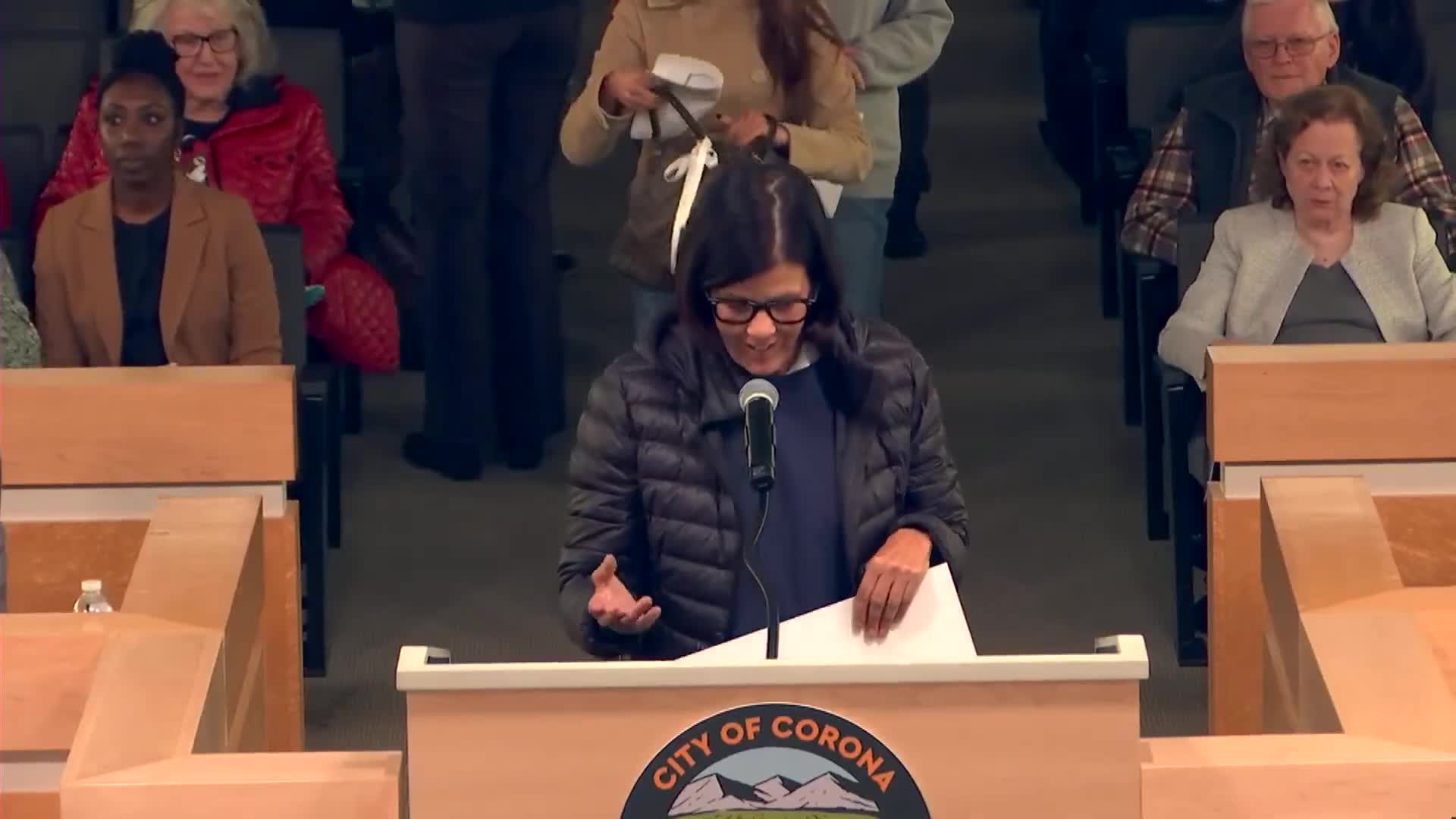
Summary
Dozens of residents told the Corona City Council that federal immigration-enforcement officers staged operations in City Hall parking areas and on nearby streets, urging the council to explore local ordinances to protect residents and to fund legal and emergency support.
Dozens of residents used the council’s public-comment time to describe what they said were aggressive immigration-enforcement operations near City Hall and in nearby neighborhoods and to urge the Corona City Council to act. Speakers said federal officers used the City Hall parking lot to stage detentions, sometimes without clear identification, and that the activity had left families afraid to go about daily life.
“Agents showed disrespect not only toward our residents, but toward our public space,” Tammy Friedrich said during public comment, alleging officers used city-owned property as a staging area and describing visible, frightening scenes she said occurred on a Sunday when families were gathered for community events.
Other residents offered video-based descriptions and first-hand accounts. Victoria Hibbard said agents drove “insanely, running red lights,” and she described a man forced to urinate on public property because there were no bathroom facilities; she said the person who urinated was among those detained. Multiple speakers called for the council to follow actions taken by other California cities — such as San Diego and Vista — by adopting a due-process ordinance limiting use of local resources for federal immigration-enforcement activities.
Council staff told the chamber the item on tonight’s agenda was informational and that the presentation was intended to brief the council on options, not to adopt policy immediately. Several speakers urged immediate steps, including (1) passing a local ordinance restricting use of city property for federal enforcement, (2) exploring a mutual-aid or emergency fund for residents affected by detentions, and (3) requiring federal officers to wear visible identification when operating near public facilities.
Several speakers said the incidents included instances they labeled racial profiling and that U.S. citizens had been stopped; others raised concerns about officer identification and public safety as agents moved through crowded streets. Mercy House’s chief program officer, Timothy Wynne, told the council the nonprofit appreciated the city’s support for homeless services but said he also observed the operations and found them disturbing.
City officials did not take action during the meeting. Mayor Jim Steiner and council members acknowledged the breadth of comment and said staff would collect information on existing legal tools and options in other cities. Council members and staff emphasized state law limits local authority in some immigration matters; at the same time, several council members said they wanted to learn about nonbinding local measures — for example, limiting the use of city-owned parking lots for federal tactical staging, clarifying reporting requirements, and developing support for affected families.
Next steps: Councilmembers asked staff to research available legal mechanisms and examples from other cities and to return with a staff briefing; community groups urged the council to move faster and to prioritize protections and direct support for impacted residents.