
Advisory board forwards revised capital-projects guidelines, adds 'beach park facilities' category
Get AI-powered insights, summaries, and transcripts
Sign Up Free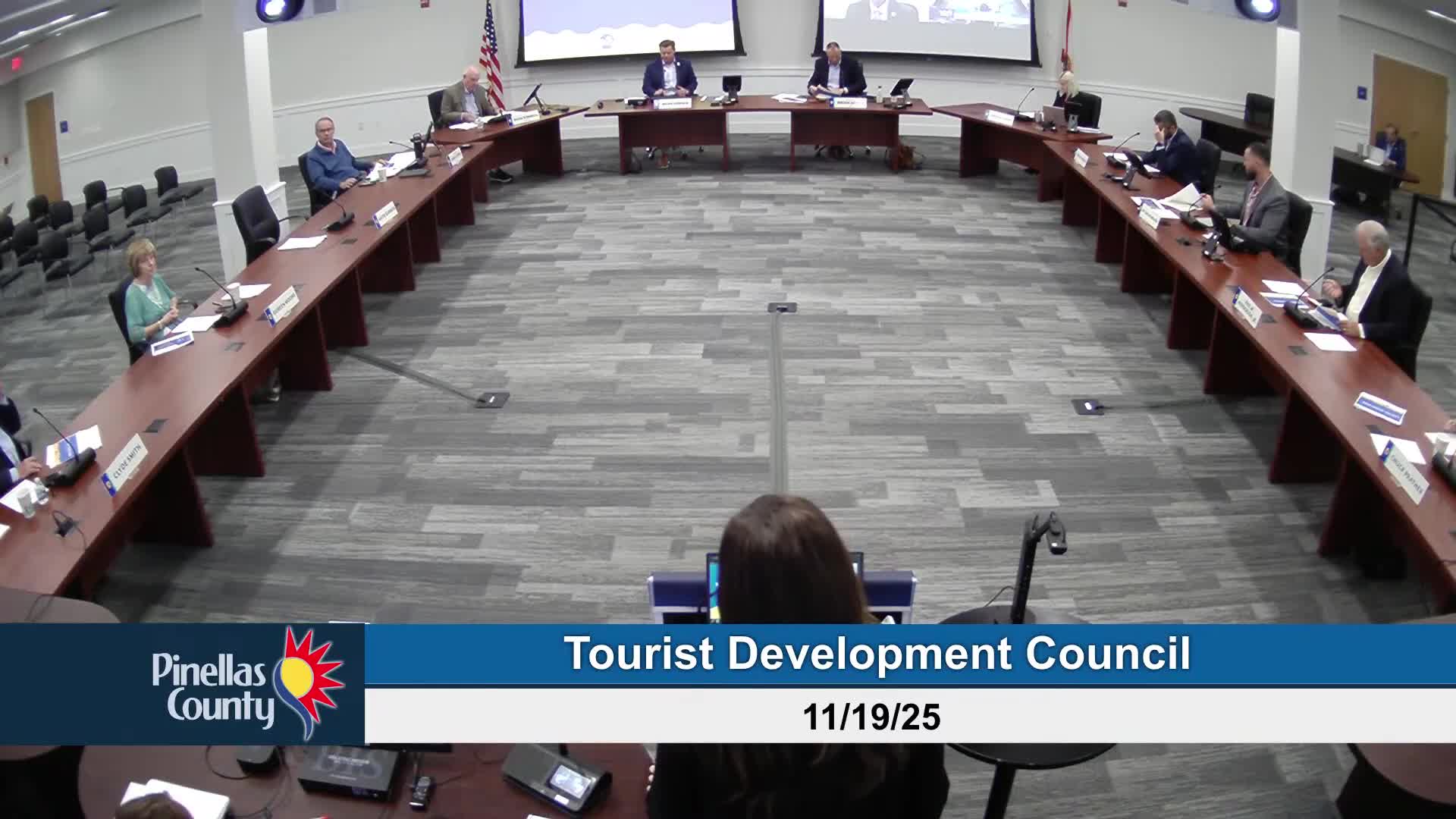
Summary
The advisory panel recommended that the Board of County Commissioners adopt revised capital-project funding guidelines that add a new 'beach park facilities' category, require 1:1 matches (except county-owned beach park facilities), a 'shovel-ready' requirement and minimum attendance/room-night thresholds. Staff removed the prior point-scoring system and will present the code amendment to the BCC.
Visit St. Pete Clearwater staff on Wednesday presented revisions to the 2026 capital-projects funding guidelines and asked the advisory panel to recommend a code amendment and updated guidelines to the Pinellas County Board of County Commissioners.
Kylie Diaz, vice president of community engagement for Visit St. Pete Clearwater, said staff propose a single funding pool per cycle, a 1:1 match requirement for applicants (except publicly owned Pinellas County facilities), a ‘shovel-ready’ requirement to ensure projects are ready for reimbursement agreements, and a simplified eligibility threshold requiring a minimum of 25,000 annual attendance and 10,000 room nights for typical capital projects (these minimums do not apply to beach park facilities). Staff also removed the previous quantitative point-scoring sheet and will evaluate projects using clearer qualitative and quantitative tourism-impact criteria.
The big policy change is the addition of ‘‘beach park facilities’’ as a separate competition bucket. Staff described beach park facilities as publicly owned and operated facilities directly associated with tourist attractions; examples might include beachfront restrooms, parking areas, picnic facilities or beach access improvements. County Attorney Amanda Coffey told board members the statute does not supply a strict definition, so staff drafted plan language for insertion into the county’s tourist development plan and noted prior Attorney General guidance will inform but not fully define eligibility.
Several advisory members raised concerns that a broad definition could allow municipalities to seek TDT funds for routine maintenance or items the municipality should budget for itself. Members suggested clarifying language (for example, limiting eligibility to capital/facility improvements rather than recurring services) and asked staff to prepare clearer financial-capability screening for applicants. Staff said projects will be evaluated on their projected tourism impacts and an economic-impact analysis will inform award amounts.
Clyde Smith moved to forward the proposed code amendment and revised guidelines to the Board of County Commissioners for final action; the motion was seconded and the panel voted to recommend the changes unanimously. Board members asked staff to correct a typographical inconsistency flagged in the draft guidelines (a parenthetical percentage) before submission and to consider a financial-fitness test for event applicants on the elite-event side.
What’s next: staff will correct the noted editorial/numbering errors, finalize the draft plan language for the tourist development plan amendment, and present the amendment and guidelines to the Board of County Commissioners.