Odessa development board outlines water, investment and compliance priorities as major projects surface
Loading...
Summary
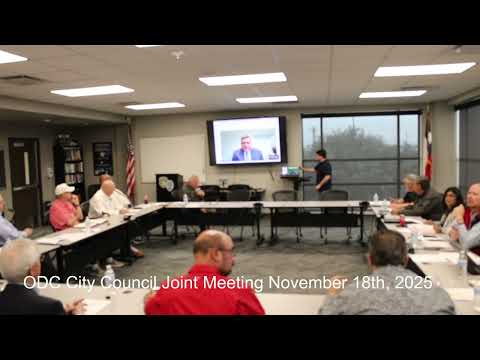
At a meeting of the Odessa Development Corporation, board members and economic development contractors formed an industrial water task force, reviewed legal authority to fund infrastructure, discussed compliance/audit processes for grants and reported increased applications including a pediatric clinic facade grant and a prospective data center.
The Odessa Development Corporation held a session to review its mission, investment approach and grant compliance procedures while updating the board on active projects and near-term prospects. Speaker 1 opened the meeting by stressing the ODC’s long-running mission "to create jobs, grow the tax base and diversify the economy," and introduced Jeff Moore as the legal counsel expected to speak later.
The board said it has formed an investment committee that will review investment returns quarterly and has added three new priorities to the general development plan. Speaker 1 also announced an industrial water task force — naming Peggy Dean, Ronnie Phillips, Gary Hanger, John Landgraf and Tommy Irving — to secure additional sources of industrial water and to evaluate return on investment before any commitments are approved.
Legal authority and limits were a central theme. A presenter (Speaker 4) reviewed Local Government Code provisions the ODC uses most often, including section 501.103, which permits targeted infrastructure (streets, water, sewer, drainage and related site improvements) for new or expanding businesses, and chapter 504 provisions for airport-related facilities in business parks. "You can provide streets and roads, water, sewer, electric, drainage, gas," Speaker 4 said when describing eligible infrastructure.
Speaker 4 also explained ODC may spend up to 10% of annual revenues for promotional or advertising purposes if that activity can be shown to publicize the city for business development, citing a Texas attorney general opinion as guidance. On job training, the presenter said the statute allows ODC to pay for training only under a contract in which the business commits to increase payroll or create new jobs that pay the prevailing or average wage for the occupation in the Odessa area; the presenter noted the statute does not define "prevailing wage."
Contracting and compliance procedures were described in detail. The board’s compliance committee (appointed by the ODC board) reviews grant applications and compliance audits. Speaker 3 explained typical economic development agreements run five years and are paid in arrears based on contract benchmarks; audits are performed by an external CPA (Whitney Kent was named as the compliance auditor). Speaker 3 described a common practice in which partial compliance leads to proportional payment (for example, a 92% compliance recommendation might yield a 92% payment for the year).
Project updates included a recent facade and infrastructure grant approved for a pediatric clinic and a reported uptick in applications. Speaker 3 told the board the OEC/ODC recently approved the pediatric clinic grant but said the developer had modified its plans and would resubmit for clarity. The presenter also discussed a major data center prospect: "They’ve already purchased part of the land... they’re supposedly gonna close on the remainder," and relayed an early water-demand figure from a prospect of about "30,000 gallons a minute." The board said the water task force will be important for evaluating such industrial demands.
Board members requested clearer reporting on infrastructure grants and an updated scoring matrix (the current matrix was last revised around 2017). Several members asked for a dedicated future meeting to dig into financial projections and the city requests ODC has been asked to support. Speaker 1 closed by thanking staff and contractors and asking the council to consider next procedural steps, including a possible motion and follow-up financial session.
What’s next: the board agreed to further analysis by the investment and compliance committees, additional reporting on grant audits and a potential separate session focused solely on financial projections and allocations.