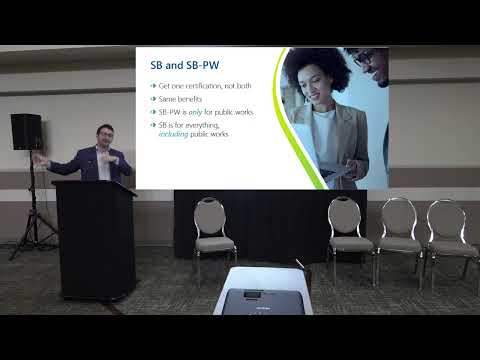
How to sell to California: DGS presentation on small-business and DVBE certification, procurement platforms and emergency registry

Department of General Services of the State of California · November 19, 2025

Get AI-powered insights, summaries, and transcripts

Sign Up Free
AI-Generated Content: All content on this page was generated by AI to highlight key points from the meeting. For complete details and context, we recommend watching the full video. so we can fix them.

Summary

John Gastel of the California Department of General Services outlined how small businesses and disabled-veteran firms can register, certify and search for state contracting opportunities, use the state procurement marketplace and emergency registry, and where to get one-on-one help.

John Gastel, with the Department of General Services of the State of California, told a public audience that getting state contracts is a process but one with tangible advantages for certified small businesses and disabled veteran business enterprises (DVBE).

"This is the sort of introductory course into doing business with the state of California," Gastel said, and he urged attendees to use his office’s free resources and schedule one-on-one consultations.

The presentation focused on two state certifications his office manages: the general small-business certification and the disabled veteran business enterprise (DVBE) designation. Gastel said certified small businesses receive a 5% bid preference and that small-business and DVBE preferences can "stack," which he described as giving certified firms up to a 10% advantage in some acquisition methods. He also cited a spending figure: "By May, 625,800,000.0 of all contract dollars went to DVEs," a number he presented without additional breakdown.

Why it matters

State purchasing is large and varied, Gastel said, and the state runs procurement channels that allow certified firms to be found by agency buyers, appear in searches, and access contract opportunities set aside for certified firms. He emphasized that certification can open doors to exclusive solicitations and to relationships with prime contractors who may prefer certified subcontractors.

How to get started

Gastel walked attendees through the state’s online procurement marketplace (referred to during the talk in several spellings). He described the steps to register a business profile, apply for certification, post vendor ads, and receive solicitation notifications. He recommended using multiple, specific United Nations Standard Products and Services Code (UNSPSC) entries (level 3–4) and carefully chosen keywords so buyers searching the system will find a firm’s offerings.

Finding opportunities and doing market research

Gastel demonstrated the California State Contract Register (CSCR) and the State Contract and Procurement Registration System (SCPRS) as tools to find active solicitations and to research past awards. He recommended using advanced searches (UNSPSC, keywords, county, department, event ID) and reviewing event pages for end dates and contract manager contact information.

Small‑business advocates and outreach

Gastel urged firms to engage proactively with small-business advocates and procurement officers in state departments, who are responsible for expanding certified-supplier pools and can accept capability statements. He pointed listeners to a directory of advocates and cited an example contact (Sharon Flores) shown in the presenter’s slides.

Emergency contracting and the SBDB emergency registry

Gastel described the SBDB emergency registry, a separate list of state‑certified firms used to quickly locate suppliers during disasters. Using the registry can shorten procurement processes in emergencies, he said, and gave an example of a Bay Area firm that supplied forklift services during Northern California flooding and later worked again with the agency. He noted registry requirements include a certification number, information about fleet and worker capacity, and primary and emergency contact details.

Compliance and commercially useful function

Gastel warned that the state enforces commercially useful function rules and has a compliance team to guard against firms being used as fronts or pass‑throughs to meet participation goals. Firms on the emergency registry must be ready to perform the work they list and not be used solely as placeholders to create the appearance of certified participation.

Next steps and resources

Gastel closed by reiterating that his office offers profile reviews in real time via Microsoft Teams, that business outreach liaisons are available, and that attendees should stop by the presenter’s table for materials and to schedule consultations. "Please come by the table," he said, "we can get you some resources."

The presentation was informational; no formal actions or votes were recorded.