
Planning Commission reviews zoning-survey results, urges more visuals and public education before major code changes
Get AI-powered insights, summaries, and transcripts
Sign Up Free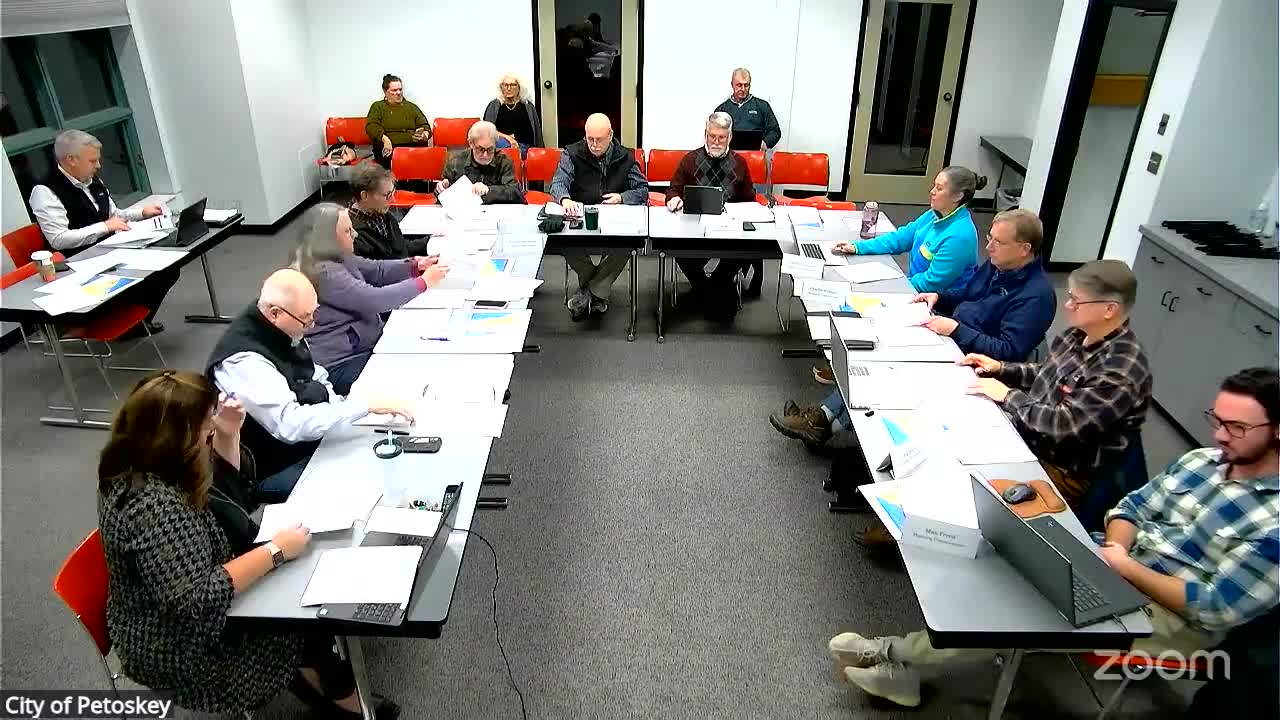
Summary
The commission considered results of a community zoning survey (292 responses) and agreed to prioritize visual education, pattern books and targeted open houses before finalizing setbacks, densities and consolidation of zoning districts.
At its Nov. 19 meeting, the Petoskey City Planning Commission reviewed results from a community narrative survey and debated next steps for zoning-code updates, agreeing that visual education and targeted outreach will be essential before making detailed changes to setbacks and density rules.
S5 summarized the survey, saying the process "ended up at 292 responses" and that responses were fairly distributed across the city. Common themes included a preference for walkability, reduced traffic, stronger code enforcement, and a general preference for two-story buildings and visual compatibility with existing neighborhoods.
Commissioners raised concerns about the public's understanding of technical topics such as setbacks and density. S3 said these topics are "very specific stuff" that the public can find conceptually difficult and recommended short, visual education segments at future commission meetings. S6 suggested a 5–10 minute educational slot on the agenda and using easels or graphics to explain concepts such as density, setback, and lot coverage.
The commission discussed the visual-survey images (examples of ADUs and small houses). Commissioners noted the visual appeal of some small-house examples but cautioned about conflating a pictured house with a regulatory category. S7 and others urged a block-by-block and GIS-informed approach to better understand existing lot coverage and prevailing neighborhood character before setting prescriptive numeric standards.
A recurring concern was enforcement capacity. S12 said the city currently lacks staff for expanded rental inspections and noted that a rental-inspection program would require additional resources. Commissioners therefore emphasized synchronizing zoning changes with realistic enforcement capacity and recommended bringing materials forward for a community open house once illustrative materials are prepared.
Staff and commissioners discussed pattern books and example plans as tools to present options that reflect Petoskey’s historical character. S5 suggested that the code should amplify the city's historical development patterns and that locally tailored pattern books could be a cost-effective way to provide by-right design options.
The Planning Commission asked staff to prepare visual examples and to bring existing project lighting/specs (for the lighting ordinance packet) and to plan a public open house to solicit clearer feedback on complex zoning topics. The commission will continue deliberations in coming months as more detail and education materials are provided to the public.