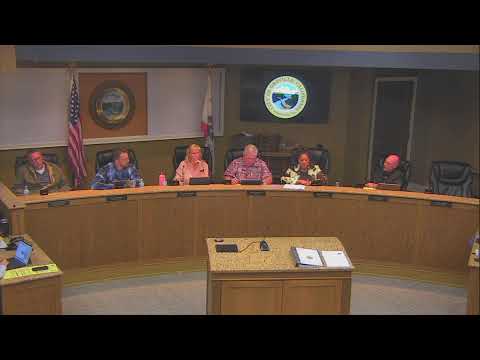
Oroville council hears technical briefing on proposed biomass biofuel plant; officials press for strict feedstock and emissions controls
Loading...
Summary
City staff and outside presenters described gasification and enzyme technologies, said Oroville’s proposed plant would take forest-product feedstock only, and recommended strict tracking and pollution controls; council scheduled a public workshop and pressed for contractual protections in any power purchase agreement.
City officials and staff on Thursday received a detailed briefing on biomass and biofuel technologies proposed for Oroville, with presenters stressing strict feedstock limits and advanced pollution controls as prerequisites for local support.
Skipper Clark, a public speaker who had compiled technical questions for Albion Energy, urged the city to require that any power purchase agreement be negotiated by a law firm experienced with such deals and to limit feedstock to forest products — “no municipal or industrial waste besides sawdust,” he said. Clark cited a bankrupt Colorado facility that failed after years of litigation and urged caution.
Patrick, a city department head who presented photos and technical descriptions from operating biomass and municipal-waste facilities, described gasification systems that convert wood into a cleaned, combustible gas and advanced filtration systems with hundreds of ceramic filter 'candles' to capture particulates. Patrick said operators track feedstock from harvest to delivery using labeling (an RFD code) and software that identifies the source and status of material, and he told council the Oroville facility being planned is intended to use only forest-derived wood feedstock.
"You can't see anything" coming from the stack at the plants Patrick visited, he said, describing visible emissions as steam rather than smoke and emphasizing filtration. He also described moisture-control techniques to manage wet sawdust and noted enzyme technology that can process wet pond material into ethanol.
Council members pressed on enforceable safeguards. "How are we going to guarantee it's just forest products and not mixed in with anything else?" asked one councilmember, and Patrick replied that the operator would log deliveries and track material through the gate so every truck and pile is identified and traceable.
Staff estimated the operational throughput discussed at the town hall as moving material from roughly 4,000 acres a year (operator estimate) and said the plant would include training and viewing facilities. The presenter invited the community to a workshop on Dec. 8 at Stream Charter School for further public discussion.
Why it matters: Oroville officials framed the proposal as part of a broader bioeconomy opportunity tied to local forest-management and wildfire-fuel reduction efforts. Council members sought contractual, technical and monitoring requirements — including explicit feedstock definitions and pollution-control systems — before advancing approvals.
Next steps: Staff will follow up with additional public materials and a workshop (Dec. 8) and return with more detailed red-line documents and any proposed procurement materials or power purchase agreement language for council review.