
Enrollment projections show modest near‑term decline; charters account for notable growth
Get AI-powered insights, summaries, and transcripts
Subscribe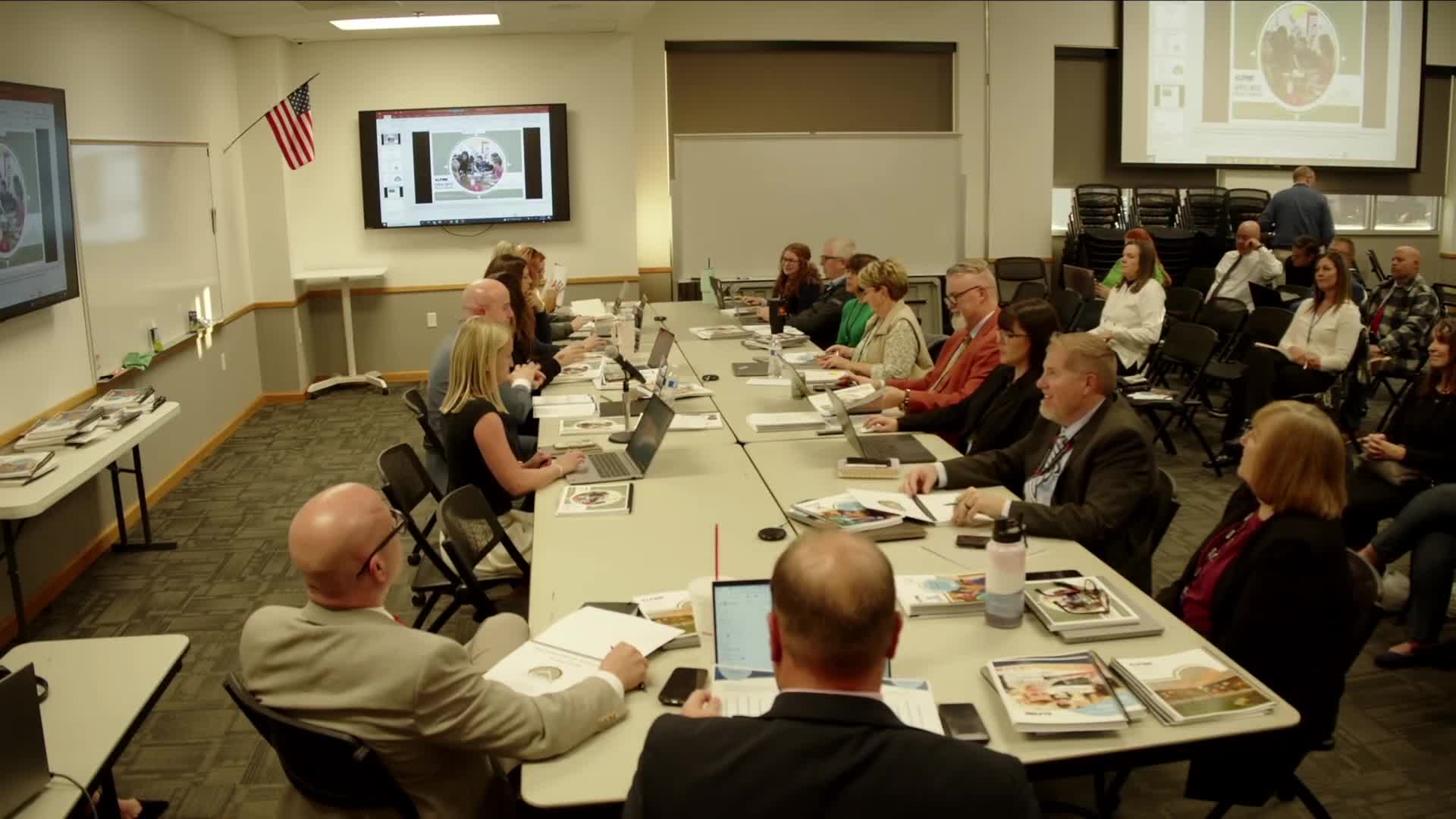
Summary
District staff reported an October 1 enrollment of 84,215 and projected 83,782 for October 1, 2026, citing lower birth rates, housing trends and charter school growth; staff added the projection book will drive FY27 FTE allocations and budgeting.
District staff presented the annual enrollment history and projection book, telling the board that the October 1 actual enrollment was 84,215 students and that the district projects 83,782 students on October 1, 2026.
Crystal Michaelis, who led the presentation, said the district saw a net decline of 542 students year over year: "elementary of 867, middle schools increase 1,109, and then decrease in high schools of 786," highlighting that a new Sage Canyon middle school and several boundary adjustments affected grade‑level distributions. She also tied the statewide enrollment decline to lower birth rates, noting a KSL article cited a 1.7% decline statewide in the last year.
Michaelis described the models behind projections — birth data, construction permits, move‑up rates and migration — and showed cluster‑level feeder charts and five‑year projections for the newly configured Central, South and West districts. She highlighted that charter school enrollment within district boundaries increased by 679 students this year and that, if combined statewide, charter schools are now larger collectively than the public district in raw enrollment counts.
Board members asked about special‑school projections and whether special education student counts could be modeled at the cluster level; staff said special schools currently lack grade‑based move‑up models but that retrospective and cluster analyses could be prepared.
Staff emphasized the book’s planning role: Michaelis said the enrollment projections "drive everything that we're gonna do with FTE" and will inform staffing and capital decisions for FY27.
The presentation concluded with an accuracy review showing the district’s projection methodology has generally tracked well over time, though the staff acknowledged some over‑projection in the most recent year and noted COVID years were particularly volatile.