
McHenry County hearing on Sunbury Orchard slaughterhouse continued amid questions on septic holding tank, alarms and variances
Get AI-powered insights, summaries, and transcripts
Sign Up Free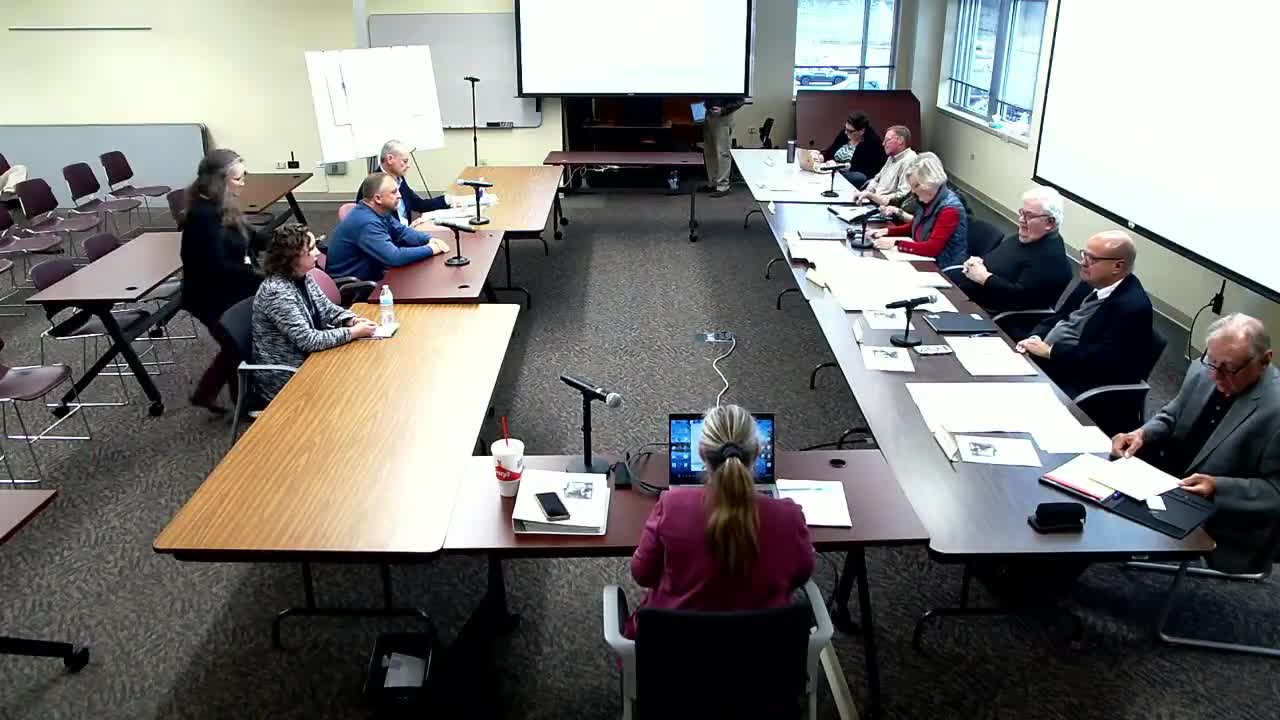
Summary
The McHenry County Zoning Board of Appeals heard testimony on petition Z250068 for a small USDA‑inspected on‑farm animal processing facility at Sunbury Orchard. County health staff said the septic and a 3,000‑gallon special‑waste holding tank meet preliminary requirements but several technical items remain; the board continued the hearing to Dec. 18 to allow the public to review evidence and ask more questions.
The McHenry County Zoning Board of Appeals continued a hearing on petition Z250068 after multiple witnesses and residents questioned whether the proposed Sunbury Orchard processing facility can be built and operated without harming groundwater or nearby homes.
Petitioner Sergei Bazilyuk, owner of Sunbury Orchard, and his attorney described a low‑volume, USDA‑inspected processing building to handle animals raised by the petitioner. “This is not a factory style slaughterhouse,” Bazilyuk’s representative said in an opening statement, adding the building would be small, enclosed, and set back from neighboring homes. The petitioner’s plans call for a roughly 100‑by‑50‑foot processing structure sited among existing farm buildings and orchards on a 107‑acre parcel, with the specific permit area encompassing about 1.044 acres.
Why it matters: Neighbors raised repeated concerns about odors, overflow risk, alarm notification, traffic and property values; the county health department and the petitioner provided technical details but several outstanding items must be addressed before the county will issue final permits.
County health testimony
Celine Taylor, an environmental health practitioner with the McHenry County Department of Health, testified she reviewed the private sewage disposal and holding‑tank plans. She said the septic system as designed is staged to accept only domestic strength waste (toilet, mop sink, wash sinks) and that process wastewater from the kill floor and floor drains is to be routed to a separate, watertight special‑waste holding tank that must be pumped by an Illinois EPA‑licensed hauler. “As it’s designed right now, it’s meeting our ordinance requirements,” Taylor said, adding that a small number of technical items remain open in the pending permit application.
Taylor described the holding tank as a below‑ground, sealed tank with an alarm that triggers at two‑thirds capacity; the permit minimum for such tanks is 1,000 gallons, and the petitioner’s design calls for a 3,000‑gallon poly tank. Taylor said the department requires a waste‑strength test after the system is operational and inspects such tanks approximately every two years; the department reviews pump‑out records during inspections and responds to complaints between inspections.
Petitioner’s operations and safeguards
Bazilyuk told the board the facility would process only animals he raises on his farms—primarily chickens and pigs—and would not accept livestock from other farms. He said live animals would be kept inside and not held at the site for more than 24 hours, that all slaughtering and processing would occur inside an enclosed building, that solid waste would be refrigerated and removed by a rendering company, and that a USDA inspector would be present during processing. Bazilyuk said the 3,000‑gallon holding tank would take “about a couple months” to reach the two‑thirds alarm threshold under his proposed operating schedule and that processing would stop during prolonged power outages.
Public concerns and technical gaps
Residents asked for specifics on whether the holding‑tank alarm notifies the county (Taylor said it does not; it sounds on site), how quickly pump‑outs would be scheduled, whether overflow reporting by the owner is required (currently it is not), and whether grease traps or other controls are mandatory (grease traps are governed by plumbing code; the health department recommends precautions but does not uniformly require internal grease traps). Taylor confirmed the septic was sized to accommodate an assumed 6 employees and up to 15 retail customers per day (approximately 1,200 gallons per day as designed), and she said any retail food service or expansion in customers would trigger additional health‑department review and a retail food permit.
Variances and legal/access issues
The petition also seeks two variances: (1) a frontage variance from the ordinance’s 330‑foot frontage requirement for an A‑1 parcel (the applicant says the 107‑acre parcel is landlocked and has perpetual ingress/egress easements dating to 1896), and (2) a variance to the ordinance’s 500‑foot distance standard as it relates to a residential structure located in an agricultural zoning district (the petitioner’s on‑site residence is roughly 217 feet from the proposed building). Counsel told the board petitioner relied on prior staff guidance that the owner‑occupied residence would be exempt from the 500‑foot rule, but staff later changed its interpretation after the petitioner had finalized plans, prompting the variance request.
What the board did next
After extended questioning of the health witness, the petitioner and members of the public, the board paused to allow public review of the record and continued the hearing. The board announced it will reconvene on December 18, 2025, at 1:30 p.m. in the same room so residents may ask follow‑up questions and additional permit technical issues can be addressed.
Key documents and next steps
County staff will require the petitioner to resolve outstanding technical items in the health‑department permit application and to provide any additional engineering or transportation responses (e.g., whether access qualifies as 'major' or 'minor' based on vehicle types). The board’s continuation leaves the conditional‑use and variance requests open pending those clarifications and any further public testimony.